PMO To Weigh PSB Reforms: Mergers, Higher FDI, And Autonomy On The Table
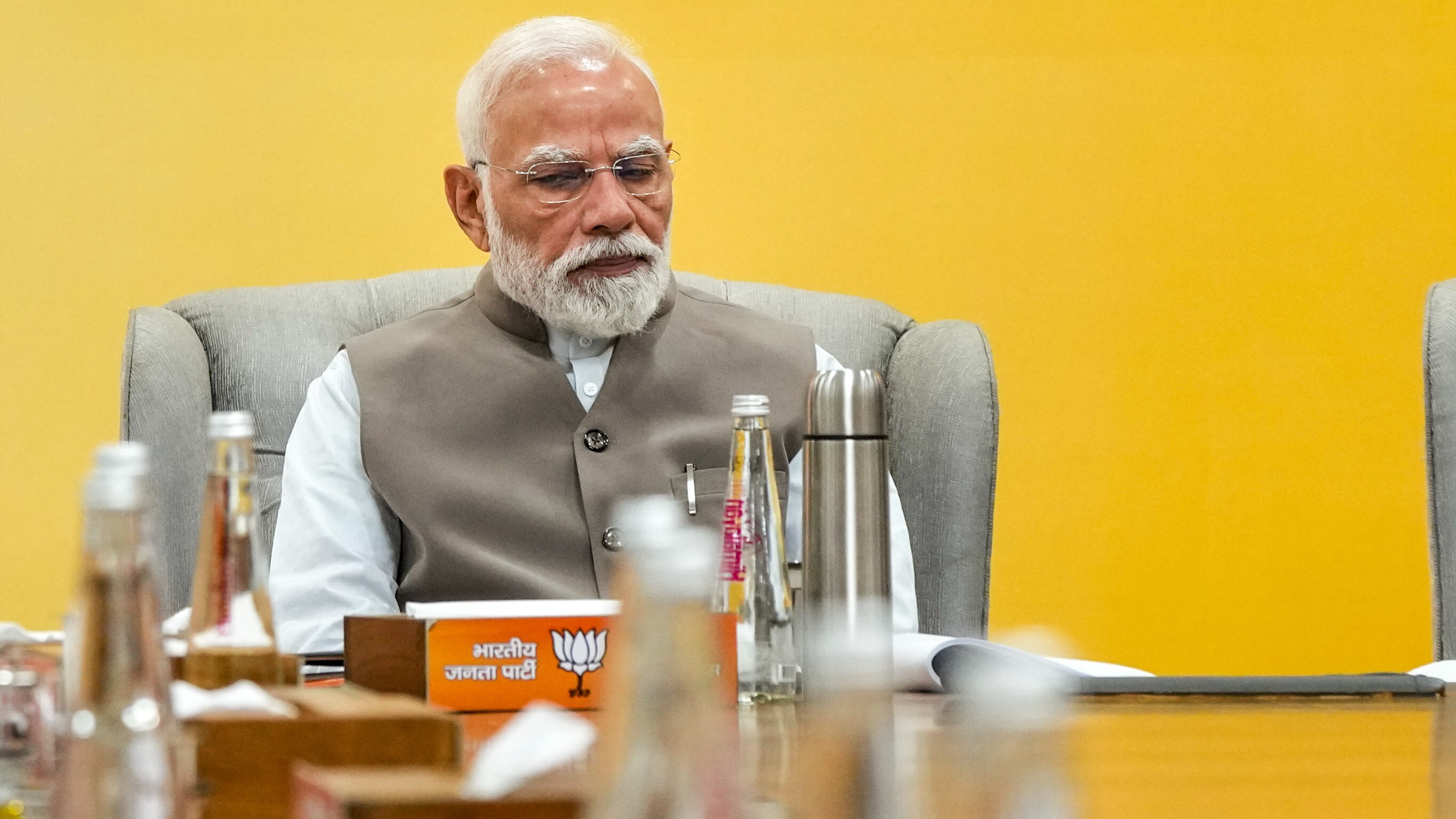
The Prime Minister's Office is set to review proposals to overhaul public sector banks (PSBs) ahead of the 2026–27 Budget. The reform blueprint—crafted by the Department of Financial Services—includes a fresh round of consolidation, enhanced board autonomy, and a phased hike in the foreign direct investment (FDI) cap. Privatisation of select PSBs, first announced in the 2021–22 Budget, may also resurface as part of the government's push to create globally competitive Indian banks, a Financial Express report said.
The report added that the government may also be looking into phased plan to raise the FDI limit to 49% from 20% at present. Further, privatisation, announced in the 2021–22 Budget for two PSBs may also materialise
The report further added that, after a six-year lull, the government is likely to revive its push for PSB reforms with an eye on creating two Indian lenders capable of ranking among the world's top 20. Inter-ministerial consultations are nearing completion, and following the PMO's upcoming review, key political decisions are expected closer to the Budget
“The vision for PSBs aligns with discussions during the finance ministry's recent “Manthan” strategy exercise and builds on the consolidation wave of 2017 and 2019–20, when the number of PSBs was reduced from 27 to 12,” the report said.
Analysts as per FE expect that larger, consolidated banks will benefit from economies of scale, stronger risk management, and greater capacity to meet India's growing credit demand, still modest compared to global benchmarks. The reform agenda has received cautious backing from both the government and the RBI.

-
Unhedged Position: Can India See An Indonesia-Style Time Correction?

The Nifty is trading below levels it first clocked in 2024. Is there, then, as I have suggested in the headline, potential that the current time correction drags on painfully for the next three-five, even ten years?
-
Navigating Friction And Energy Realities: An Analysis Of Marco Rubio's October Visit To India
Occurring at a critical juncture marked by stalled trade negotiations and escalating geopolitical pressures over global energy supplies, the visit offers a profound window into modern US-India relations.
-
India Exports Capital. Why Not Export Trusteeship?
The big question, then, is whether India can build an institution that global borrowers, investors, banks, and lawyers can trust, even without an Indian connection.
-
France's Economy & Politics Are In Crisis | The Reason Why
Let's look at how the French economy and politics evolved under Nicolas Sarkozy, Franois Hollande and Emmanuel Macron.
-
You May Inherit The Business. You Must Earn Its Credibility.
Succession tests the founder's ability to share authority as much as it tests the next generation's readiness to assume it.
-
Signing Deals Is One Thing; Making Them Work Is Another | The Week In Whys
Sometimes, things don't turn out as planned. Indian companies have lost some bids to rivals, some projects won't produce until 2030.
-
FOMC Wall, PERM Suspension, Hospital Stocks | Talking Points This Week
A PERM suspension would directly affect green-card sponsorship rather than H-1B visas, so the near-term earnings impact could remain relatively limited. The key question is whether this marks a new phase in US scrutiny of Indian IT.
-
Everything, Everywhere, All At Once: Dalal Street's Week To Forget | Joining The Dots
Visa curbs, a Starlink spat and cancer drug caps: what connects this week's shocks for Indian markets
-
India Is Going Abroad For Critical Minerals. But It May Take Years To Pay Off | The Reason Why
Although India's steps are in the right direction, they remain modest compared with India's growing dependence.
-
When Everyone Has AI, What Gives You An Edge?
India's young workforce is entering an uncertain world of work where powerful AI tools are becoming widely accessible. The advantage will belong to those who combine deep expertise with digital fluency, and the distinctly human capabilities that technology cannot manufacture.









