Mood Of Gloom And Doom Won’t Help Anyone: RBI’s Shaktikanta Das
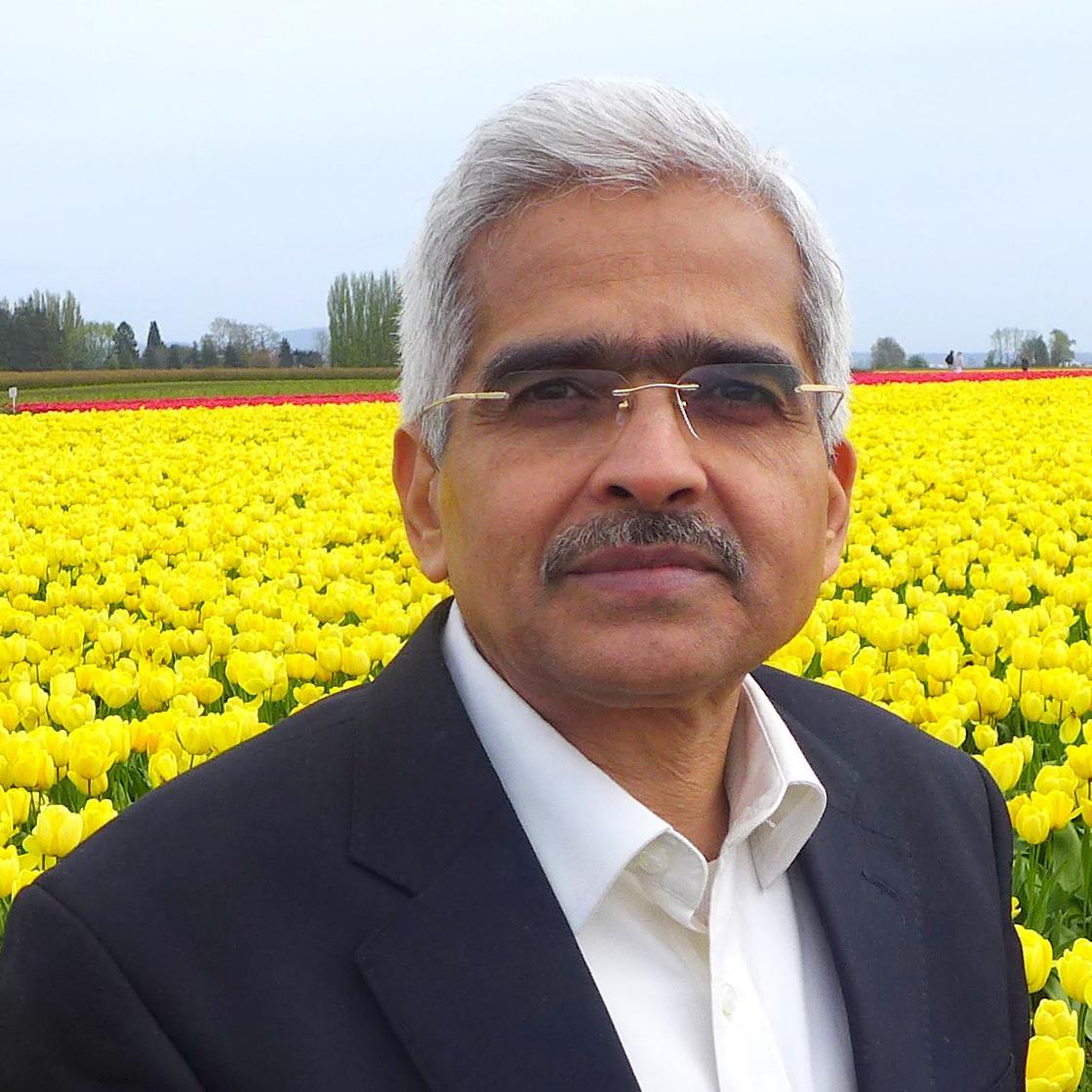
Reserve Bank of India Governor Shaktikanta Das on Monday tried to dispel the mood of pessimism prevailing around economic conditions saying that growth is the highest priority for the central bank right now, adding that steps have been taken to stabilise the economy.
“At this particular juncture, growth is a matter of highest priority,” Das reiterated while speaking at the annual banking summit ‘FIBAC 2019' organised by the Indian Banks' Association and FICCI. “This is something which financial sector representatives, the banks, leaders from business and everyone involved in policymaking, including regulators are concerned with. Growth today is a matter of highest priority,” Das said.
India's Monetary Policy Committee has cut interest rates by 110 basis points so far in 2019, taking the benchmark policy rate to a near 10-year low. At its meeting in August, the MPC cut rates by 35 basis points, while according “highest priority” to growth.
Still, calls for more monetary and fiscal stimulus continue as growth remains weak. GDP growth fell to 5.8 percent in the fourth quarter of 2018-19. Economists expect growth in the first quarter of the current financial year to remain below 6 percent.
While acknowledging challenges to the economy, Das admonished stakeholders for excessive pessimism, saying that an attitude of “doom and gloom” will not help anyone.
We do realise that there are challenges, there are difficulties coming from external sources, domestic sources. But I think one has to look at the opportunities, one has to maintain a positive sentiment. Look at the opportunities and capitalise on them because the mood of doom and gloom is not going to help anyone.... I am not saying that we maintain a Panglossian attitude and smile away every difficulty... but there are several opportunities in the challenges we are facing.Shaktikanta Das, Governor, RBI
Focus On Financial Stability
While steps to reboot growth will continue to be discussed, stability of the financial sector must also be kept in focus, said Das.
Das said financial stability should be seen as the ability of the financial sector to facilitate efficient allocation of economic resources and assessing, managing and pricing risks appropriately.
In the domestic context, financial stability has always been a policy priority, said Das, adding that the Financial Stability Development Council looks into this aspect closely.
“Headwinds to financial stability could emerge in four ways — credit markets, financial markets, external sector and payment systems,” Das said.
The RBI governor said the overhang of stressed assets in the banking system has declined and gross non-performing assets are expected to decline further by March 2020. However, “the real test of performance, efficiency, internal stability and governance improvement in public sector banks would be their ability to access capital markets rather than looking at the government as a ‘recapitaliser' of first and last resort,” Das said.
The RBI is also keeping a close eye on the inter-connectedness of banks and non-banks, he said, adding that a review of regulations for core investment companies is underway. The regulator is also looking a broader rules governing aspects ranging from liquidity management to governance at NBFCs.
Our objective is to harmonise the liquidity norms between banks and NBFCs, taking into account their unique business models. We are also looking at governance and risk management structures in NBFCs.Shaktikanta Das, Governor, RBI
Speaking on the sidelines, Das ruled out an asset quality review of non-bank lenders at this stage but added that the regulator is closely scrutinising the top 50 non bank financial companies.
Headwinds For Financial Markets
Das also cautioned on the headwinds that can emerge from financial markets.
“The increasing frequency and severity of currency and debt crises globally and their ability to cause output loss calls for careful regulation and surveillance of financial markets,” he cautioned.
Das said that the RBI's approach to integration of domestic financial markets with global markets has been a calibrated and sequenced one. “The broad objective has been to keep pace with the requirements of fast-growing Indian economy, while being vigilant of potential risks to financial stability.”
This approach has been followed in segments such as foreign investor access to the debt markets. While opening up access, prudential limits have been put in place. Similarly, attempts are being made to make the onshore foreign exchange markets more competitive to reduce the dominance of the offshore markets, Das said while citing the recommendations of a committee headed by former deputy governor Usha Thorat.

-
Talking Points This Week: Tech Nerves, FII Buying, And A Faraway Banking Shock

The global markets are not shining this Diwali. The exception in the large markets is, India.
-
Midterm Rally Lasted A Day. The Hard Reality Of A Divided US May Last Two Years | Opinion
Between a contested AI boom, a debt ceiling that arrives in 2027 and a president with every incentive to act alone, the next two years may prove more volatile than the first day's rally suggests.
-
Blue Wave Will Derail the AI Trade but Won't Dismantle the AI Era | Unhedged Position
The Democrats' sweep of the US Congress will see politics collide with economic forces both over the long and short term.
-
It's Time To Take The GST Council's Bet On Trust Global
Payment records can prove India's services exports, and clear, proportionate rules can bring foreign digital sellers into the tax net.
-
Opinion | India at 38: From Innovation Overperformer to Innovation Powerhouse
India now has 453 VC-backed deep science startups, 18 of them late-stage, after 117 percent growth since 2020. Laurus Labs, at USD 9.3 billion, is the most valuable deep science company in any middle-income economy outside China.
-
Navigating Energy Crossroads: S Jaishankar's Call For Diversified Supply Chains At G20 Ministerial Meeting
As geopolitical fault lines continue to test maritime trade routes and commodity flows, Jaishankar's message remains pertinent: true economic resilience requires open markets, protected transit lines, and a genuine commitment to multilateral cooperation rather than coercion.
-
Indians Are Travelling, But Not Every Journey Is A Holiday | The Week In Whys
Pilgrims, patients and working women are the real travellers, and the system hasn't quite caught up with them.
-
Getting To Work Costs Women More | The Reason Why
It is not just about women paying more than men. It is about women paying much more in cities than in villages.
-
AI Bias In Investing Cannot Be Eliminated, But It Can Be Governed
Framing is a particularly important example as identical financial information presented in terms of gains rather than losses can lead an LLM to reach a different assessment.









