India Among Worst Hit From Trump's Reciprocal Tariffs Even As Talks Set To Continue
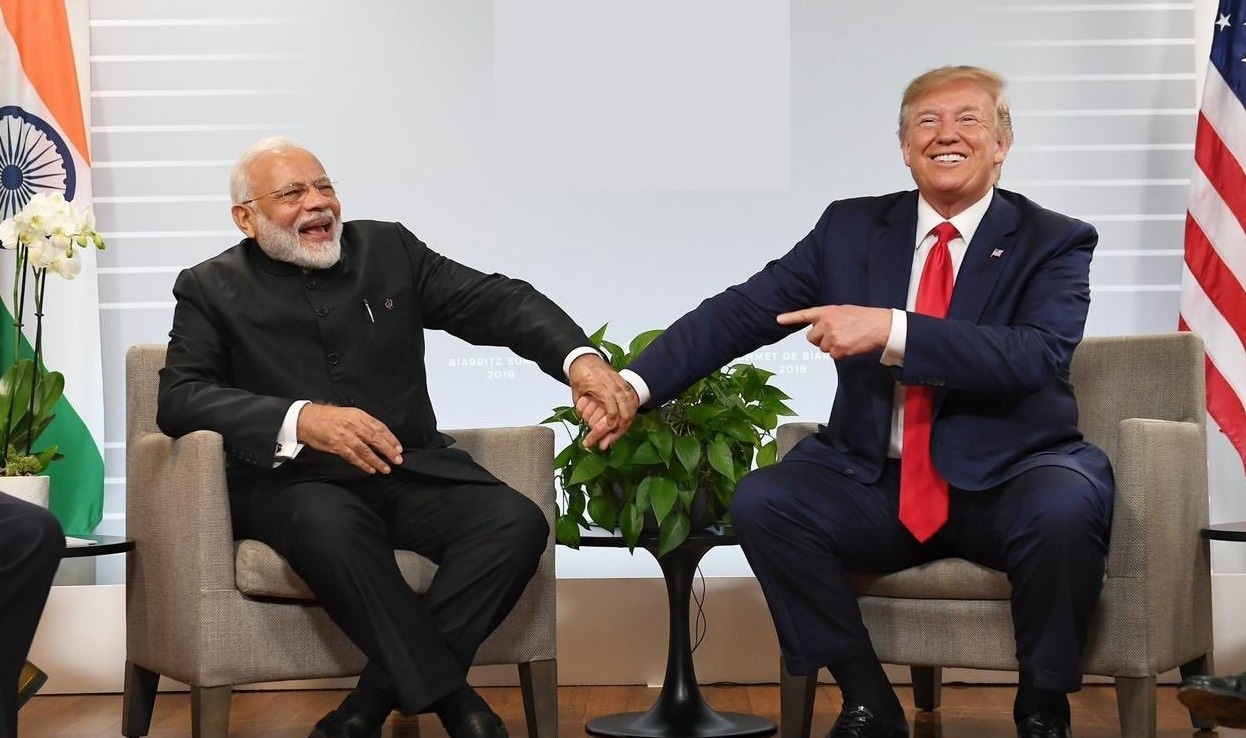
India could be among the worst hit due to US President Donald Trump's latest reciprocal tariffs, even as the two countries agreed to begin negotiations to address trade deficit issues.
Trump, on Thursday, ordered his administration to consider imposing reciprocal tariffs on numerous trading partners, which could take effect from April this year. Reciprocal tariffs could affect nearly every country, with India, Japan, and the European Union being hit the most.
This decision to impose reciprocal tariff, including India, came moments before he held a bilateral talk with his Indian counterpart Narendra Modi, where they announced a framework to strengthen both sides economically and vowed to deepen every aspect of the partnership.
Trump hailed Modi's decision to announce reductions in tariffs on certain high-duty goods from the US in the Union Budget, "which limits US access into the Indian markets very strongly".
Trump said his decision was forced after efforts to convince India to reduce import taxes had failed. “It's very hard to sell into India because they have trade barriers, very strong tariffs,” said Trump.
Both countries discussed measures to cut down the trade deficits, which now is almost $100 billion. "We want a level playing field, and we can easily make up that deficit with the sale of oil and gas," Trump said. He also said the US would take steps to ultimately provide India with sales of F-35 fighters.
Meanwhile, Modi said that both countries decided to take bilateral trade to $500 billion by 2030. While Trump's motto is 'Make America Great Again', India is moving towards the goal of 'Viksit Bharat 2047', he said.
From ensuring the return of undocumented Indian migrants to cutting import duties of key US goods in the Union Budget, Modi has shown that India is ready to engage with Trump.
On global reciprocal tariffs, Trump told reporters that he would enact import taxes on cars, semiconductors and pharmaceuticals “over and above” the reciprocal tariffs at a later date, Bloomberg News reported.
Trump singled out Japan and South Korea as countries that he believes are taking advantage of the US, and thus could be targeted in his latest push.
The US President has already imposed 10% tariffs on Chinese goods and plans to slap 25% duties on all US steel and aluminum imports next month.
Treasuries in Asia were trading flat in early trade, after a rally in the previous session. The dollar index — which tracks the greenback's performance against a basket of 10 leading global currencies — was 0.2% down at 107.09.

-
Talking Points This Week: Tech Nerves, FII Buying, And A Faraway Banking Shock

The global markets are not shining this Diwali. The exception in the large markets is, India.
-
Midterm Rally Lasted A Day. The Hard Reality Of A Divided US May Last Two Years | Opinion
Between a contested AI boom, a debt ceiling that arrives in 2027 and a president with every incentive to act alone, the next two years may prove more volatile than the first day's rally suggests.
-
Blue Wave Will Derail the AI Trade but Won't Dismantle the AI Era | Unhedged Position
The Democrats' sweep of the US Congress will see politics collide with economic forces both over the long and short term.
-
It's Time To Take The GST Council's Bet On Trust Global
Payment records can prove India's services exports, and clear, proportionate rules can bring foreign digital sellers into the tax net.
-
Opinion | India at 38: From Innovation Overperformer to Innovation Powerhouse
India now has 453 VC-backed deep science startups, 18 of them late-stage, after 117 percent growth since 2020. Laurus Labs, at USD 9.3 billion, is the most valuable deep science company in any middle-income economy outside China.
-
Navigating Energy Crossroads: S Jaishankar's Call For Diversified Supply Chains At G20 Ministerial Meeting
As geopolitical fault lines continue to test maritime trade routes and commodity flows, Jaishankar's message remains pertinent: true economic resilience requires open markets, protected transit lines, and a genuine commitment to multilateral cooperation rather than coercion.
-
Indians Are Travelling, But Not Every Journey Is A Holiday | The Week In Whys
Pilgrims, patients and working women are the real travellers, and the system hasn't quite caught up with them.
-
Getting To Work Costs Women More | The Reason Why
It is not just about women paying more than men. It is about women paying much more in cities than in villages.
-
AI Bias In Investing Cannot Be Eliminated, But It Can Be Governed
Framing is a particularly important example as identical financial information presented in terms of gains rather than losses can lead an LLM to reach a different assessment.









