Is Rs 12,000 Crore Enough For The World’s Biggest Public Health Insurance Plan?
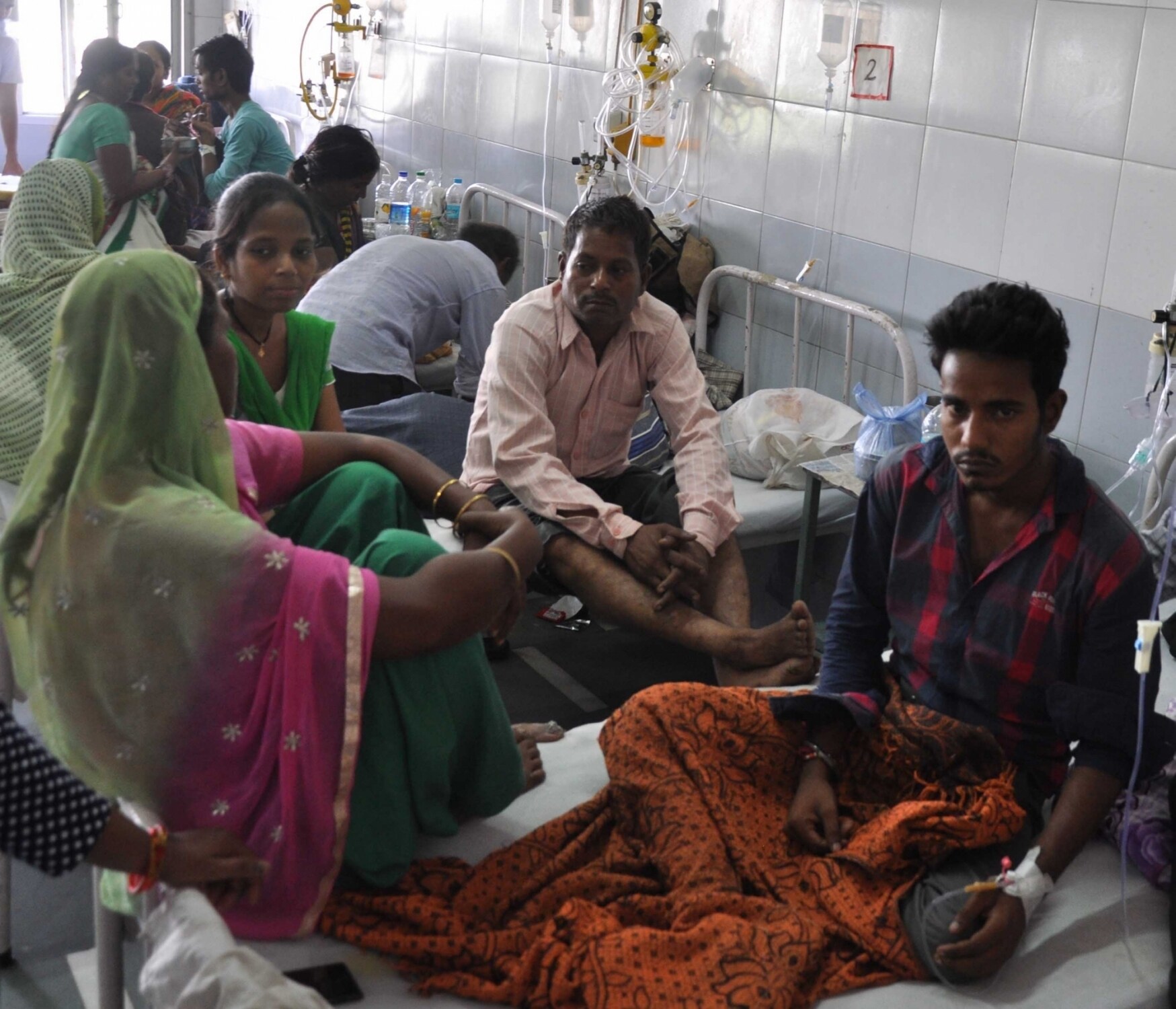
Government's think tank NITI Aayog expects its new health insurance scheme to cost Rs 12,000 crore a year as it looks to cover four in every 10 Indians under what Finance Minister Arun Jaitley called the world's largest such plan. That may not be enough.
The annual premium for the proposed National Health Protection Scheme covering 10 crore families or 50 crore people is expected to be Rs 1,200 each, NITI Aayog said in a presentation. The central government will provide 60 percent of the funds and the rest will come from states. The scheme provides a cover of up to Rs 5 lakh a year for each family living below the poverty line.
“Rs 1,200 per household will be grossly insufficient considering that claims frequency and frauds will higher in the segment the government is looking to insure,” Nidhesh Jain, financial services analyst at banking and asset management firm Investec Bank Plc, told BloombergQuint.
A premium of Rs 4,000-5,000 per household will be more prudent as the government will save on customer acquisition costs and commissions.Nidhesh Jain, Financial Services Analyst, Investec Bank
Indians pay about 62 percent of the health expenditure out of their pocket, World Bank data shows. That's much higher than peers in countries like China (32 percent) and Brazil (25.5 percent). That too in a nation where about one-fifth of the 120-crore population lives below the international poverty line of $1.9 a day, according to a World Bank report. A health cover will protect vulnerable families from falling back below the poverty line in case of hospitalisation.
Andhra Pradesh and Telangana offer state-sponsored insurance schemes for below poverty line families since 2007. They provide a cover of up to Rs 2 lakh for each family every year through 234 private and government hospitals. Andhra Pradesh allocated Rs 421 crore in 2015-16, a premium of Rs 498 a family. The scheme provided cover for 942 ailments.
Tamil Nadu also offers a state-run health cover of Rs 1 lakh each to families with annual income of less than Rs 72,000—in certain procedures it can go up to Rs 1.5 lakh. States like Kerala and Rajasthan also provide such schemes.
The Rs 12,000-crore estimate for the national scheme will be logical only if the government is able to get all the empaneled hospitals to agree to a fixed rate for procedures, said V Jagannathan, chairman and chief executive officer of Star Health and Allied Insurance Company Ltd., which has worked with Tamil Nadu and Andhra Pradesh to offer state-run health cover for below poverty line families. “The premium outgo, however, would still increase by another Rs 5,000-6,000 crore because of medical inflation.”
In the Union Budget 2018, Jaitley made no allocation for the new scheme, saying resources will be provided when needed. He increased the outlay to Rs 2,000 crore for the Rashtriya Swasthya Bima Yojana, an existing cashless scheme that provides a cover of Rs 30,000 for common diseases and surgeries to unorganised sector workers living below the poverty line and up to five of their family members. The new plan will have no such cap.
“The experience of past government-run health insurance schemes which were smaller in benefits and scale shows that adequate pricing is important for the long term,” said Joydeep Roy, partner and leader, insurance at PwC. “Pricing will depend on many factors and the process of enrollment and claim settlement. These need to be worked out and hospitalisation cost escalation controlled. Otherwise, an indicative price of Rs 1,100-1,200 per family may become inadequate after proper actuarial analysis.”
Expenditure Secretary Ajay Narayan Jha said in a press conference on Friday that the Rashtriya Swasthya Bima Yojana will be converted into National Health Protection Scheme. It will be rolled out in six to eight months, Finance Secretary Hasmukh Adhia told BloombergQuint.
Also Read: Union Budget 2018: Modicare May Only Take Off In FY20, Says Finance Secretary Adhia
The central government will provide Rs 6,000 crore in the first year for the fully sponsored scheme with no premium and co-payment by beneficiaries. It will be offered either through an insurance or trust model.
The amount would still be too large for the government to cover it alone. Implementation has to be through public-private partnerships with insurance companies, said Roy. The biggest challenge would be uniform healthcare delivery and pricing. “Hospital costs vary widely across the country and there is no central healthcare regulator.”

-
A New Samvat Wishlist: Inclusive Prosperity And Human Development

India has strengthened its economic foundations through infrastructure, digital access and enterprise. Its next growth chapter must deepen productivity, create better livelihoods and widen participation in prosperity.
-
Love, Sex Aur Dhokha: The Audacious Plot To Spy On Jensen Huang
A Taipei dinner, a Singapore chip buyer and a suspected Chinese asset: inside the alleged spy operation that got close to NVIDIA's Jensen Huang.
-
Ten Things I Learnt This Samvat
Patience can be a trap. Cheap stocks can stay cheap. Leverage can wipe you out. What did Samvat 2082 teach us? Niraj Shah writes on 10 lessons from the year gone by.
-
Talking Points This Week: Tech Nerves, FII Buying, And A Faraway Banking Shock
The global markets are not shining this Diwali. The exception in the large markets is, India.
-
Midterm Rally Lasted A Day. The Hard Reality Of A Divided US May Last Two Years | Opinion
Between a contested AI boom, a debt ceiling that arrives in 2027 and a president with every incentive to act alone, the next two years may prove more volatile than the first day's rally suggests.
-
Blue Wave Will Derail the AI Trade but Won't Dismantle the AI Era | Unhedged Position
The Democrats' sweep of the US Congress will see politics collide with economic forces both over the long and short term.
-
It's Time To Take The GST Council's Bet On Trust Global
Payment records can prove India's services exports, and clear, proportionate rules can bring foreign digital sellers into the tax net.
-
Opinion | India at 38: From Innovation Overperformer to Innovation Powerhouse
India now has 453 VC-backed deep science startups, 18 of them late-stage, after 117 percent growth since 2020. Laurus Labs, at USD 9.3 billion, is the most valuable deep science company in any middle-income economy outside China.
-
Navigating Energy Crossroads: S Jaishankar's Call For Diversified Supply Chains At G20 Ministerial Meeting
As geopolitical fault lines continue to test maritime trade routes and commodity flows, Jaishankar's message remains pertinent: true economic resilience requires open markets, protected transit lines, and a genuine commitment to multilateral cooperation rather than coercion.









