India's Retail Inflation Eases To The Lowest In A Year At 4.75% In May
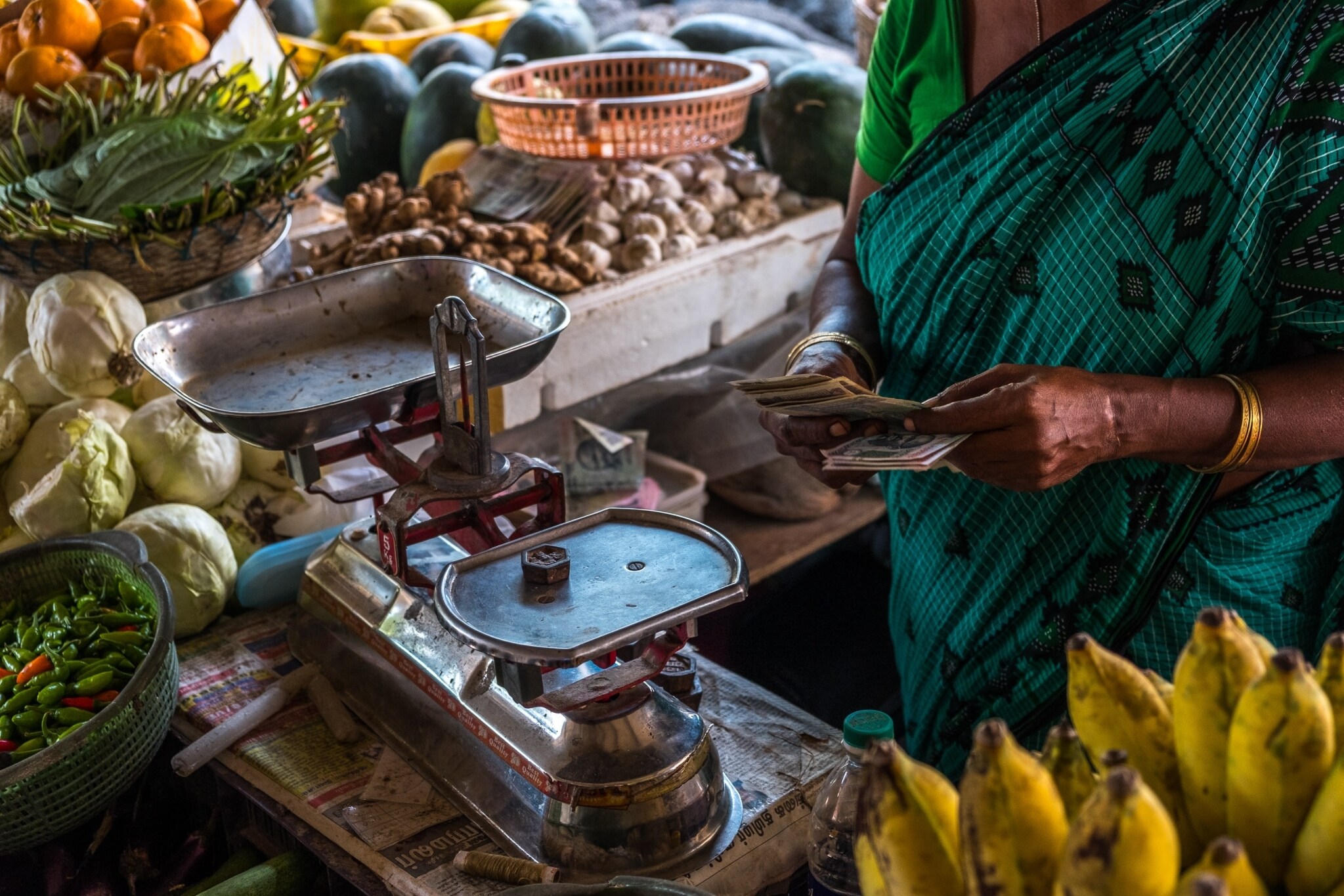
India's retail inflation eased to the lowest since May last year, led by continued reduction in fuel cost and steady food prices.
The Consumer Price Index-based inflation stood at 4.75% in May, as compared to 4.83% in April, according to data from the Ministry of Statistics and Programme Implementation, released on Wednesday.
A panel of economists polled by Bloomberg estimated inflation at 4.85% for the month. Inflation has been within the central bank's tolerance band of 4% plus or minus 2% since September last year.
Food and beverage inflation came in at 7.87%, the same as in April. Fuel prices contracted by 3.83% in May, as compared to a 4.24% decline in the previous month.
Core inflation—that excludes food and fuel—eased to a series low of 3.12%, as compared to 3.25% last month, according to data from Bloomberg.
The inflation print comes just under a week after the Reserve Bank of India kept the benchmark repo rate unchanged for the eighth time at 6.5%, even as it reiterated its focus on food inflation trajectory despite easing core inflation.
Food products continue to push up inflation, with cereals, pulses, vegetables and meat/fish products pushing up the index, said Madan Sabnavis, chief economist at Bank of Baroda. The present heatwave has taken a toll on vegetable supplies, with prices of potatoes, tomatoes and onions rising, which will continue for another month or two, he said.
Adequate volume and dispersion of rainfall in the season remain key to improve the prospects for Kharif crop and replenish the reservoir levels, which would be crucial to support the Rabi crop, and rein-in food prices, said Aditi Nayar, chief economist at ICRA.
Future inflation numbers will be driven by base effects, especially after June and from July onwards, Sabnavis said.
Internals
Cereal prices rose by 8.7%, as against 8.6% in April.
Inflation in meat and fish was at 7.3%, as compared with 8.2% the previous month.
Inflation in eggs was at 7.6%, as against 7.1% last month.
Inflation in milk and milk products was at 2.6%, as compared with 3%.
Prices of oils and fats declined 6.7%, as opposed to a 9.4% contraction in the previous month.
Vegetable prices rose 27.3%, as compared with 27.8% last month.
Pulses inflation gained 17.1%, as against 16.8%.
Clothing and footwear inflation was at 2.7% versus 2.9% in the previous month.
Housing inflation was at 2.6% versus 2.7%.
This print is likely to be of little consequence for the RBI MPC, which will prefer to take a forward-looking view, opting to see through near-term disinflation in Q2 FY24 and base-effect driven pullback, said Radhika Rao, economist at DBS Bank.

-
Blue Wave Will Derail the AI Trade but Won't Dismantle the AI Era | Unhedged Position

The Democrats' sweep of the US Congress will see politics collide with economic forces both over the long and short term.
-
It's Time To Take The GST Council's Bet On Trust Global
Payment records can prove India's services exports, and clear, proportionate rules can bring foreign digital sellers into the tax net.
-
Opinion | India at 38: From Innovation Overperformer to Innovation Powerhouse
India now has 453 VC-backed deep science startups, 18 of them late-stage, after 117 percent growth since 2020. Laurus Labs, at USD 9.3 billion, is the most valuable deep science company in any middle-income economy outside China.
-
Navigating Energy Crossroads: S Jaishankar's Call For Diversified Supply Chains At G20 Ministerial Meeting
As geopolitical fault lines continue to test maritime trade routes and commodity flows, Jaishankar's message remains pertinent: true economic resilience requires open markets, protected transit lines, and a genuine commitment to multilateral cooperation rather than coercion.
-
Indians Are Travelling, But Not Every Journey Is A Holiday | The Week In Whys
Pilgrims, patients and working women are the real travellers, and the system hasn't quite caught up with them.
-
Getting To Work Costs Women More | The Reason Why
It is not just about women paying more than men. It is about women paying much more in cities than in villages.
-
AI Bias In Investing Cannot Be Eliminated, But It Can Be Governed
Framing is a particularly important example as identical financial information presented in terms of gains rather than losses can lead an LLM to reach a different assessment.
-
Joining The Dots | Dark Skies, Steady Diya: Why Hope Holds This Diwali
With war, a weak rupee and foreign outflows weighing on sentiment, policymakers at the NDTV World Summit and market veterans at NDTV Profit Ignite: Diwali Edition offered the same advice: stay invested and filter out the noise.
-
The Curious Case of Equitas Small Finance Bank And A CEO Who Quit For Stock
PN Vasudevan believes persistent investor concerns over a perceived conflict of interest had become a governance overhang on Equitas Small Finance Bank's stock, even as the lender improved profitability and asset quality.










