India Is Going Abroad For Critical Minerals. But It May Take Years To Pay Off | The Reason Why
Although India's steps are in the right direction, they remain modest compared with India's growing dependence.
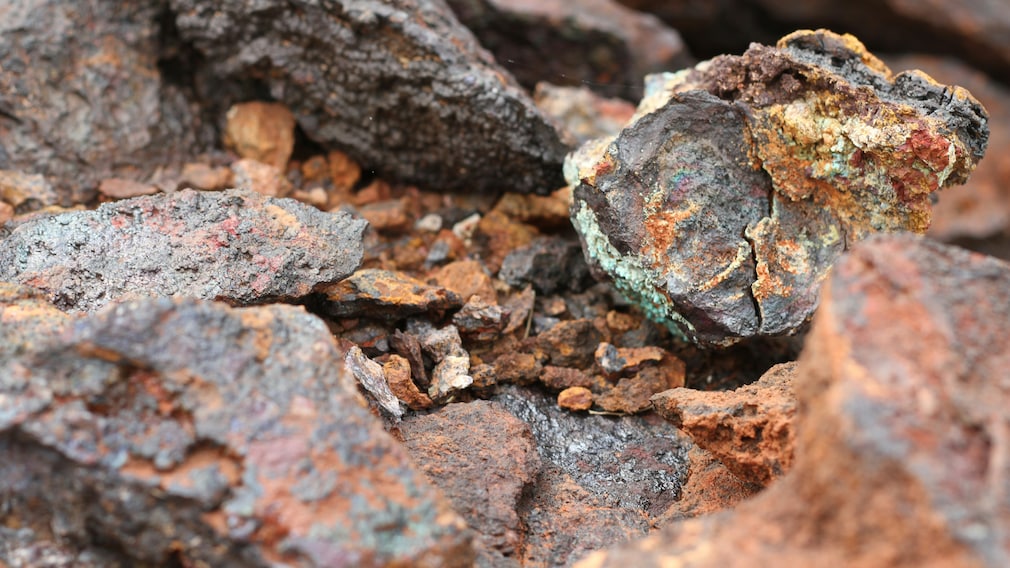
In 2015, India's Prime Minister Narendra Modi visited Mongolia. He was the first Indian PM to do so. India needed a small piece of Mongolia's vast reserves of coal, copper and other minerals. For years, policymakers explored routes through China and, later, Russia. Each came with logistical and geopolitical problems.
More than a decade later, that has reached a notable step. Last month, Steel Authority of India Ltd. (SAIL) brought one tonne of Mongolian coking coal to India for testing by flight.
As India grows, it will need more coal, copper, lithium, rare earths and other minerals. Some are scarce at home, while others lack adequate processing and refining capacity. That is why India is looking overseas for mines, offtake agreements and long-term supply deals. But signing an agreement is only the first step.
Resources still have to move from exploration and mining to processing, transportation, and finally to an Indian manufacturer. That takes time. This one-tonne Mongolian shipment makes that clear.
India's Lithium Play Across Continents
Established by National Aluminium Corporation (NALCO), Hindustan Copper and Mineral Exploration and Consultancy Limited (MECL), Khanij Bidesh India Limited (KABIL) has been tasked with securing minerals overseas.
Its most important project is in Argentina, where it has rights to five lithium-brine blocks. The project has moved more slowly than initially expected, with commercial production now expected around 2030.
India has also explored Australian lithium assets. KABIL, along with other public sector enterprises, has explored five Australian lithium projects. The consortium lost competitive bids for two projects to South Korea's POSCO, while its evaluation of two others is ongoing. A fifth project was found unsuitable for investment.
High valuations, volatile lithium prices and strong international competition made these deals difficult. India also lacks a well-developed value chain from lithium ore to battery materials and cells, making such investments harder to justify commercially.
NMDC is pursuing a broader approach through its Australian subsidiary Legacy Iron, which has interests across iron ore, nickel, lithium and rare earths.
Lohum, India's critical minerals company, had a different journey in Zimbabwe. The company has acquired rights to 10 lithium-bearing blocks and shipped its first lithium ore last month. It plans to invest around $100 million in Zimbabwe while also developing downstream battery-material capacity in India. The company is also looking for nickel assets in Indonesia and the Philippines.
This year, Zimbabwe suspended exports of raw minerals and lithium concentrates to encourage more processing within the country. For Indian companies, that means they may have to process the mineral in the host country before sending it to India. That means more investments abroad.
Also Read | India Is Easy To Enter, Harder To Attract | The Week In Whys
Lloyds & Adani Tap Copper's Immediate Need
Now, turn to copper. India's growing demand for copper makes an urgent case to secure the metal before it's too late. Without significant new mine development, India's copper concentrate import dependence could rise to 91–97% by 2047, according to the Ministry of Mines.
That gives Indian companies a strong commercial reason to look for copper mines overseas. And two of the biggest efforts are coming from Lloyds Metals and Adani.
Lloyds Metals and Virtus, a US-based mining company, acquired Chemaf, a copper and cobalt producer in the Democratic Republic of Congo (DRC), through a distressed-asset transaction. The deal gave them control of both mines and processing facilities. Like Zimbabwe, the DRC is increasingly pushing for more local beneficiation.
Adani Enterprises is pursuing another route: its wholly owned subsidiary Kutch Copper operates a copper smelting and refining complex at Mundra. It is exploring opportunities to secure raw materials.
In Australia, Kutch Copper has signed a non-binding Memorandum of Understanding (MoU) with Caravel Minerals for potential funding and long-term copper offtake. The project is still being developed, with a final investment decision targeted for 2027 and production still several years away. It has also signed an MoU with Chile's Codelco to examine three copper projects.
Hindustan Copper is also separately working with Codelco.
Also Read | Wrong Labels, High Pesticide Residues Holding Back Agri Exports | The Reason Why
Other Deals
There's more.
Hyderabad-based Midwest is exploring rare-earth opportunities in Indonesia, while Deccan Gold is exploring lithium and other critical minerals in Mozambique. Sakariya Mines is developing a graphite project in Tanzania. Most of these projects remain at the exploration or evaluation stage.
Meanwhile, Coal India is exploring lithium opportunities in Chile and other minerals. It has also set up a commodity trading platform in Singapore to explore opportunities in global mineral markets.
At the more mature end, JSW Steel and International Coal Ventures Pvt. Ltd. (ICVL) have used overseas coal assets in Mozambique and elsewhere to support their Indian steel operations.
Final Take
Ultimately, the real test is not what India acquires but what reaches Indian factories. An MoU, a mining block or an overseas acquisition is only the start. The resource still has to be mined, processed, transported and delivered at a competitive cost.
Several challenges may arise in the process. The ore may be difficult to process. Mines need roads, railways, power and water connectivity. Host country rules can change, local opposition can emerge, and commodity prices can move against the project. By the time a mine starts producing, the economics may look different.
Although India's steps are in the right direction, they remain modest compared with India's growing dependence, and most projects are still years away from meaningful production.
Disclaimer: The views expressed in this article are solely those of the author and do not necessarily reflect the opinion of NDTV Profit or its affiliates. Readers are advised to conduct their own research or consult a qualified professional before making any investment or business decisions. NDTV Profit does not guarantee the accuracy, completeness, or reliability of the information presented in this article
(Disclaimer: New Delhi Television is a subsidiary of AMG Media Networks Limited, an Adani Group Company.)
-
Why Swapping Your Old Gold Can Trigger A Rs 5 Lakh Tax Bill, And How You Can Avoid It Legally

Swapping old gold for new is taxed as a sale and a fresh purchase. Getting your own gold remade can cut most of that bill, though it has its own costs.
-
The AI Trade is Done. The Real Opportunity for Investors Starts in 2027 | Unhedged Position
As pureplay AI stocks plunge and circular, capex-led financing unwinds, 2027 is set to be a year of reckoning for AI companies. Yet the bust clears the way for a better opportunity for investors in 2027 -- shifting the spotlight from AI builders to the companies using AI.
-
Leadership As Mission: Why The Age Of AI Demands More Human Leadership
Debjani Ghosh examines how AI is changing leadership, arguing that its success must be measured by its impact on people and the accountability of those guiding its use.
-
We May Need Another Tukaram Mundhe To Fight Air Pollution | The Reason Why
Developers may install basic measures such as sprinklers and green nets, resume work, and continue violating rules when this equipment stops working.
-
Extracting Value From Battery Scrap Could Be Challenging For India | The Reason Why
A discarded lithium-ion battery still contains valuable materials such as lithium, nickel and cobalt. These can be recovered and reused. When such batteries are crushed and shredded, they produce a dark powder called black mass.
-
One El Nino, India Can Handle. Two Could Break The Granary
India's grain stocks can absorb one bad year, but a second El Nino could drain the buffer in two to three years, economists say.
-
India's Troika Of Good Luck | Joining The Dots
As Jensen Huang's exit drags Nvidia down, a cooling AI trade and resilient earnings have revived investor interest in India. A likely RBI rate hike looms.
-
Talking Points This Week: Leadership Shock At Nvidia, Earnings Strength, And The Fog Over Hormuz
The Anthropic IPO pricing and first trading day, Nvidia's upcoming earnings, and any fresh signals from Iran will set the tone for the following week.
-
Signature Play: The Classic Cocktail Is Dead. Or Is It?
Classic cocktails are disappearing from India's cocktail menus. But they're still being ordered, taught to bartenders and borrowed from. So, who's really having the last drink?
-
A New Samvat Wishlist: Inclusive Prosperity And Human Development
India has strengthened its economic foundations through infrastructure, digital access and enterprise. Its next growth chapter must deepen productivity, create better livelihoods and widen participation in prosperity.









