Household Debt Rises, Formal Finance Makes Deeper Inroads: SBI Research
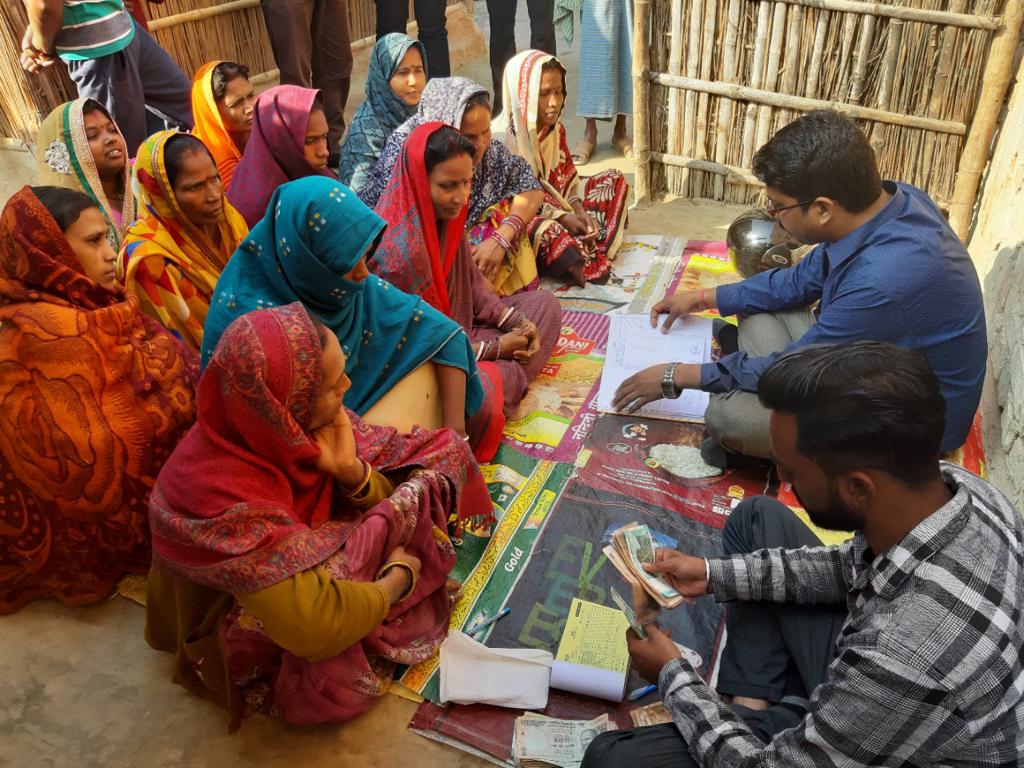
India's household debt rose steadily during the 2012-2018 period, with rural households seeing a steeper rise, according to a survey.
The average amount of debt among rural households rose 84%, while urban households saw an increase of 42% over this six-year period, the latest ‘All India Debt And Investment Survey' released on Sept. 10 showed. The survey is conducted periodically and released with considerable delays.
“State-wise trends indicate that the rural households' average debt more than doubled in 18 states for the six-year period ended 2018, while seven states witnessed the same for urban households,” said SBI Economic Research in an analysis of the survey.
Importantly, five states, including Maharashtra, Rajasthan and Assam, witnessed a simultaneous doubling in average debt across both urban and rural households during this period.Soumya Kanti Ghosh, Chief Economist, SBI
While debt rose, assets held by households also increased. Still, the debt-asset ratio deteriorated modestly.
For rural areas, the debt-asset ratio was at 3.8 in 2018 compared with 3.2 in 2012. For urban households, it increased from 3.7 to 4.4.
Kerala, Madhya Pradesh and Punjab witnessed deterioration of at least 100 basis points in debt asset ratio over the six-year period ended 2018. “On balance, the pace of asset creation seems to have kept pace almost on an even keel across both rural and urban areas, with a marginal tilt towards the latter,” SBI Research said.
Access To Institutional Finance Improves
For decades, India has tried to push formal finance deeper into the hinterlands, in the hope that easier availability of institutional credit will break the hold that moneylenders have historically had in rural areas.
The efforts, according to the survey data, are increasingly paying off.
The share of outstanding cash debt from non-institutional credit agencies has declined significantly to 34% in 2018 from 44% in 2012, SBI Economic Research said in its report analysing the survey. “Notably, almost all states have registered steep decline in non-institutional credit in rural areas, indicating the increase in formalisation of the economy.”
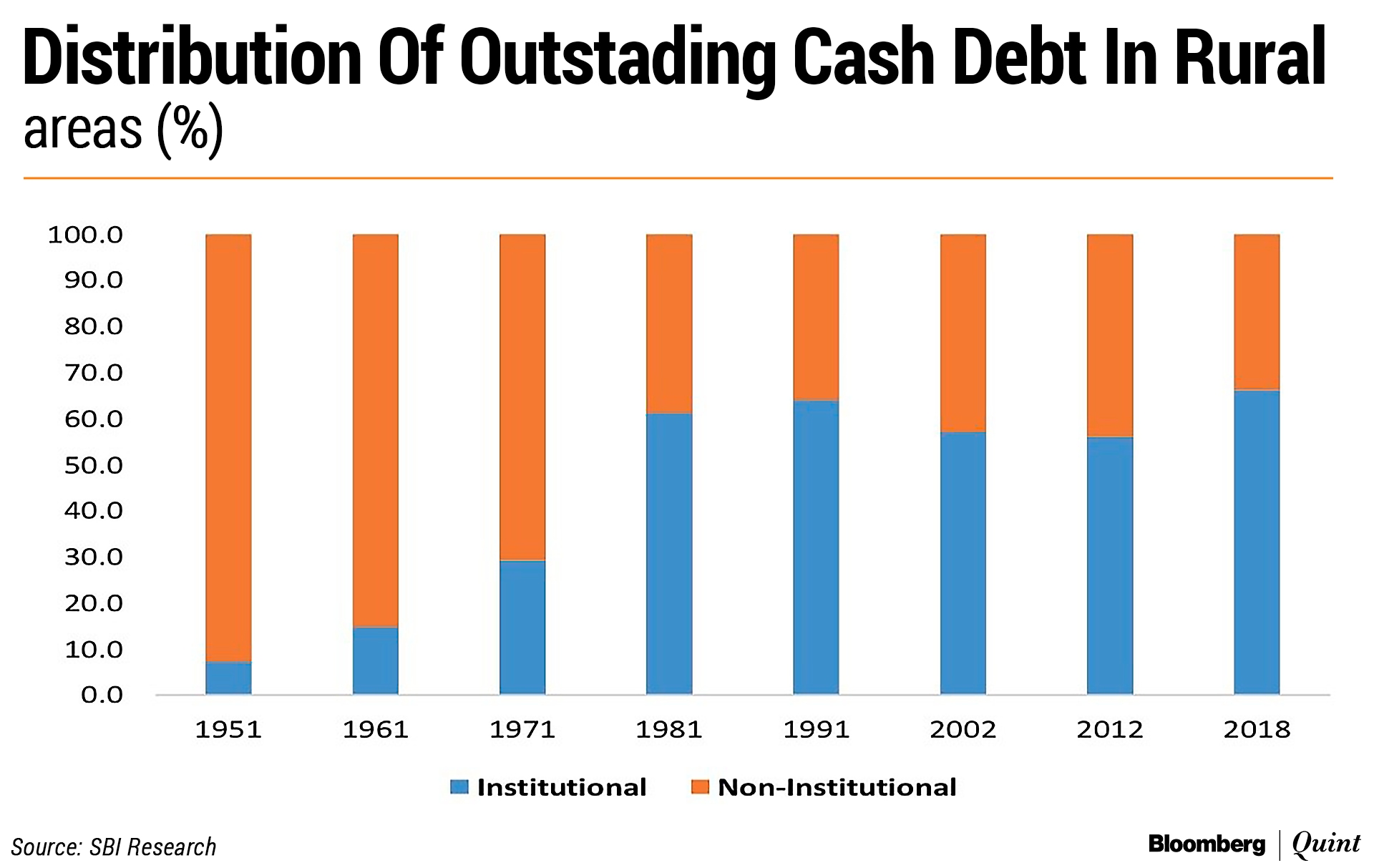
The share of non-institutional credit has declined significantly in case of Bihar, West Bengal, Rajasthan, Haryana and Gujarat.
Even in Haryana and Rajasthan, that witnessed loan waiver schemes, the share of non-institutional credit declined contrary to popular perception, the report said.
“This could be explained by significant increase in penetration of Kisan Credit Cards in these two states. Our estimates show that the number of KCC cards has jumped five times over the seven-year period ended 2020,” Ghosh wrote.

-
Talking Points This Week: Tech Nerves, FII Buying, And A Faraway Banking Shock

The global markets are not shining this Diwali. The exception in the large markets is, India.
-
Midterm Rally Lasted A Day. The Hard Reality Of A Divided US May Last Two Years | Opinion
Between a contested AI boom, a debt ceiling that arrives in 2027 and a president with every incentive to act alone, the next two years may prove more volatile than the first day's rally suggests.
-
Blue Wave Will Derail the AI Trade but Won't Dismantle the AI Era | Unhedged Position
The Democrats' sweep of the US Congress will see politics collide with economic forces both over the long and short term.
-
It's Time To Take The GST Council's Bet On Trust Global
Payment records can prove India's services exports, and clear, proportionate rules can bring foreign digital sellers into the tax net.
-
Opinion | India at 38: From Innovation Overperformer to Innovation Powerhouse
India now has 453 VC-backed deep science startups, 18 of them late-stage, after 117 percent growth since 2020. Laurus Labs, at USD 9.3 billion, is the most valuable deep science company in any middle-income economy outside China.
-
Navigating Energy Crossroads: S Jaishankar's Call For Diversified Supply Chains At G20 Ministerial Meeting
As geopolitical fault lines continue to test maritime trade routes and commodity flows, Jaishankar's message remains pertinent: true economic resilience requires open markets, protected transit lines, and a genuine commitment to multilateral cooperation rather than coercion.
-
Indians Are Travelling, But Not Every Journey Is A Holiday | The Week In Whys
Pilgrims, patients and working women are the real travellers, and the system hasn't quite caught up with them.
-
Getting To Work Costs Women More | The Reason Why
It is not just about women paying more than men. It is about women paying much more in cities than in villages.
-
AI Bias In Investing Cannot Be Eliminated, But It Can Be Governed
Framing is a particularly important example as identical financial information presented in terms of gains rather than losses can lead an LLM to reach a different assessment.









