Health Groups Seek Highest Possible Tax Levy On Tobacco Items
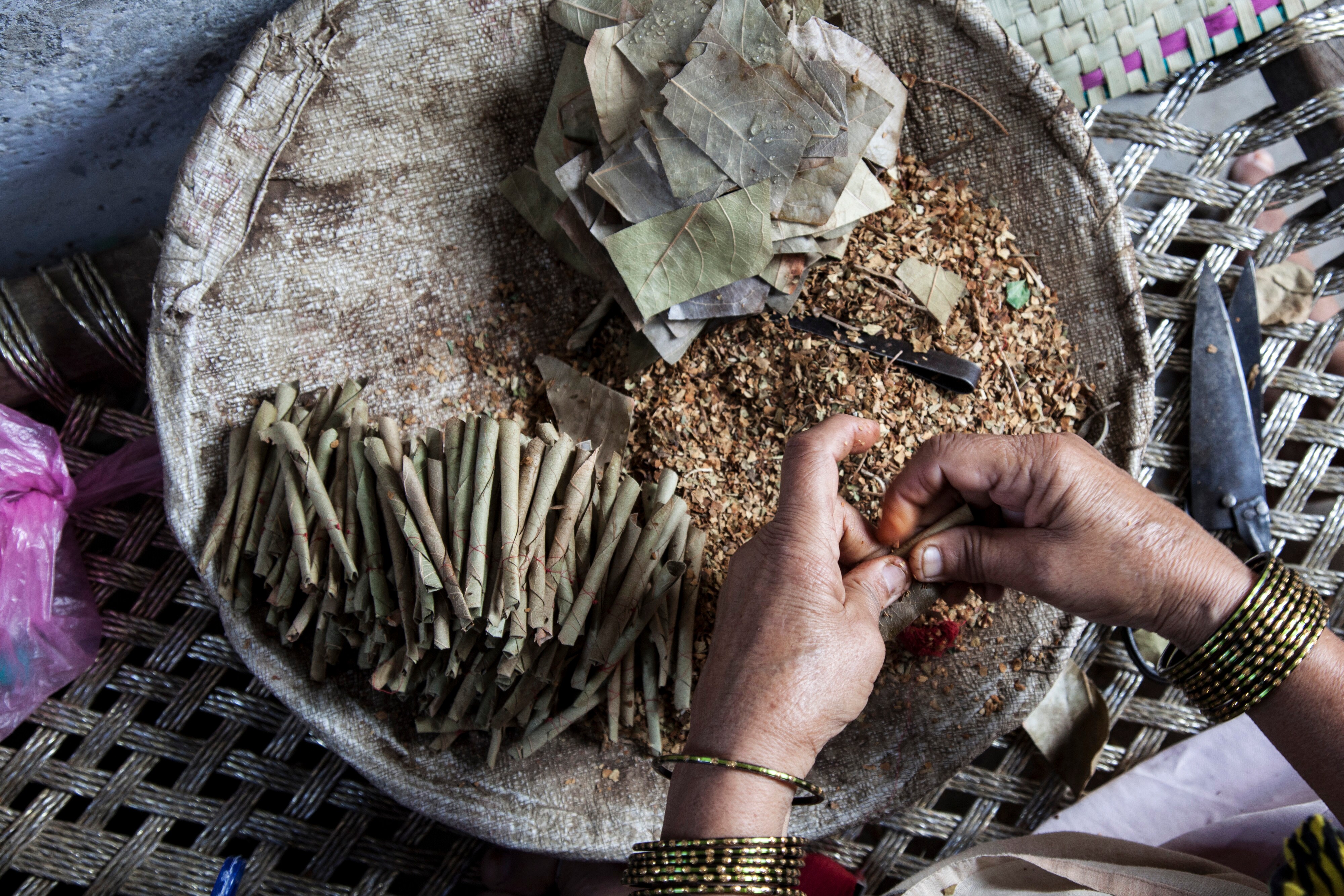
Ahead of a crucial GST Council meet on February 18, many public health groups have reached out to Union Finance Minister Arun Jaitley, urging him to ensure that all tobacco products especially bidis are placed in the demerit good category at the 28 percent GST rate.
Besides, they have also sought an additional levy of the highest possible rate of cess on such tobacco products.
These groups have also strongly recommended that tobacco products including bidis should be taxed at uniformly high rates under the new indirect tax framework expected to kick in from July 1 this year.
The delegation from Voice of Tobacco Victims (VOTV) has recently sent a memorandum to Jaitley and met the finance ministers of at least 20 states of the country.
The move is significant as it comes just days ahead of the GST Council meet which is expected to discuss the rate slabs for different goods and services under the GST mechanism.
With the total tax burden currently at 53 percent, 19.5 percent and 56 percent, respectively for cigarettes, bidis and smokeless, tobacco taxation in India is much lower than the level recommended by the WHO, according to which the tax burden should represent at least 75 percent of the retail price.
These groups also expressed disappointment that the Union Budget 2017-18 did not address this anomaly with an effective tax increase of 6 percent, lower than at least the 10 percent increase witnessed in previous budgets.
With 10 lakh tobacco triggered deaths every year, public health advocates believe that the government's taxation policies in the tobacco sector have left public health concerns unaddressed.
Classifying different tobacco products in the lower rate GST slabs will be a distortion and will send a wrong message and promote the use of products like bidis, said Ashima Sarin, director, Voice of Tobacco Victims (VOTV), adding bidis are the most commonly used tobacco product in India, accounting for 64 percent of all tobacco consumption and are disproportionately consumed by the poor.
Bidis contribute to the majority of the 10 lakh deaths attributable to tobacco as well as the staggering economic burden caused by tobacco use, she said.
The excise increase proposed on tobacco products in the recent Union Budget of 2017-18 fell far short of even previous budgets, since the proposed increase in Additional Duties of Excise and Basic Excise duties (BED) on various tobacco products amounted to an increase of only 6 percent in the current budget, the groups against tobacco consumption argued.
Most importantly like earlier years, the budget also failed to increase the excise taxes on tendu rolled hand-made bidis which almost 98 percent of the bidis smokers consume instead increasing it on paper-rolled bidis which has a negligible market share – once again keeping bidis a very affordable and practically unregulated poison for its 67.5 million bidi users, according to health groups.
The tobacco industry knows how to exploit its consumers and this is why it increases prices much more than the tax increases that the government proposes every year. It is unfortunate that the government doesn't take a cue from this and increase taxes on tobacco products substantially.Rijo John, Assistant Professor, IIT Jodhpur
As against a normally expected 10-15 percent increase in taxes on tobacco products, a mere increase of 6 percent announced in the budget is a boon to the tobacco industry.
Unless corrective measures are taken in the impending GST by bringing all tobacco products under the highest demerit rate of 28 percent plus the highest possible cess, it would be a severe blow to the public health in India," said Pankaj Chaturvedi, Oncologist, Tata Memorial Hospital, Mumbai, who was recently in Kota sees no logic in giving tax subsidy to a product that carries a product warning that it kills.
"In fact, it is the cheapest and unregulated poison currently available in the market," Chaturvedi said adding with current tax pattern, consumer and the nation are losers, whereas handful of business families (bidi and chewing tobacco industry owners) are making vulgar profits by selling this weapon of mass destruction.
"Tobacco consumption has reached a dangerous level and requires immediate attention by law makers," he said.
According to Global Adult Tobacco Survey (GATS), India has the second largest number of tobacco users (275 million or 35 per cent of all adults in India) in the world –- of these at least 10 lakh die every year from tobacco related diseases.
The total direct and indirect cost of diseases attributable to tobacco use was a staggering Rs 1.04 lakh crore ($17 billion) in 2011 or 1.16 percent of India's GDP.
Approximately, 48 percent of men and 20 percent of women consume tobacco (35 percent of the adult population overall) – of these at least 10 lakh are dying each year from tobacco related diseases.
Bidis comprise 48 percent of the tobacco market, chewing tobacco 38 percent and cigarettes 14 percent so it is evident that bidis account for a significant portion of those deaths

-
Opinion | India at 38: From Innovation Overperformer to Innovation Powerhouse

India now has 453 VC-backed deep science startups, 18 of them late-stage, after 117 percent growth since 2020. Laurus Labs, at USD 9.3 billion, is the most valuable deep science company in any middle-income economy outside China.
-
Navigating Energy Crossroads: S Jaishankar's Call For Diversified Supply Chains At G20 Ministerial Meeting
As geopolitical fault lines continue to test maritime trade routes and commodity flows, Jaishankar's message remains pertinent: true economic resilience requires open markets, protected transit lines, and a genuine commitment to multilateral cooperation rather than coercion.
-
Indians Are Travelling, But Not Every Journey Is A Holiday | The Week In Whys
Pilgrims, patients and working women are the real travellers, and the system hasn't quite caught up with them.
-
Getting To Work Costs Women More | The Reason Why
It is not just about women paying more than men. It is about women paying much more in cities than in villages.
-
AI Bias In Investing Cannot Be Eliminated, But It Can Be Governed
Framing is a particularly important example as identical financial information presented in terms of gains rather than losses can lead an LLM to reach a different assessment.
-
Joining The Dots | Dark Skies, Steady Diya: Why Hope Holds This Diwali
With war, a weak rupee and foreign outflows weighing on sentiment, policymakers at the NDTV World Summit and market veterans at NDTV Profit Ignite: Diwali Edition offered the same advice: stay invested and filter out the noise.
-
The Curious Case of Equitas Small Finance Bank And A CEO Who Quit For Stock
PN Vasudevan believes persistent investor concerns over a perceived conflict of interest had become a governance overhang on Equitas Small Finance Bank's stock, even as the lender improved profitability and asset quality.
-
Talking Points This Week: AI Cash Burn, A Tiger Comeback And An India That Still Finds Its Own Path
India is not immune to higher oil or tighter global liquidity, yet its earnings base is broader, its domestic policy levers are still available.
-
Foreign Investors Own Half Of HDFC Bank and ICICI Bank. An LTCG Cut Could Matter Most Here
Foreign portfolio investors have US$115 billion parked in HDFC Bank, ICICI Bank. If the government cuts long-term capital gains tax, Jefferies says returning foreign money could land here first.










