Have The Government’s Efforts To Support The Rural Economy Had Any Impact?
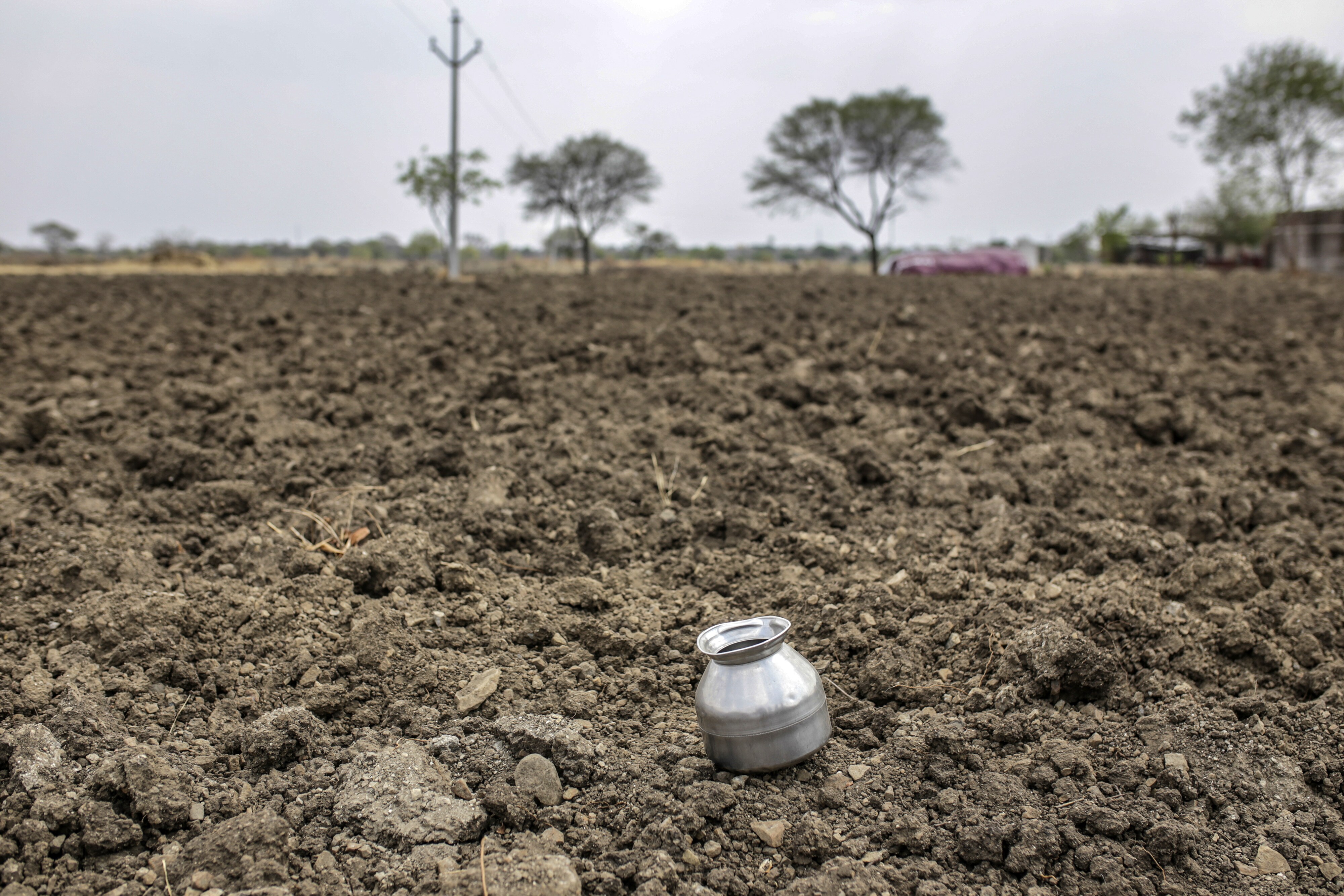
Rural economic indicators, such as inflation and wage growth, remain subdued despite steps taken by the government to help stabilise an economy hit by falling food prices and weak income growth, shows data analysed by BloombergQuint.
Concerns around rural distress had prompted the government to step in with support measures last year. In July 2018, the government stepped up the pace of increase in minimum support prices for the Kharif season. That was followed up with a decision in February to initiate direct cash transfers to farmers under the Pradhan Mantri Kisan Samman Nidhi'.
Cash Transfers: Progress So Far
Data available on the website of the PM Kisan scheme shows that 6.8 crore farmers have received cash transfers so far. The scheme intended to transfer Rs 6,000 to each eligible farmer in three equal instalments of Rs 2,000 each.
The data shows that 6.2 crore farmers received the first instalment, initiated in February this year. About 3.8 crore farmers have received the second instalment too.
Cumulatively, about Rs 20,000 crore has already been disbursed under the scheme.
The higher MSPs and the cash transfers, together with other measures like the Kisan Credit Card scheme, the Pradhan Mantri Fasal Bima Yojana and the old age pension scheme for farmers, were intended to boost and protect farm incomes and, eventually, improve the spending power in the rural economy.
This increased spending power would manifest itself in higher inflation and eventually in a pick-up in wage rates in the rural economy.
Rural Inflation Still Too Low
Inflation data for the last twelve months shows that rural inflation remains subdued and well below urban inflation.
Since January this year, rural inflation has remained range-bound between 1-2 percent. Urban inflation has normalised faster and has remained above 4 percent for the last five months. The weak rural inflation has meant that overall inflation has remained below the 4 percent mark, which is the mid-point of India's inflation target of 4 (+/-2) percent.
Rural food inflation, while rebounding from an eight-month period of disinflation, too has remained low at under 1 percent. In contrast, urban food inflation has risen to above 5 percent in the last three months.
Case Study: Uttar Pradesh, Maharashtra
National averages for inflation levels, however, may not be the best gauge for impact of cash transfers to farmers.
To assess the impact at the state level, BloombergQuint studied the inflation scenario in Uttar Pradesh. The state has seen the largest number of beneficiaries under the PM Kisan scheme, with 1.55 crore farmers getting the first instalment and 1.08 crore farmers getting the second instalment.
The data shows that overall rural inflation and rural prices in the food and beverage category in Uttar Pradesh have risen faster than the pace of increase seen across India. Rural inflation in the state has been above 3 percent for the last five months while inflation in the food and beverages category has risen from a low of -0.52 percent in December 2018 to 3 percent now. At the all-India level, food and beverage inflation remains under 1 percent.
To be sure, data from Uttar Pradesh over a longer period of time suggests that the state has inflation levels higher than the all-India averages. As such, it is difficult to draw a direct linkage between cash transfers and higher inflation at the state level in the state.
A similar analysis across Maharashtra, which has the second-highest number of beneficiaries under PM Kisan, shows a steeper pick-up in food and beverage inflation.
Maharashtra saw disinflation in the food and beverages category in rural areas starting October last year. However, this started to reverse in March. Since then the rebound of inflation in this category has been steeper for Maharashtra when compared to all-India figures.
However, the pick-up in overall rural inflation in Maharashtra has broadly kept pace with the all-India average.
Pick Up In Rural Wages Modest
Rural wages, which could see a second order impact from a cash transfer program, have also shown only a modest uptick in recent months.
Agricultural wages rose by 4.1 percent in June 2019 on an annual basis, moderately higher than the rate of growth last year but sharply lower compared to 2017. Non-agricultural wages exhibited a similar trend, rose by 4 percent for the same month.
Consistently low wage growth is believed to be a key factor behind the slowing consumption in rural areas.
Too Early To Judge?
The recent uptick in wage growth remains insubstantial, said Soumya Kanti Ghosh, chief economic advisor at State Bank of India. The impact of PM Kisan is unlikely to be felt this soon, he added.
Devendra Pant, chief economist at India Ratings and Research, agreed. Low wholesale inflation continues to indicate that agricultural produce is still not fetching a good price. In such circumstances, when income is not growing substantially, then how much difference will an income transfer make, he asked.

-
Love, Sex Aur Dhokha: The Audacious Plot To Spy On Jensen Huang

A Taipei dinner, a Singapore chip buyer and a suspected Chinese asset: inside the alleged spy operation that got close to NVIDIA's Jensen Huang.
-
Ten Things I Learnt This Samvat
Patience can be a trap. Cheap stocks can stay cheap. Leverage can wipe you out. What did Samvat 2082 teach us? Niraj Shah writes on 10 lessons from the year gone by.
-
Talking Points This Week: Tech Nerves, FII Buying, And A Faraway Banking Shock
The global markets are not shining this Diwali. The exception in the large markets is, India.
-
Midterm Rally Lasted A Day. The Hard Reality Of A Divided US May Last Two Years | Opinion
Between a contested AI boom, a debt ceiling that arrives in 2027 and a president with every incentive to act alone, the next two years may prove more volatile than the first day's rally suggests.
-
Blue Wave Will Derail the AI Trade but Won't Dismantle the AI Era | Unhedged Position
The Democrats' sweep of the US Congress will see politics collide with economic forces both over the long and short term.
-
It's Time To Take The GST Council's Bet On Trust Global
Payment records can prove India's services exports, and clear, proportionate rules can bring foreign digital sellers into the tax net.
-
Opinion | India at 38: From Innovation Overperformer to Innovation Powerhouse
India now has 453 VC-backed deep science startups, 18 of them late-stage, after 117 percent growth since 2020. Laurus Labs, at USD 9.3 billion, is the most valuable deep science company in any middle-income economy outside China.
-
Navigating Energy Crossroads: S Jaishankar's Call For Diversified Supply Chains At G20 Ministerial Meeting
As geopolitical fault lines continue to test maritime trade routes and commodity flows, Jaishankar's message remains pertinent: true economic resilience requires open markets, protected transit lines, and a genuine commitment to multilateral cooperation rather than coercion.
-
Indians Are Travelling, But Not Every Journey Is A Holiday | The Week In Whys
Pilgrims, patients and working women are the real travellers, and the system hasn't quite caught up with them.









