GST: Missing Data Points, Lower Revenue Collection And Fiscal Worries
Five months into implementation of the Goods and Services Tax and there is still little clarity on the efficacy of the tax system and the impact on fiscal revenue collections.
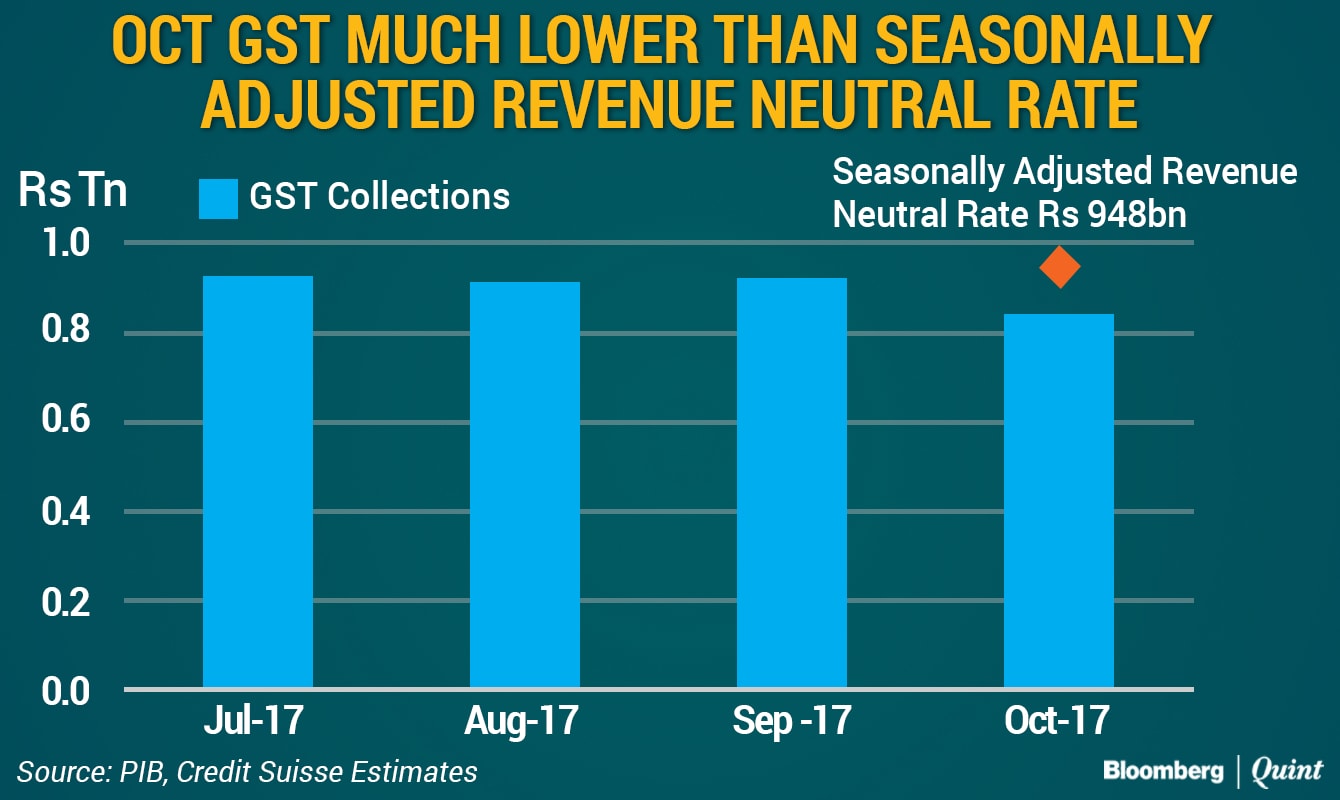
On Monday, the finance ministry reported that as on Nov. 27 it had collected Rs 83,346 as total revenue for October. This compares poorly with the Rs 92,150 crore collected in September (as of Oct. 23), Rs 90,669 crore in August and Rs 92,283 crore in July.
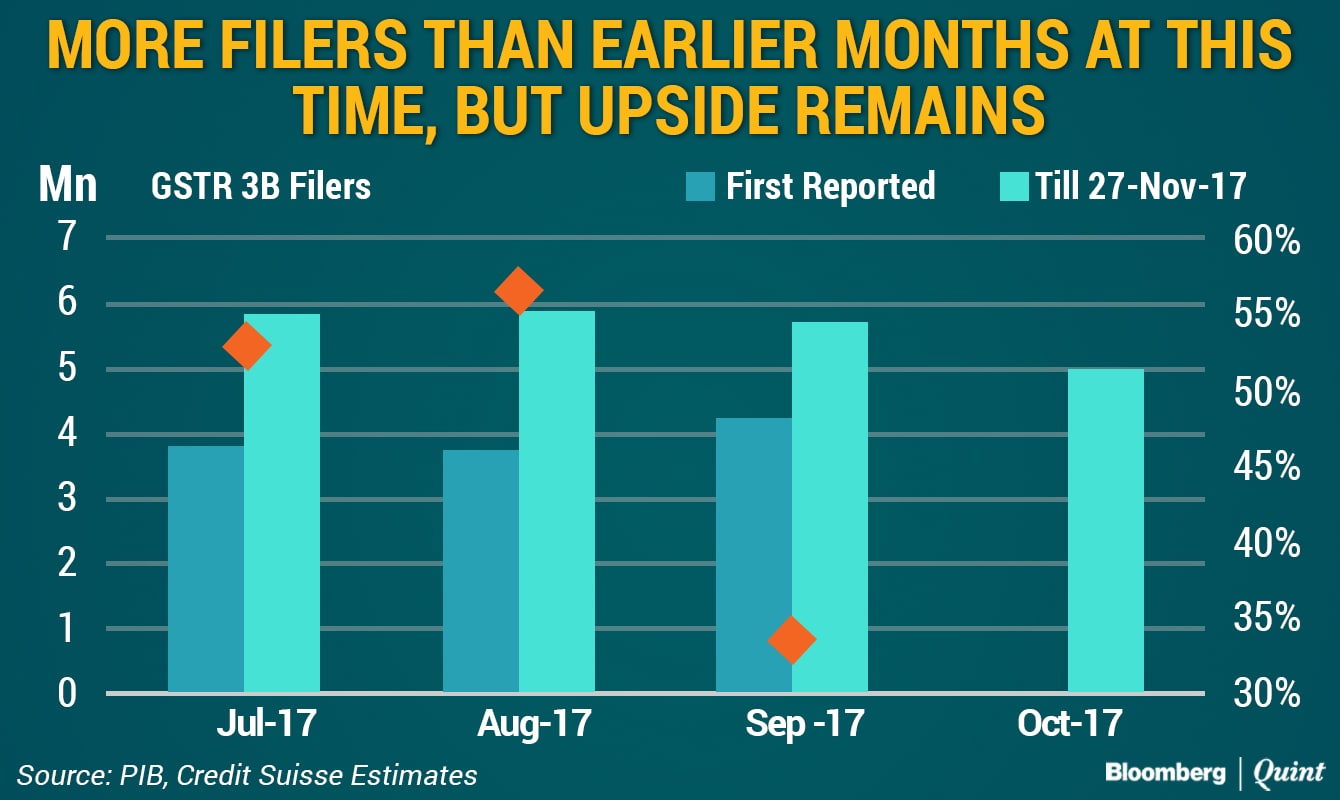
The number of filers is also lower than in previous months—50.1 lakh in October compared to 58.7 lakh, 58.9 lakh and 57.3 lakh for July, August and September, respectively—but could climb due to late filings.
“GST collections, till November 27, remain well below the desired level of indirect tax collections,” said a Kotak Institutional Equities report.
Compliance remains low (around 50 percent) and is unlikely to increase significantly till the complete framework (returns matching, e-way bill, reverse charge, etc.) are implemented fully.Kotak Institutional Equities Report
A Credit Suisse report concurred.
“GST collections fell much short of our estimate of the seasonally adjusted revenue neutral threshold,” it said, also emphasising on missing data.
There are too many data points missing for us to conclude with any confidence whether GST is delivering more revenues than required or less.Credit Suisse Report
The finance ministry's statement indicated that the GST collections were lower on account of
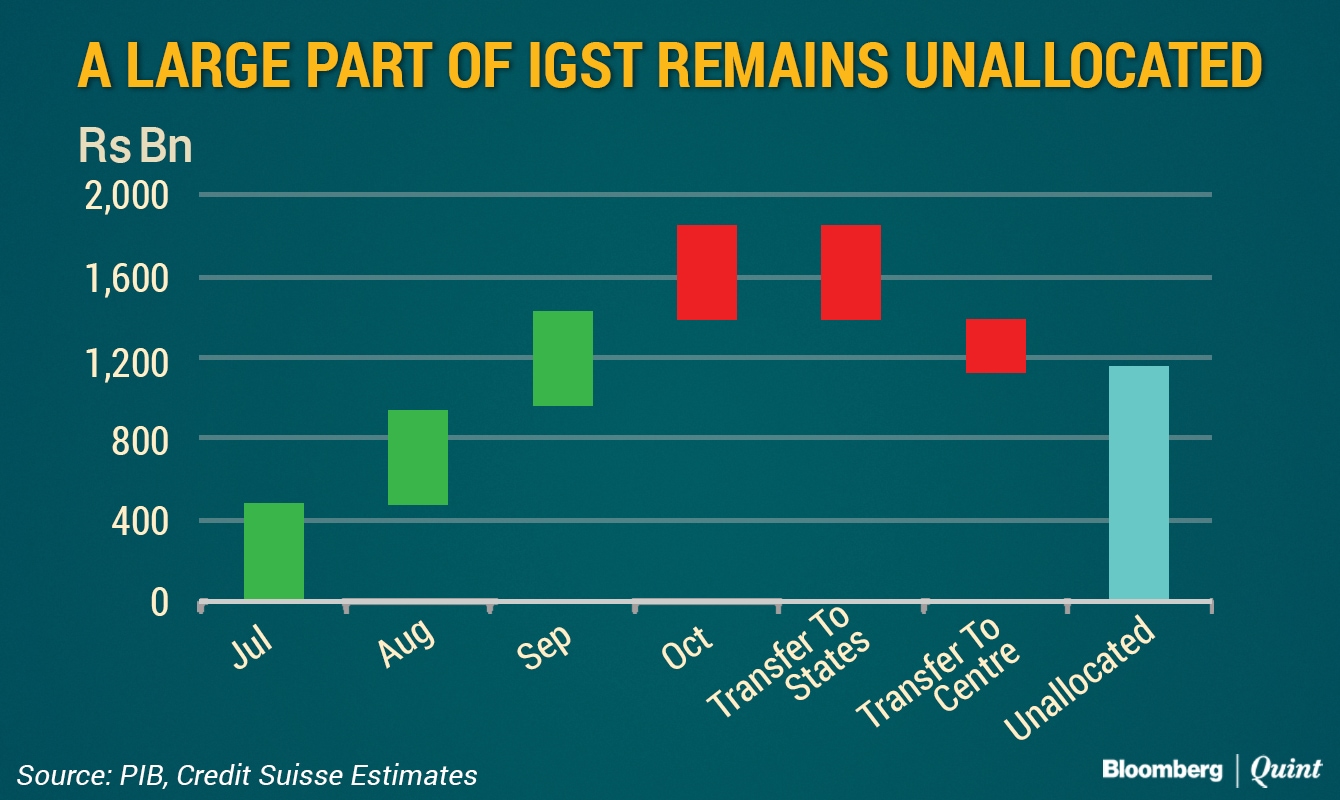
- IGST credit being utilised for payment of SGST and CGST and therefore, the inflow of new taxes is low.
- lower GST rates.
- tax administration of GST is now based on a self-declared tax return.
- delayed implementation of some of the main features of GST such as, matching of returns, e-way bill as well as reverse charge mechanism.
The statement “was quite defensive, emphasizing how self-disclosure and the drop in rates may be responsible for the sequential drop in Oct. GST collections,” noted Credit Suisse.
Kotak expressed concerns about fiscal revenue slippage compared to budgeted levels.
“Our calculations indicate that the government required a monthly run-rate (including petroleum products) of around Rs 750 billion from July 2017 – March 2018. We estimate that the average run-rate has been around Rs 500-550 billion; much lower than the required, till now.”
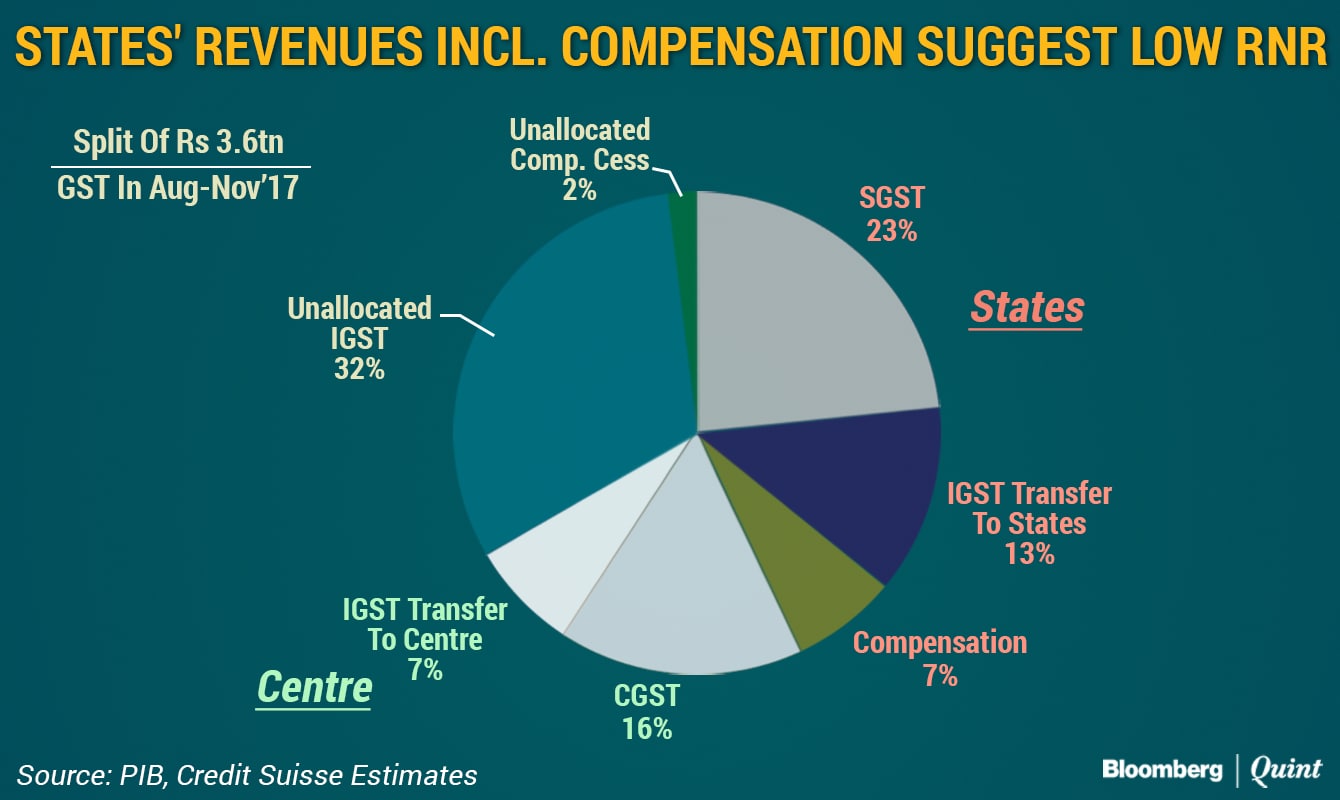
But Credit Suisse remained sanguine about the fiscal impact saying that the data release is likely to add to the fog on macroeconomic parameters in India, but that it remains “comfortable with the aggregate collections of GST”.

-
It's Time To Take The GST Council's Bet On Trust Global

Payment records can prove India's services exports, and clear, proportionate rules can bring foreign digital sellers into the tax net.
-
Opinion | India at 38: From Innovation Overperformer to Innovation Powerhouse
India now has 453 VC-backed deep science startups, 18 of them late-stage, after 117 percent growth since 2020. Laurus Labs, at USD 9.3 billion, is the most valuable deep science company in any middle-income economy outside China.
-
Navigating Energy Crossroads: S Jaishankar's Call For Diversified Supply Chains At G20 Ministerial Meeting
As geopolitical fault lines continue to test maritime trade routes and commodity flows, Jaishankar's message remains pertinent: true economic resilience requires open markets, protected transit lines, and a genuine commitment to multilateral cooperation rather than coercion.
-
Indians Are Travelling, But Not Every Journey Is A Holiday | The Week In Whys
Pilgrims, patients and working women are the real travellers, and the system hasn't quite caught up with them.
-
Getting To Work Costs Women More | The Reason Why
It is not just about women paying more than men. It is about women paying much more in cities than in villages.
-
AI Bias In Investing Cannot Be Eliminated, But It Can Be Governed
Framing is a particularly important example as identical financial information presented in terms of gains rather than losses can lead an LLM to reach a different assessment.
-
Joining The Dots | Dark Skies, Steady Diya: Why Hope Holds This Diwali
With war, a weak rupee and foreign outflows weighing on sentiment, policymakers at the NDTV World Summit and market veterans at NDTV Profit Ignite: Diwali Edition offered the same advice: stay invested and filter out the noise.
-
The Curious Case of Equitas Small Finance Bank And A CEO Who Quit For Stock
PN Vasudevan believes persistent investor concerns over a perceived conflict of interest had become a governance overhang on Equitas Small Finance Bank's stock, even as the lender improved profitability and asset quality.
-
Talking Points This Week: AI Cash Burn, A Tiger Comeback And An India That Still Finds Its Own Path
India is not immune to higher oil or tighter global liquidity, yet its earnings base is broader, its domestic policy levers are still available.










