GST: Government In No Rush To Set Up Anti-Profiteering Body, Says CBEC Chairman
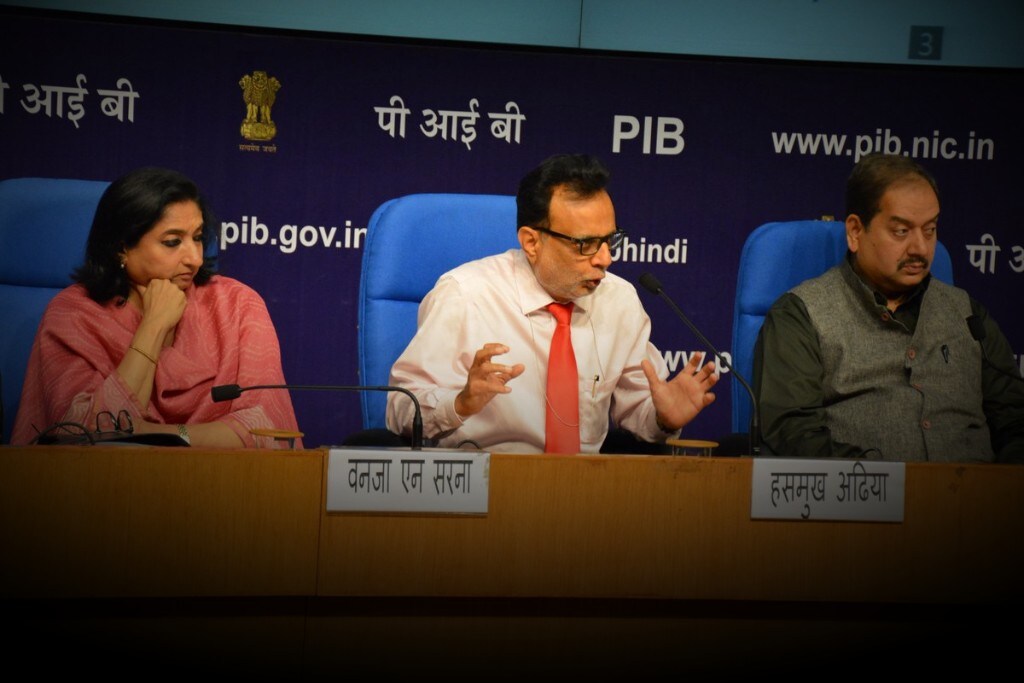
The government is not considering setting up an anti-profiteering body under the Goods and Services Tax regime anytime soon and the GST Council will take a final call in the matter.
“There is no timeline as to when this will be set up as the priority is to roll out GST (Goods and Services Tax),” Central Board of Excise and Customs (CBEC) Chairman Vanaja Sarna told BloombergQuint in an interview. The GST Council will decide whether any such body will be set up or this work will be assigned to an existing regulator like the Competition Commission of India, she said.
The Central GST Law includes a provision to pass on the benefits of reduction in tax rates to consumers once the new indirect tax regime is implemented, and is generally referred to as an anti-profiteering measure.
In a separate interaction, another senior official of the CBEC, to be renamed CBIC (Central Board of Indirect Taxes and Customs), told BloombergQuint that determining the fluctuations in the price of an individual commodity will be difficult as it depends on several factors.
A fall in prices of raw materials could be because of other global factors and not necessarily GST, the official said. It will then be difficult to conclude whether the prices fell because of the GST and if the lower prices should be passed on to consumers. It will also increase litigation, making life difficult for manufacturers, especially small and medium-scale industries, the official said.
The government is not considering setting up such an anti-profiteering body anytime soon, the official said requesting anonymity. It is studying the gray areas in a similar regulator established by the Malaysian government before implementing GST there, which he said turned out to be a failure.
GST Council May Consider Apple's Proposals In Next Meeting
The GST Council will consider exemptions sought by industry associations and also iPhone-maker Apple Inc if the internal groups set up to examine these exemptions submit their report before its next meeting, Sarna said.
Every industry has expressed concerns relating to their respective industry about what will happen under the GST regime. They have flagged some concerns, those are under examination. If things are ready by the next meeting, it will be brought before the Council in the next meeting on May 18-19.Vanaja Sarna, Chairman, CBEC
Also Read: GST Council To Decide On Rates At Next Meeting In May
Efforts On To Resolve Legacy Excise, Service Tax Cases
All legacy service tax and excise duty dispute cases pending before the rollout of GST will continue to be dealt with provisions of the previous law, Sarna said. New GST commissionerates will have a dedicated cell to handle all legacy work, she added.
“Efforts are on to have minimum legacy cases, but those which are locked up in courts, we cannot do much about it; otherwise those which are with the officers like appeals/refunds, efforts are on to resolve them as soon as possible.”
There will always be some spillover, which will be dealt with by these commissionerates, she added.
The CBEC chairman also told BloombergQuint that 77 percent of the central excise taxpayers have already registered with the Goods and Services Tax Network (GSTN), the IT backbone of GST, along with about 57 percent service tax assessees. The government is also pressing for migration of existing taxpayers to the new system, she said.
Also Read: GSTN's Ownership, Accountability And The Challenge Of Working With A ‘Moving' Target
Tax Rates For Precious Metals Not Decided
The government is yet to decide the tax rate for precious metals like gold and silver, and would consider it once the GST Council fixes rates for all other commodities.
“Whether precious metals will fit in the existing specified tax rates or will have a different rate structure is yet to be decided,” she said.
The GST Council has finalised a four-tier GST tax rate structure of 5, 12, 18 and 28 percent.
(Corrects an earlier version which referred to CBEC by its proposed name, CBIC, which is yet to get parliamentary approval.)

-
Medicine Pricing: Where Must Profit Stop?

India must confront excessive margins, hidden incentives and regulatory gaps that threaten the integrity of medicine.
-
Why Amazon And Flipkart Are Struggling To Beat Meesho In India's Smaller Cities
With 274 million users and lowest-cost logistics, Meesho is defending its value commerce crown against giants like Amazon and Flipkart.
-
High US Salaries, No Green Card Certainty: The Financial Calculation Facing Indian H-1B Families
The suspension of PERM processing at eight technology employers does not cancel existing H-1B visas. What it does is force a question many Indian families have been avoiding: is the US salary worth tying your career and family plans to one employer?
-
Swiggy vs Eternal: Food Delivery's Two Rivals Are No Longer In The Same Race
Eternal is building a private AI assistant, dark.ai. Swiggy is still working out how to make Instamart pay, with an operating loss of Rs 895 crore in the July-September quarter while Blinkit stayed profitable.
-
Where You Live Shapes How You Get To Work | The Reason Why
Two-wheelers are the most popular way to get to work in India, accounting for nearly 43% of workplace commutes.
-
Unhedged Position: Can India See An Indonesia-Style Time Correction?
The Nifty is trading below levels it first clocked in 2024. Is there, then, as I have suggested in the headline, potential that the current time correction drags on painfully for the next three-five, even ten years?
-
Navigating Friction And Energy Realities: An Analysis Of Marco Rubio's October Visit To India
Occurring at a critical juncture marked by stalled trade negotiations and escalating geopolitical pressures over global energy supplies, the visit offers a profound window into modern US-India relations.
-
India Exports Capital. Why Not Export Trusteeship?
The big question, then, is whether India can build an institution that global borrowers, investors, banks, and lawyers can trust, even without an Indian connection.
-
France's Economy & Politics Are In Crisis | The Reason Why
Let's look at how the French economy and politics evolved under Nicolas Sarkozy, Franois Hollande and Emmanuel Macron.
-
You May Inherit The Business. You Must Earn Its Credibility.
Succession tests the founder's ability to share authority as much as it tests the next generation's readiness to assume it.










