GST Countdown: People Keep Complaining; It Doesn’t Make Sense, Says Adi Godrej
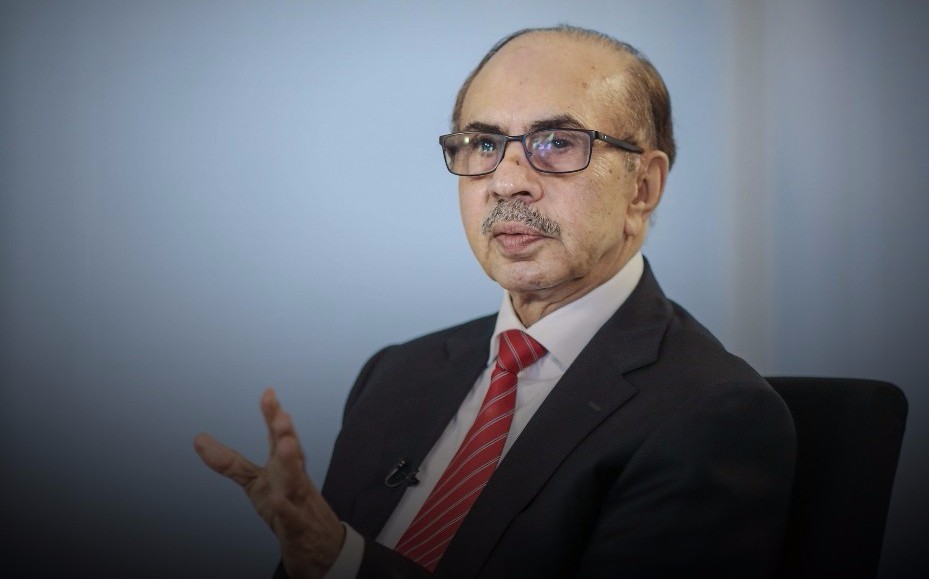
Over the last several months, industry bodies and businesses have been clamoring for a deferral of the implementation date for the Goods and Services Tax (GST) regime. Among them, a lone voice of veteran industrialist and Chairman of the Godrej Group, Adi Godrej, had recently said that those asking for a postponement of GST are mainly tax evaders. In an interview on BloombergQuint's special series, GST Countdown, Godrej said that the request to defer the date didn't make any sense.
Here are edited excerpts from the conversation.
Would you say that those who are asking for the deferral of the July 1 deadline woke up too late?
Yes. GST was to be implemented long time ago. The last time the government had announced that it will be implemented from April 1. They deferred that to July 1. People keep complaining; it doesn't make sense.
You have said in the past that GST is a big reform and that it is going to add 1.5-2 percent to our GDP. By when do you expect these numbers to reflect in the growth of the economy?
GDP growth will pick up almost immediately after July 1. I think, in (financial year) 2018-19, we will see a strong growth. 2017-18 also will see a good growth but, the full impact will be in 2018-19.
Price Cuts Ahead?
Have you done any calculation or any math in terms of the price change across segments Godrej has presence; for instance consumer goods, appliances, home and personal care products?
The final data has just come in recently. So, all our businesses have worked to top. I don't expect much price change across our company.
But the GST Council has been going to town telling consumers that the effective rate on consumer goods will come down because of the benefit of input tax credit. There is an anti-profiteering body for which the rules have also been finalised. Do you fear that the expectation from the Council that the prices will come down can lead to the harassment of industry?
I don't think it will lead to harassment. Where costs are going down, we will certainly pass it on to the consumer. But, final calculations have not yet been done. They will be done very soon.
So, on July 1, as the fresh stock that comes from Godrej's stable, can we prices to go down for certain products?
The distributors margins will be adjusted. But, MRPs (maximum retail prices) cannot be adjusted overnight. I suppose people will have difficulty in doing that.
So, when will we see the revised MRPs?
I can't say that. The businesses will manage that. As the chairman of the group, I don't interfere into these sort of points. That is decided by each business, by each brand manager.
There is a 12 percent rate for under construction projects but, we don't have any word from the Council yet on whether abatement on land would be available to developers or not. How will this impact the real estate sector?
I don't have the details. The businesses will decide. I am sure each of these businesses have considered the details of how it affects them and then they will decide. In this case, it's only a question of charging the actual tax to the consumer. In consumer products, you must price the product. There is an MRP; that doesn't happen to real estate.
Could you give a flavour of what is the conversation that your companies have had with your distributors? Have you given them any assurances that they will be compensated for losses, if at all, on transition stock?
Yes. I don't think anybody will lose money. That will be worked out. There are many different things in terms of the prices, the goods go to the distributors, there are promotions, there are special schemes, there is MRP and based on the actual situation it would be worked out by these businesses. I don't think there will be any problem.
Better Efficiency?
One of the biggest efficiencies that GST is likely to bring in is the way companies look at their warehouse and logistics strategy. How do you see that change going forward?
Certainly there will be changes because we don't have to have as complicated logistics and warehousing as before because in the earlier days, because of the tax complications, you had to move to certain warehouses. Now, you can cut down the number of warehouses. Everything will now be done on the basis of convenience; not on the basis of taxes. So, I think there will be cost savings in logistics and warehouse.
Less Evasion?
You've mentioned earlier that a lot of businesses in the unorganised sector will come into the fold of taxation post July 1 and that's because the entire chain gets rewarded with the input tax credit benefit. How do you see market dynamics change because of that?
Evasion of indirect taxes will come down tremendously because evading taxes will not be workable as if you evade taxes, at the next stage, the party will have to pay full taxes to get credit. And if you have not paid it and you don't have documents that you have paid it, they are not likely to buy from you. So, overall evasion of indirect taxes will come down dramatically in my mind. Collections of the government will rise, that is why it will create a win-win situation for the economy, consumer, and manufacturers. That is why I feel GDP growth of the country will rise quite a lot.
Will it create any opportunities in terms of acquisitions to your mind?
It's possible. There could be some businesses which will be up for sale.
Execution Pangs?
We're a week away from the July 1deadline. What is your expectation from the government once GST is implemented?
They should be understanding. They have already announced that they will be very understanding in the first couple of months. They have already extended the deadline for you to pay your taxes, file your returns and submit your documents in the first couple of months. I think the government has taken a very rational stand on these various points. There's yet another meeting now to take place on June 30. Overall, I think the GST Council has been very rational, they have done a very good job. I must compliment the government on implementing it well.
What do you have to say about the preparedness of GST Network (GSTN)? There have been a lot of questions with regards to that because the rules got finalised on June 3 and the GSTN is rolling out the Application Program Interface in a staggered way; which means the GST Suvidha providers and Application Service Providers may not be ready.
No, I don't think there's a problem at all. Everybody will be ready. There's not much difficulty and the government. (GSTN) themselves have a software on the net which can be used by small enterprises who don't have their own software.

-
Ten Things I Learnt This Samvat

Patience can be a trap. Cheap stocks can stay cheap. Leverage can wipe you out. What did Samvat 2082 teach us? Niraj Shah writes on 10 lessons from the year gone by.
-
Talking Points This Week: Tech Nerves, FII Buying, And A Faraway Banking Shock
The global markets are not shining this Diwali. The exception in the large markets is, India.
-
Midterm Rally Lasted A Day. The Hard Reality Of A Divided US May Last Two Years | Opinion
Between a contested AI boom, a debt ceiling that arrives in 2027 and a president with every incentive to act alone, the next two years may prove more volatile than the first day's rally suggests.
-
Blue Wave Will Derail the AI Trade but Won't Dismantle the AI Era | Unhedged Position
The Democrats' sweep of the US Congress will see politics collide with economic forces both over the long and short term.
-
It's Time To Take The GST Council's Bet On Trust Global
Payment records can prove India's services exports, and clear, proportionate rules can bring foreign digital sellers into the tax net.
-
Opinion | India at 38: From Innovation Overperformer to Innovation Powerhouse
India now has 453 VC-backed deep science startups, 18 of them late-stage, after 117 percent growth since 2020. Laurus Labs, at USD 9.3 billion, is the most valuable deep science company in any middle-income economy outside China.
-
Navigating Energy Crossroads: S Jaishankar's Call For Diversified Supply Chains At G20 Ministerial Meeting
As geopolitical fault lines continue to test maritime trade routes and commodity flows, Jaishankar's message remains pertinent: true economic resilience requires open markets, protected transit lines, and a genuine commitment to multilateral cooperation rather than coercion.
-
Indians Are Travelling, But Not Every Journey Is A Holiday | The Week In Whys
Pilgrims, patients and working women are the real travellers, and the system hasn't quite caught up with them.
-
Getting To Work Costs Women More | The Reason Why
It is not just about women paying more than men. It is about women paying much more in cities than in villages.









