GST Council Resolves Dual Control Issue; Defers Rollout To July 1
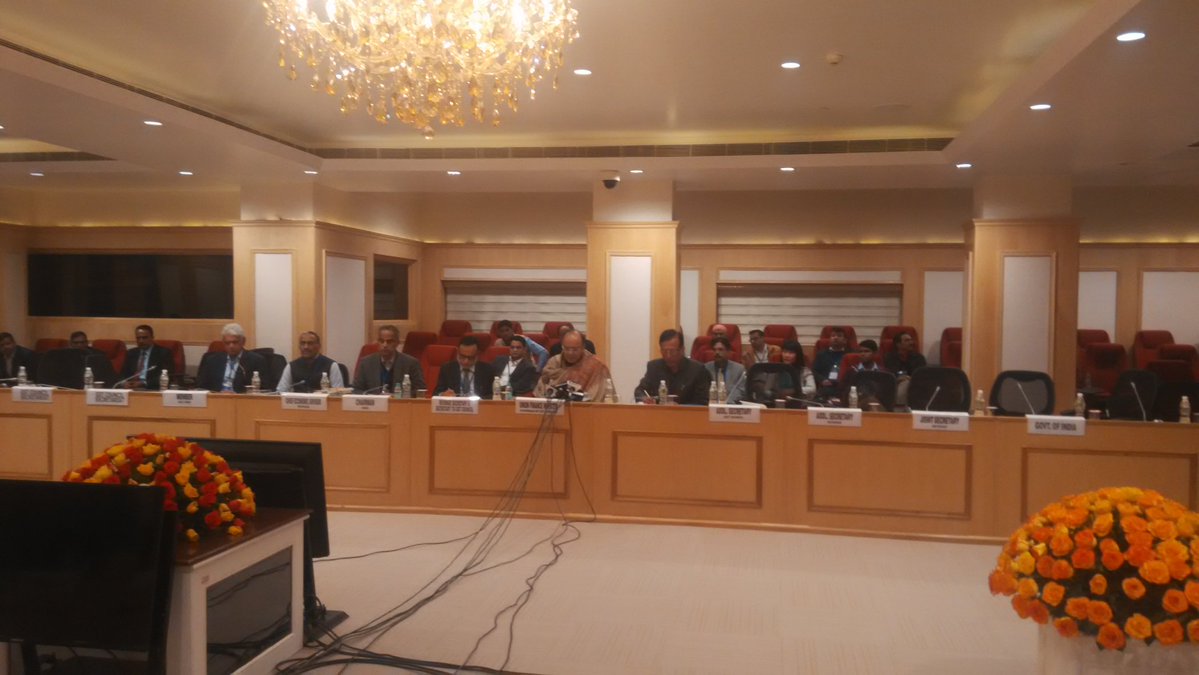
The Goods and Services Tax (GST) has moved a step closer to reality. The GST Council on Monday ended the deadlock over the contentious issue of dual control – or the division of assessees between states and the Centre.
While states will audit and scrutinise 90 percent of the assessees who have a turnover of Rs 1.5 crore per annum or below, the Centre will assess the remaining 10 percent, Finance Minister Arun Jaitley told reporters after the ninth meeting of the Council.
Those with an annual turnover above Rs 1.5 crore will be equally divided – 50 percent each.
Each assessee will be assessed by only one tax authority, he said.
Whilethe entire services sector has not gone to the Centre for administration, the FM(Finance Minister) indicated that in cases where complex interpretive issuesare involved , the Centre might carry out the assessment. This comes as a relief to the industry asstates currently don't have the experience to handle tax on servicesPratik Jain, Partner, PwC India
L Badri Narayanan, Partner, Lakshmikumaran & Sridharan said it will be “interesting to see how this sharing of administration is going to be effected in practice”. It is also “not clear if the division of administration for large taxpayers is going to be on the basis of revenue or type of supply or some other basis”, he added.

West Bengal was the only state to oppose the new structure, and demanded 100 percent control over all businesses with an annual turnover of less than or equal to Rs 1.5 crore.
Jaitley said given the consensus on dual control, the realistic deadline to roll out the GST regime will be July 1, 2017.
“A well thought through implementation post meticulous discussion on the draft legislation is far more desirable than a premature rushed-through roll out,” said Rajeev Dimri, Leader, Indirect Tax, BMR & Associates. “Even to achieve the deferred date, finalisation and publication of GST laws without further delay would be important for India Inc to effectively prepare for migration to the new regime.”
Tax On Territorial Waters
The Council also resolved the issue of tax on high seas. States will be empowered to tax any economic activity in territorial waters up to 12 nautical miles, Jaitley said.
“As far as the area of 12 nautical miles into the territorial waters is concerned, it's part of the Union government's territory but as per the convention, states will be empowered to collect tax on any economic activity. This decision has been taken after very wide consultation,” he said.
Narayanan cautioned there has been a lot of “litigation on what taxes apply to such transactions. This is likely to be a contested area in the future”.
The power to levy and collect Integrated GST (IGST) will lie with the Centre, Jaitley said, adding that by a special provision in law, states will also be cross-empowered.
The draft legislations will now be firmed by officers, and will be tabled again on the next meeting of the GST Council scheduled for February 18.
The only items to be dealt with are approval of draft bills and rules and setting of rates for different commodities, Jaitley said.
Resolutionof contentious issue of dual control will now allow the Centre to focus on moreimportant issues like fitment of various goods and services to specific taxrates already approved by the GST Council.SatyaPoddar, Tax Partner – Policy Advisory Group, EY
Delaying rollout till July 1 will also provide the taxpayers as well as the government additional time for proper implementation of the new indirect tax regime, Poddar said.

-
Talking Points This Week: Tech Nerves, FII Buying, And A Faraway Banking Shock

The global markets are not shining this Diwali. The exception in the large markets is, India.
-
Midterm Rally Lasted A Day. The Hard Reality Of A Divided US May Last Two Years | Opinion
Between a contested AI boom, a debt ceiling that arrives in 2027 and a president with every incentive to act alone, the next two years may prove more volatile than the first day's rally suggests.
-
Blue Wave Will Derail the AI Trade but Won't Dismantle the AI Era | Unhedged Position
The Democrats' sweep of the US Congress will see politics collide with economic forces both over the long and short term.
-
It's Time To Take The GST Council's Bet On Trust Global
Payment records can prove India's services exports, and clear, proportionate rules can bring foreign digital sellers into the tax net.
-
Opinion | India at 38: From Innovation Overperformer to Innovation Powerhouse
India now has 453 VC-backed deep science startups, 18 of them late-stage, after 117 percent growth since 2020. Laurus Labs, at USD 9.3 billion, is the most valuable deep science company in any middle-income economy outside China.
-
Navigating Energy Crossroads: S Jaishankar's Call For Diversified Supply Chains At G20 Ministerial Meeting
As geopolitical fault lines continue to test maritime trade routes and commodity flows, Jaishankar's message remains pertinent: true economic resilience requires open markets, protected transit lines, and a genuine commitment to multilateral cooperation rather than coercion.
-
Indians Are Travelling, But Not Every Journey Is A Holiday | The Week In Whys
Pilgrims, patients and working women are the real travellers, and the system hasn't quite caught up with them.
-
Getting To Work Costs Women More | The Reason Why
It is not just about women paying more than men. It is about women paying much more in cities than in villages.
-
AI Bias In Investing Cannot Be Eliminated, But It Can Be Governed
Framing is a particularly important example as identical financial information presented in terms of gains rather than losses can lead an LLM to reach a different assessment.









