GST Sees Biggest Overhaul As Tax Slabs Cut To 5%, 18%; New Rates Effective Sept 22
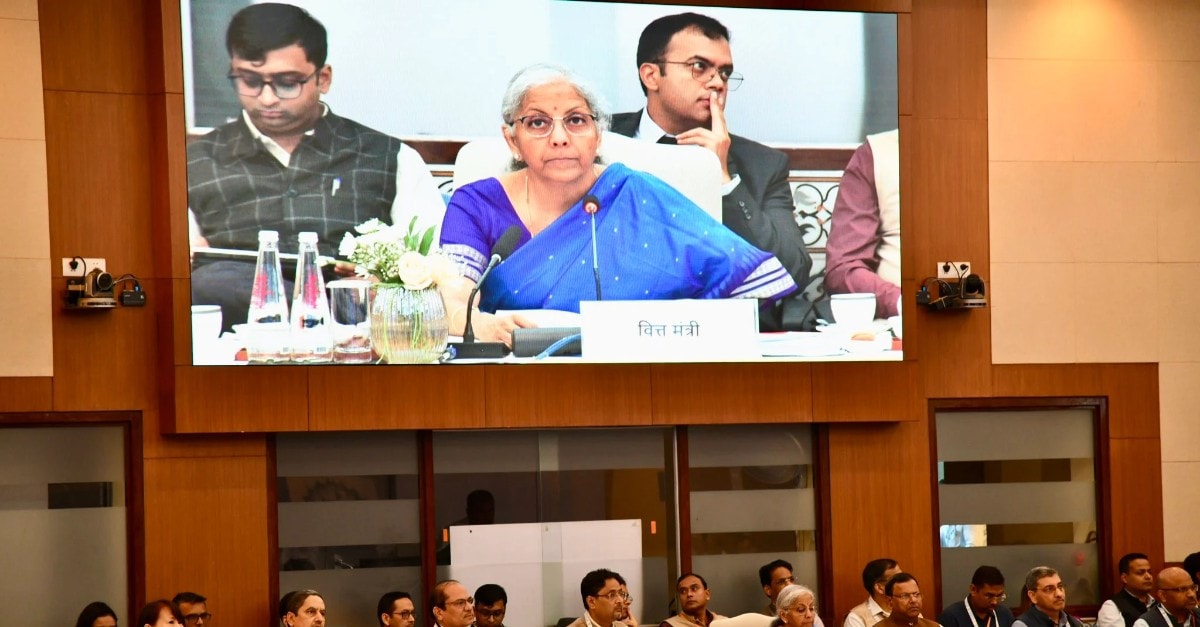
At the high-stake meeting of the GST Council on Wednesday, a consensus was reached on all proposals, including the restructuring of tax slabs from four at present to only two — 5% and 18%.
The new tax rates will come into effect from Sept. 22, Finance Minister Nirmala Sitharaman said in a press briefing in New Delhi following the council meeting. The GST overhaul will reduce the tax on several household articles, thereby providing relief to the common man, she said.
The GST Council decision eliminates the slabs of 12% and 28%. Sitharaman, however, noted that an additional levy of 40% will be imposed on certain luxury and sin goods, including pan masala, cigarettes and gutkha.
The total revenue loss on account of the reduction in tax rates is pegged at around Rs 48,000 crore annually, according to Revenue Secretary Arvind Shrivastava.
The consensus on all GST Council agenda has been achieved on the first day itself, and the meeting would not be resume on Thursday as earlier scheduled.
Tax Cuts On Household Items
Several household articles, including namkeen (snacks), pasta, sauces, bhujia, instant noodles, cornflakes and preserved meat will now attract a tax of 5% instead of 18%.
On daily essentials such as ultra-high-temperature processing milk, chhenna paneer and all Indian breads, the tax has been reduced to nil from 5% at present.
28% To 18% Shift
The GST rates on an array of aspirational items, including air conditioners, television sets, dishwashers, small cars and bikes less than 350 cc engine has come down to 18% from 28% at present.
On footwear, those priced above Rs 2,500 will be charged at 18%, whereas those charged at less than Rs 2,500 will be taxed at 5%.
Also, Sitharaman noted during her presser, that the tax rate on cement has been lowered from 28% to 18%. The move is crucial for the real estate sector.
Tax On Autos
The GST rates on buses, trucks and ambulances has been reduced from 28% to 18%. The Council has also decided to impose a uniform 18% tariff on all automobile parts.
On three-wheelers, the tax rate has been reduced from 28% to 18%.
The GST Council has also waived off the tax on certain medicines, including cancer drugs and medication for rare diseases. Presently, they were charged at 5%.
The reforms approved by the GST Council are "significant", and will have a a "multi-sectoral and multi-thematic focus, aimed at ensuring ease of living for all citizens and ease of doing business for all", Sitharaman said.
Prime Minister Narendra Modi described the GST reforms as "next-generation", noting that it would lead to the ease of lives for common man and strengthen the economy.
"Glad to state that GST Council, comprising the Union and the States, has collectively agreed to the proposals submitted by the Union Government on GST rate cuts and reforms, which will benefit the common man, farmers, MSMEs, middle-class, women and youth. The wide ranging reforms will improve lives of our citizens and ensure ease of doing business for all, especially small traders and businesses," Modi said.

-
Unhedged Position: Can India See An Indonesia-Style Time Correction?

The Nifty is trading below levels it first clocked in 2024. Is there, then, as I have suggested in the headline, potential that the current time correction drags on painfully for the next three-five, even ten years?
-
Navigating Friction And Energy Realities: An Analysis Of Marco Rubio's October Visit To India
Occurring at a critical juncture marked by stalled trade negotiations and escalating geopolitical pressures over global energy supplies, the visit offers a profound window into modern US-India relations.
-
India Exports Capital. Why Not Export Trusteeship?
The big question, then, is whether India can build an institution that global borrowers, investors, banks, and lawyers can trust, even without an Indian connection.
-
France's Economy & Politics Are In Crisis | The Reason Why
Let's look at how the French economy and politics evolved under Nicolas Sarkozy, Franois Hollande and Emmanuel Macron.
-
You May Inherit The Business. You Must Earn Its Credibility.
Succession tests the founder's ability to share authority as much as it tests the next generation's readiness to assume it.
-
Signing Deals Is One Thing; Making Them Work Is Another | The Week In Whys
Sometimes, things don't turn out as planned. Indian companies have lost some bids to rivals, some projects won't produce until 2030.
-
FOMC Wall, PERM Suspension, Hospital Stocks | Talking Points This Week
A PERM suspension would directly affect green-card sponsorship rather than H-1B visas, so the near-term earnings impact could remain relatively limited. The key question is whether this marks a new phase in US scrutiny of Indian IT.
-
Everything, Everywhere, All At Once: Dalal Street's Week To Forget | Joining The Dots
Visa curbs, a Starlink spat and cancer drug caps: what connects this week's shocks for Indian markets
-
India Is Going Abroad For Critical Minerals. But It May Take Years To Pay Off | The Reason Why
Although India's steps are in the right direction, they remain modest compared with India's growing dependence.
-
When Everyone Has AI, What Gives You An Edge?
India's young workforce is entering an uncertain world of work where powerful AI tools are becoming widely accessible. The advantage will belong to those who combine deep expertise with digital fluency, and the distinctly human capabilities that technology cannot manufacture.









