GST Council Extends Due Date For Filing Annual Returns
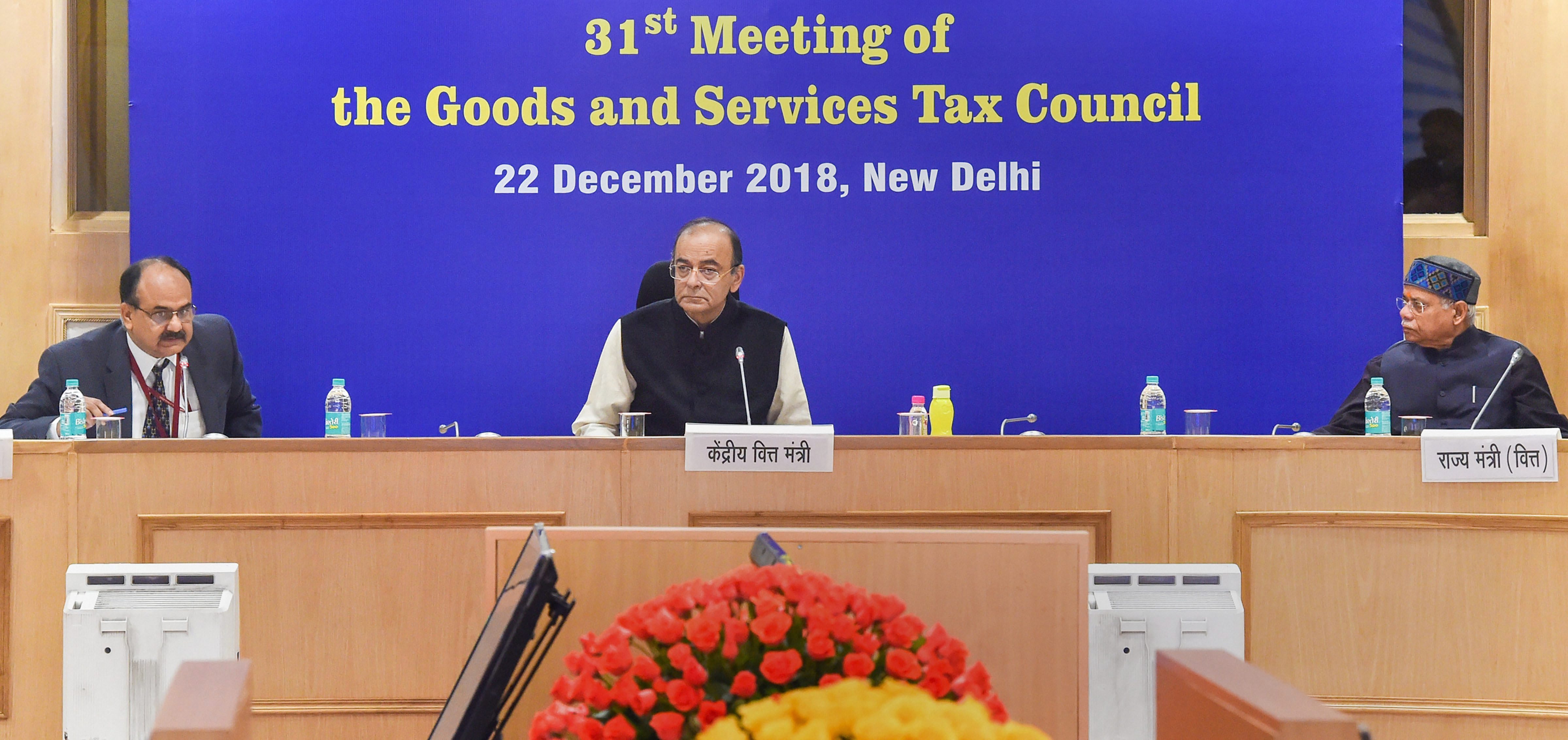
The Goods and Services Tax Council further extended the due date for filing annual returns by three months as it looks to provide reasonable time for industry to collate the information required to be disclosed in the forms.
The due date for filing of annual returns for financial year 2017-18 in Form GSTR-9, GSTR-9A and GSTR-9C has been extended to June 30, according to a Finance Ministry press release. The government had earlier extended the last date for filing annual returns to March 31 from Dec. 31.
GSTR-9 is the annual return form for normal taxpayers, GSTR-9A is for composition taxpayers and GSTR-9C is a reconciliation statement.
“The government is also coming out with amendments in annual returns and audit returns. It would have been otherwise difficult for the industry to file returns in the new format, which are yet to be approved,” said Abhishek Jain, indirect tax expert at EY India.
Another three-month extension would give reasonable time to the industry to appropriately file these returns.Abhishek Jain, EY India
The council also extended the last date for availing input credit for financial year 2017-18 from Oct. 25, 2018 to the last day for filing GSTR-3B for March 2019, that is April 20, 2019.
This, Jain said, will help companies re-verify and avail additional credits for the previous financial year and reduce tax costs.
Besides, the council extended the date for filing monthly returns by e-commerce operators while deducting tax collected at source for October-December to Jan. 31. Last day for filing this return—GSTR-8—is the tenth day of succeeding month.
Here are the other policy changes approved by the GST Council:
Centralised Appellate Authority For Advance Ruling
The GST Council approved the creation of a centralised Appellate Authority for Advance Ruling to deal with cases of conflicting decisions by two or more State Appellate Advance Ruling Authorities on same issues.
The advance ruling authorities in different states have been passing contradictory rulings over many important issues. But this will help in passing binding decisions, said Abhishek Rastogi, partner at Khaitan & Co.
It is hoped that the GST Council will focus on adequate representation of judicial and non-judicial members for this centralised authority.Abhishek Rastogi, Khaitan & Co.
Amendments To CGST Act
The panel headed by Finance Minister Arun Jaitley approved amendments to Section 50 of the Central Goods and Services Tax Act, to charge interest to taxpayers for late payment of tax, only on net tax liability, adjusted for credits.
This would be effective once the amendment is approved by Parliament. Interest charged on late payment of tax is 18 percent. It has also waived off late fee for filing GSTR-1, GSTR-3B, GSTR-4 for 15 months from July 2017. These returns can be filed after Dec. 22, but before March 31.
Composition Scheme For Service Providers
The Finance Minister announced that the composition scheme, that requires taxpayers to pay a flat GST rate, to be extended for service providers. At present, only restaurant owners with an annual turnover up to Rs 1.5 crore can avail the composition scheme.
The rate of tax and threshold for service providers to avail the composition scheme will be decided by the Law Committee and Fitment Committee of GST, Jaitley said.
Issues Referred To Other Panels
The GST Council decided to form a group of ministers to study revenue trend and to analyse the reasons for states reporting a shortfall in their GST revenue.
The study would include the underlying reasons for deviation from the revenue collection targets vis-a-vis original assumptions discussed during the design of GST system, its implementation and related structural issue.Finance Ministry Release
The panel will be assisted by the committee of experts from central government, state governments and the National Institute of Public Finance and Planning.
A ministerial panel that was earlier constituted to look into the issues faced by small businesses has been asked to review the threshold for exemption of taxpayers under the GST, the statement said. The group of ministers is headed by Minister of State for Finance Shiv Pratap Shukla.
The Law Committee and Fitment Committee of GST have been asked to look into the taxation of residential property in the real estate sector. Currently, different GST is levied on under-construction properties and ready-to-move in properties. There could be one rate—like in the case of the composition scheme—for the real estate sector, a government official said on the sidelines of the GST Council meet.
Yet, Pratik Jain, leader-indirect taxes at PwC India said the proposal to bring in a composition kind of scheme for real estate sector may not be a good idea and needs detailed deliberations.

-
High US Salaries, No Green Card Certainty: The Financial Calculation Facing Indian H-1B Families

The suspension of PERM processing at eight technology employers does not cancel existing H-1B visas. What it does is force a question many Indian families have been avoiding: is the US salary worth tying your career and family plans to one employer?
-
Swiggy vs Eternal: Food Delivery's Two Rivals Are No Longer In The Same Race
Eternal is building a private AI assistant, dark.ai. Swiggy is still working out how to make Instamart pay, with an operating loss of Rs 895 crore in the July-September quarter while Blinkit stayed profitable.
-
Where You Live Shapes How You Get To Work | The Reason Why
Two-wheelers are the most popular way to get to work in India, accounting for nearly 43% of workplace commutes.
-
Unhedged Position: Can India See An Indonesia-Style Time Correction?
The Nifty is trading below levels it first clocked in 2024. Is there, then, as I have suggested in the headline, potential that the current time correction drags on painfully for the next three-five, even ten years?
-
Navigating Friction And Energy Realities: An Analysis Of Marco Rubio's October Visit To India
Occurring at a critical juncture marked by stalled trade negotiations and escalating geopolitical pressures over global energy supplies, the visit offers a profound window into modern US-India relations.
-
India Exports Capital. Why Not Export Trusteeship?
The big question, then, is whether India can build an institution that global borrowers, investors, banks, and lawyers can trust, even without an Indian connection.
-
France's Economy & Politics Are In Crisis | The Reason Why
Let's look at how the French economy and politics evolved under Nicolas Sarkozy, Franois Hollande and Emmanuel Macron.
-
You May Inherit The Business. You Must Earn Its Credibility.
Succession tests the founder's ability to share authority as much as it tests the next generation's readiness to assume it.
-
Signing Deals Is One Thing; Making Them Work Is Another | The Week In Whys
Sometimes, things don't turn out as planned. Indian companies have lost some bids to rivals, some projects won't produce until 2030.
-
FOMC Wall, PERM Suspension, Hospital Stocks | Talking Points This Week
A PERM suspension would directly affect green-card sponsorship rather than H-1B visas, so the near-term earnings impact could remain relatively limited. The key question is whether this marks a new phase in US scrutiny of Indian IT.









