GST: Consumer Electronics Retailers Brace For Transition Pain
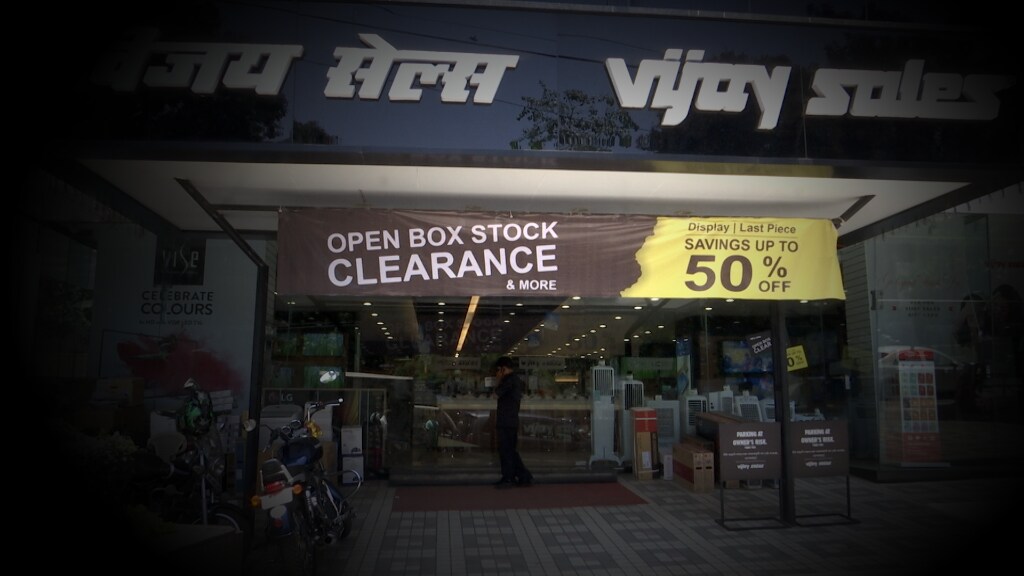
- Electronics retailers look to clear stock before GST is rolled out
- Some stores offering discounts to reduce stock
- All bulk dealers may not be GST compliant before rollout
India's consumer electronics retailers have been de-stocking amid fears that a transition to a universal Goods and Services Tax next month will disrupt the $12.5-billion market.
While some large chains like Vijay Sales and Future Group's Ezone are offering discounts to exhaust inventory, smaller retailers have been buying from dealers to only fulfil existing orders. They don't want to be saddled with too much stock as the new indirect tax regime kicks in.
“With all the news about a likely price hike of 2-3 percent, we have seen a surge in the retail sales,” Kamal Nandi, business head and executive vice-president, Godrej Appliances, said in response to an emailed query by BloombergQuint. However, trade partners focused on de-stocking due to ambiguity around input tax credit on central GST on transit and current stocks, he said, before the final transition rules were announced on Saturday.
The GST Council allowed input tax credit of 60 percent of applicable Central GST for items in the 18 percent tax bracket, and kept the cap at 40 percent for products taxed at below 18 percent.
This comes as a relief to the industry and neutralises the loss on transition stock to a large extent, according to Pratik Jain, partner and leader indirect tax, PwC. “ Allowing 100 percent (tax) credit in case of high-value items (above Rs 25,000) based on tracking of the product, even without actual excise duty paying document, could be a major relief to sectors such as consumer electronics, durables and automobile. The disruption in the trade would be minimised.”
Nilesh Gupta, managing director, Vijay Sales, however, told BloombergQuint that while the increase in tax credit limit is good, even that is not enough to cover losses for retailers. “So, the liquidation of the stock will continue.”
Also Read: GST Council Increases Tax Slabs To Six To Accommodate Gold & Diamonds
The business has already slowed down. Finished goods inventory fell to a 21-month low in April, Nikkei India Manufacturing Purchasing Managers Index showed. A report by Nomura attributed this to the impending GST rollout. Order-to-inventory ratio too declined, indicating that firms will have to ramp up production in the months following GST implementation.
Distributors A Weak Link
Even if the manufacturers were to supply on time, distributors remain a weak link in the chain. Retailers fear all bulk dealers may not become GST-ready in time.
“We can only buy from distributors who are GST-compliant,” said Ritesh Ghoshal, chief marketing officer at Croma Electronics, a consumer electronics retail chain owned by Tata Sons Ltd.'s subsidiary Infiniti Retail Ltd. A shortfall will only mean fewer products on the shelves and limited options for customers, he said.
The consumer durables and mobiles segment retail is a $12.5-billion market, according to a report by India Brand Equity Foundation. It's troubles may continue well beyond the GST rollout.
The industry may face teething problems for at least 90 days and maybe more depending on how fast the entire supply chain becomes GST-ready – which includes everyone right from the manufacturer to the logistics, distributors and finally the retailers, Biren Vyas, partner, Grant Thornton India LLP, told BloombergQuint over the phone.
If even a link in this supply chain doesn't synchronise with GST, the impact will ultimately trickle-down to customers.Biren Vyas, Partner, Grant Thornton India
Also Read: GST Countdown: Why India's Small Traders Dread The Digital Leap
Customers Make Most Of It
Household appliances such as air-conditioners, televisions, water heaters, refrigerators, washing machines and even shavers have been placed in the highest tax slab of 28 percent under GST. That compares with an existing tax rate of 26 percent in a state like Maharashtra.
The likelihood of a price increase is in itself a big incentive to buy before GST implementation, Godrej Appliances' Nandi said.
Discounts offered by retailers have only added to the incentive. The response to the stock-clearance sale across categories ahead of GST has been terrific, Vijay Sales' Gupta said in reply to an emailed query by BloombergQuint.
However, the extent of the price hikes post-GST will not be uniform across states. Consumer electronics prices may not increase by much in cities like Mumbai, where the state government levies a high octroi charge. Prices may go up in states like Karnataka, Andhra Pradesh and Madhya Pradesh, though, where existing state levies are low, according to retailers.
An increase of 4 percent and upwards can be expected, according to Consumer Electronics and Appliances Manufacturers Association. July-August sales will get impacted and the effect will wear off by the festive season and demand will be back, it said.
Consumers don't want to let go of the opportunity though. Prices will rise after July and retailers are offering good discounts, said Sunita Chavan, who was looking to buy household appliances at a Vijay Sales outlet in Prabhadevi, Mumbai. “I might as well buy now than later.”
Also Read: There Are 160 Reasons India Won't Escape Sales Tax Chaos

-
Navigating Energy Crossroads: S Jaishankar's Call For Diversified Supply Chains At G20 Ministerial Meeting

As geopolitical fault lines continue to test maritime trade routes and commodity flows, Jaishankar's message remains pertinent: true economic resilience requires open markets, protected transit lines, and a genuine commitment to multilateral cooperation rather than coercion.
-
Indians Are Travelling, But Not Every Journey Is A Holiday | The Week In Whys
Pilgrims, patients and working women are the real travellers, and the system hasn't quite caught up with them.
-
Getting To Work Costs Women More | The Reason Why
It is not just about women paying more than men. It is about women paying much more in cities than in villages.
-
AI Bias In Investing Cannot Be Eliminated, But It Can Be Governed
Framing is a particularly important example as identical financial information presented in terms of gains rather than losses can lead an LLM to reach a different assessment.
-
Joining The Dots | Dark Skies, Steady Diya: Why Hope Holds This Diwali
With war, a weak rupee and foreign outflows weighing on sentiment, policymakers at the NDTV World Summit and market veterans at NDTV Profit Ignite: Diwali Edition offered the same advice: stay invested and filter out the noise.
-
The Curious Case of Equitas Small Finance Bank And A CEO Who Quit For Stock
PN Vasudevan believes persistent investor concerns over a perceived conflict of interest had become a governance overhang on Equitas Small Finance Bank's stock, even as the lender improved profitability and asset quality.
-
Talking Points This Week: AI Cash Burn, A Tiger Comeback And An India That Still Finds Its Own Path
India is not immune to higher oil or tighter global liquidity, yet its earnings base is broader, its domestic policy levers are still available.
-
Foreign Investors Own Half Of HDFC Bank and ICICI Bank. An LTCG Cut Could Matter Most Here
Foreign portfolio investors have US$115 billion parked in HDFC Bank, ICICI Bank. If the government cuts long-term capital gains tax, Jefferies says returning foreign money could land here first.
-
'Never Seen This Level Of Negativity': Sandeep Tandon Says The Next Rally May Be Closer Than You Think
Veteran investor Sandeep Tandon says foreign selling is easing, large-caps are due a comeback and mid-caps are crowded, while he turns positive on gold, power and pharma this Diwali.










