GST Compensation: Amit Mitra Says States Have No Headroom To Take On Any New Debt
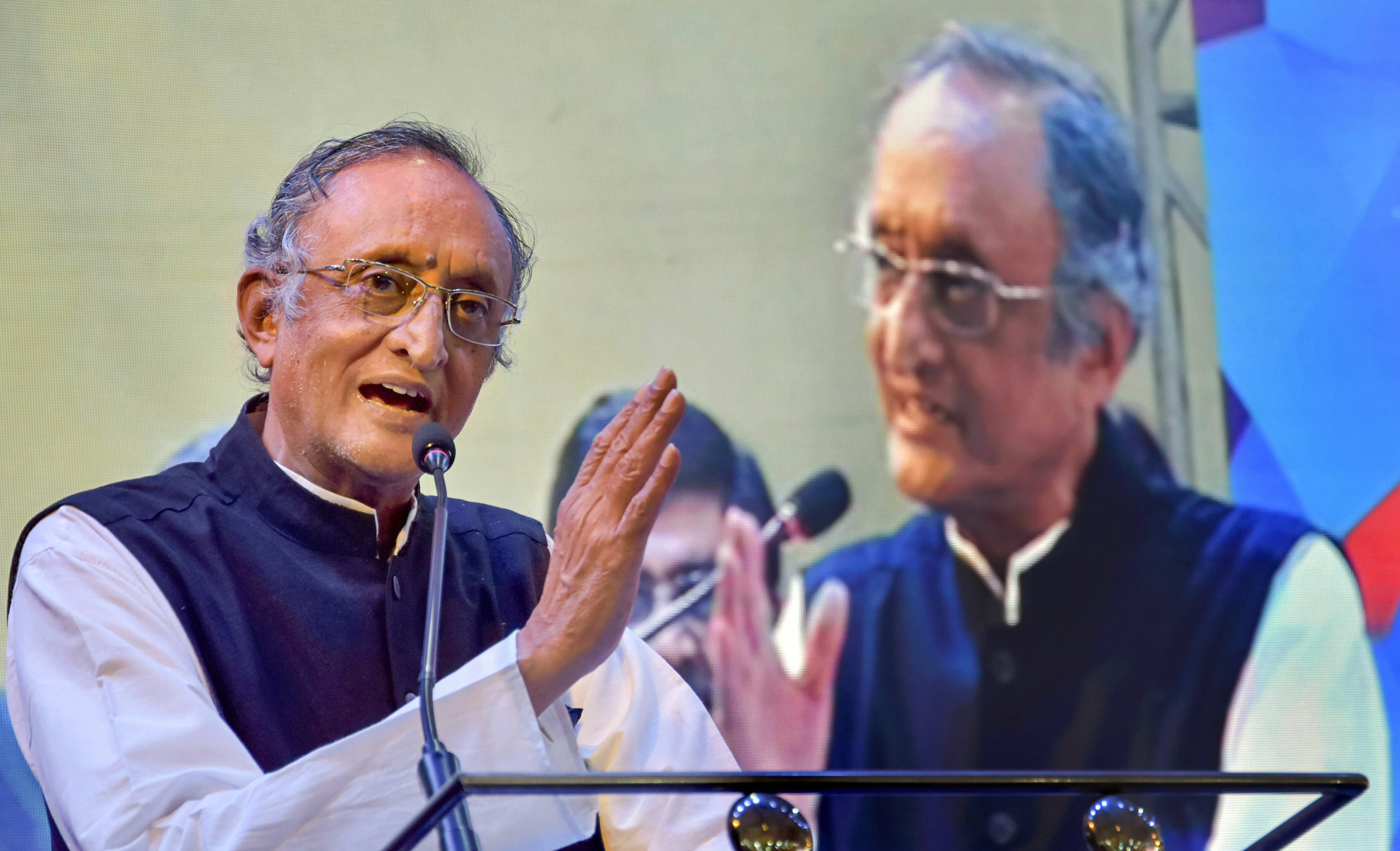
A day after the central government asked states to borrow more to make up for the shortfall in goods and services tax revenue, West Bengal Finance Minister Amit Mitra said they have no headroom to take on any new debt.
“I take the debt, it comes into my books. I cannot take debt. I have no headroom. Some states are not able to pay salaries. On top of that, you take debt that you have to service?” Mitra said in an interview with BloombergQuint's Sanjay Pugalia on Rajpath.
Union Finance Minister Nirmala Sitharaman, after the 41st GST Council meeting on Thursday, proposed two options to states to resolve the issue of compensation cess shortfall under the GST regime. This shortfall has been estimated at Rs 2.35 lakh crore in 2020-21. Of this, the central government said only Rs 97,000 crore is on account of GST implementation, while the rest is due to Covid-19 and not provided for under the GST Constitutional Amendment. In the first option, the states can borrow the Rs 97,000 crore from the Reserve Bank of India via a special window. The alternative allows states to borrow the full shortfall of Rs 2.35 lakh crore from the market.
“Of the two options presented, we may produce a third or a fourth option. But the principle remains that there is no headroom to borrow or pay interest and so they (centre) must kindly come along and keep their commitment,” Mitra said. “We will study the fine print of the options presented to us with an open mind under the condition that we don't have to take any debt and we don't have to service it at least for a period of time, maybe for a year.”
Sitharaman, according to Mitra, in the 39th GST Council meeting had said the central government was responsible to make up for the shortfall in GST revenue to the states. States gave up 70% of their taxing power when GST was introduced, with the guarantee that they will be compensated at a 14% annual increase by the central government for five years, he said.
The central government has the capacity to borrow at a lower rate and service debt as it can print money from the Reserve Bank of India to monetise its fiscal deficit, Mitra said, adding the hope is that the finance minister will consider the view of all states and the federalist policy will be preserved.
“It will be a big shock to India if the federalist policy falls apart where state after state, irrespective of political party, finds that they are not able to manage because the GST compensation money is not paid,” Mitra said.
Three states, including Karnataka, ruled by the Bharatiya Janata Party, too, voiced similar concerns. The GST Council will meet again after seven working days to deliberate upon states' responses.
Watch the full interview here:

-
Where You Live Shapes How You Get To Work | The Reason Why

Two-wheelers are the most popular way to get to work in India, accounting for nearly 43% of workplace commutes.
-
High US Salaries, No Green Card Certainty: The Financial Calculation Facing Indian H-1B Families
The suspension of PERM processing at eight technology employers does not cancel existing H-1B visas. What it does is force a question many Indian families have been avoiding: is the US salary worth tying your career and family plans to one employer?
-
Unhedged Position: Can India See An Indonesia-Style Time Correction?
The Nifty is trading below levels it first clocked in 2024. Is there, then, as I have suggested in the headline, potential that the current time correction drags on painfully for the next three-five, even ten years?
-
Navigating Friction And Energy Realities: An Analysis Of Marco Rubio's October Visit To India
Occurring at a critical juncture marked by stalled trade negotiations and escalating geopolitical pressures over global energy supplies, the visit offers a profound window into modern US-India relations.
-
India Exports Capital. Why Not Export Trusteeship?
The big question, then, is whether India can build an institution that global borrowers, investors, banks, and lawyers can trust, even without an Indian connection.
-
France's Economy & Politics Are In Crisis | The Reason Why
Let's look at how the French economy and politics evolved under Nicolas Sarkozy, Franois Hollande and Emmanuel Macron.
-
You May Inherit The Business. You Must Earn Its Credibility.
Succession tests the founder's ability to share authority as much as it tests the next generation's readiness to assume it.
-
Signing Deals Is One Thing; Making Them Work Is Another | The Week In Whys
Sometimes, things don't turn out as planned. Indian companies have lost some bids to rivals, some projects won't produce until 2030.
-
FOMC Wall, PERM Suspension, Hospital Stocks | Talking Points This Week
A PERM suspension would directly affect green-card sponsorship rather than H-1B visas, so the near-term earnings impact could remain relatively limited. The key question is whether this marks a new phase in US scrutiny of Indian IT.
-
Everything, Everywhere, All At Once: Dalal Street's Week To Forget | Joining The Dots
Visa curbs, a Starlink spat and cancer drug caps: what connects this week's shocks for Indian markets









