GST 2.0 Spells Concerns Of Revenue Loss, But Risk Of Fiscal Slippage Low
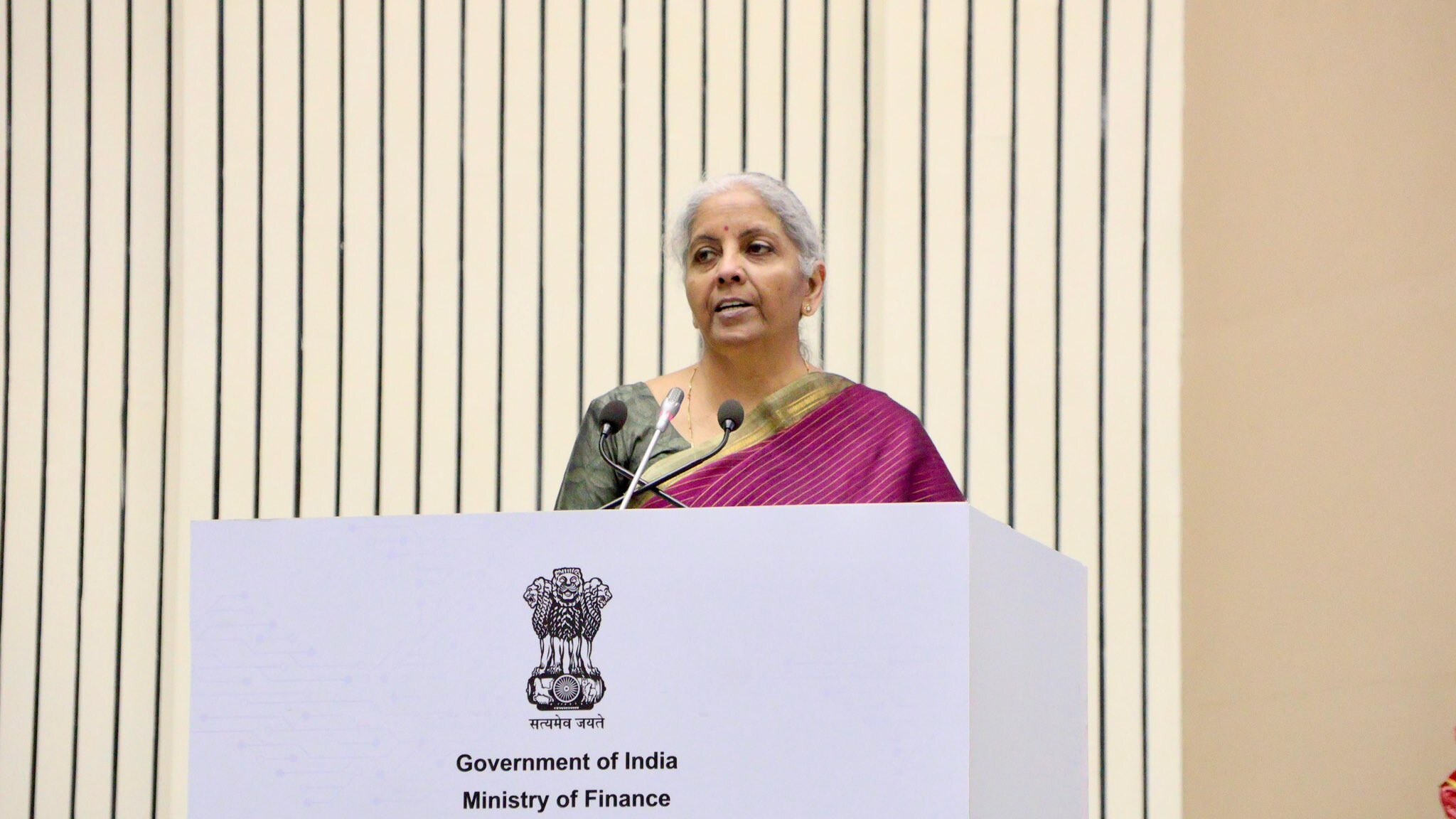
The government's next generation GST reforms could boost disposable income, power consumption, provide a leg up to private capex and may nullify the impact of US tariffs on GDP — all while permitting the government to stick to fiscal deficit target for fiscal year 2025-26, according to experts.
The gains to Indian consumers might just be the government's loss in terms of tax collections, which are already seen to be on a weak footing. However, the potential revenue loss could be offset by chances of higher dividends from PSUs, higher dividends from the Reserve Bank of India, and hike in excise duty on diesel and petrol, as per Gaura Sengupta, chief economist at IDFC First bank.
The gross revenue loss from the tax cuts is about Rs 93,000 crore in a consumption base of FY24, according to estimates by Pranjul Bhandari, chief economist at HSBC. Revenues folded from the compensation cess to the 40% tax bracket can fund Rs 45,000 crore of the loss, leaving a net loss of Rs 48,000 crore, which is 0.16% of GDP.
Scaling this to the FY26 base implies a net revenue loss of Rs 57,000 crore (0.16% of GDP) over a year. Since only half the fiscal year is left, the implication for FY26 would be around 0.1% of GDP, according to estimates by Bhandari.
"Our calculations suggest the net impact on the central government's fiscal deficit, assuming no capex adjustments would be close to 20 basis points," said Venugopal Garre, managing director and head of research at Bernstein, assuming that about 65% of the total benefit to consumers is recycled into consumption. If capex is reduced by 5%, the impact moderates to about five basis points, he added.
As of now, the Centre's loss in the second half of FY26 appears to be small, and may be absorbed by the higher dividend from RBI, said Aditi Nayar, chief economist at ICRA. However, if expenditure rises, for instance towards a potential package for exporters, the size of the same would affect the overall fiscal deficit, she added.
GDP Growth: Nullifying The Tariff Impact
At the first impression, the GST rate changes look favourable especially since there is across the board decline in daily use items including services, as well as critical items like cement, which should be huge positive for the infrastructure sector, said Garima Kapoor, economist at Elara Capital. The efforts to further ease the compliance burden on tax filers is positive and should aid ease of doing business, she added.
"We expect GST-related demand boost to add 100 to 120 bps to the GDP growth over next four-to-six quarters, thereby nullifying the negative impact of higher tariffs on exports to US," Kapoor estimated.
Over a year, led by stronger consumption, GDP growth can rise by 0.2 percentage points, according to estimates by Bhandari. It is also important to put the GST cuts in a broader context, she added.
The GST rate rationalisation, along with the income tax rebates announced in the Union Budget, looser monetary policy and lower inflation, appear to be paving the way for consumption to drive GDP growth.
"If we add on the benefits from the income tax cut earlier this year, and a lower debt servicing burden due to repo rate cuts (0.17% of GDP), the overall boost to consumption can be 0.6% of GDP," Bhandari estimated, adding that the net boost could be lower since a part of this could be saved instead of spent.
Together with lower inflation, a good monsoon, and rate cuts, the move should lift utilisation levels and revive the private capex cycle, stated a research note by Dolat Capital.
The tax cuts can also lower headline CPI by about 1 percentage point if producers pass on all benefits to consumers, according to estimates by Bhandari. If the pass-through is only partial, the inflation fall could be closer to 0.5 percentage point she added.

-
Unhedged Position: Can India See An Indonesia-Style Time Correction?

The Nifty is trading below levels it first clocked in 2024. Is there, then, as I have suggested in the headline, potential that the current time correction drags on painfully for the next three-five, even ten years?
-
Navigating Friction And Energy Realities: An Analysis Of Marco Rubio's October Visit To India
Occurring at a critical juncture marked by stalled trade negotiations and escalating geopolitical pressures over global energy supplies, the visit offers a profound window into modern US-India relations.
-
India Exports Capital. Why Not Export Trusteeship?
The big question, then, is whether India can build an institution that global borrowers, investors, banks, and lawyers can trust, even without an Indian connection.
-
France's Economy & Politics Are In Crisis | The Reason Why
Let's look at how the French economy and politics evolved under Nicolas Sarkozy, Franois Hollande and Emmanuel Macron.
-
You May Inherit The Business. You Must Earn Its Credibility.
Succession tests the founder's ability to share authority as much as it tests the next generation's readiness to assume it.
-
Signing Deals Is One Thing; Making Them Work Is Another | The Week In Whys
Sometimes, things don't turn out as planned. Indian companies have lost some bids to rivals, some projects won't produce until 2030.
-
FOMC Wall, PERM Suspension, Hospital Stocks | Talking Points This Week
A PERM suspension would directly affect green-card sponsorship rather than H-1B visas, so the near-term earnings impact could remain relatively limited. The key question is whether this marks a new phase in US scrutiny of Indian IT.
-
Everything, Everywhere, All At Once: Dalal Street's Week To Forget | Joining The Dots
Visa curbs, a Starlink spat and cancer drug caps: what connects this week's shocks for Indian markets
-
India Is Going Abroad For Critical Minerals. But It May Take Years To Pay Off | The Reason Why
Although India's steps are in the right direction, they remain modest compared with India's growing dependence.
-
When Everyone Has AI, What Gives You An Edge?
India's young workforce is entering an uncertain world of work where powerful AI tools are becoming widely accessible. The advantage will belong to those who combine deep expertise with digital fluency, and the distinctly human capabilities that technology cannot manufacture.









