Gold Jewellery Demand To Be Unaffected At 3% GST Rate: ICRA
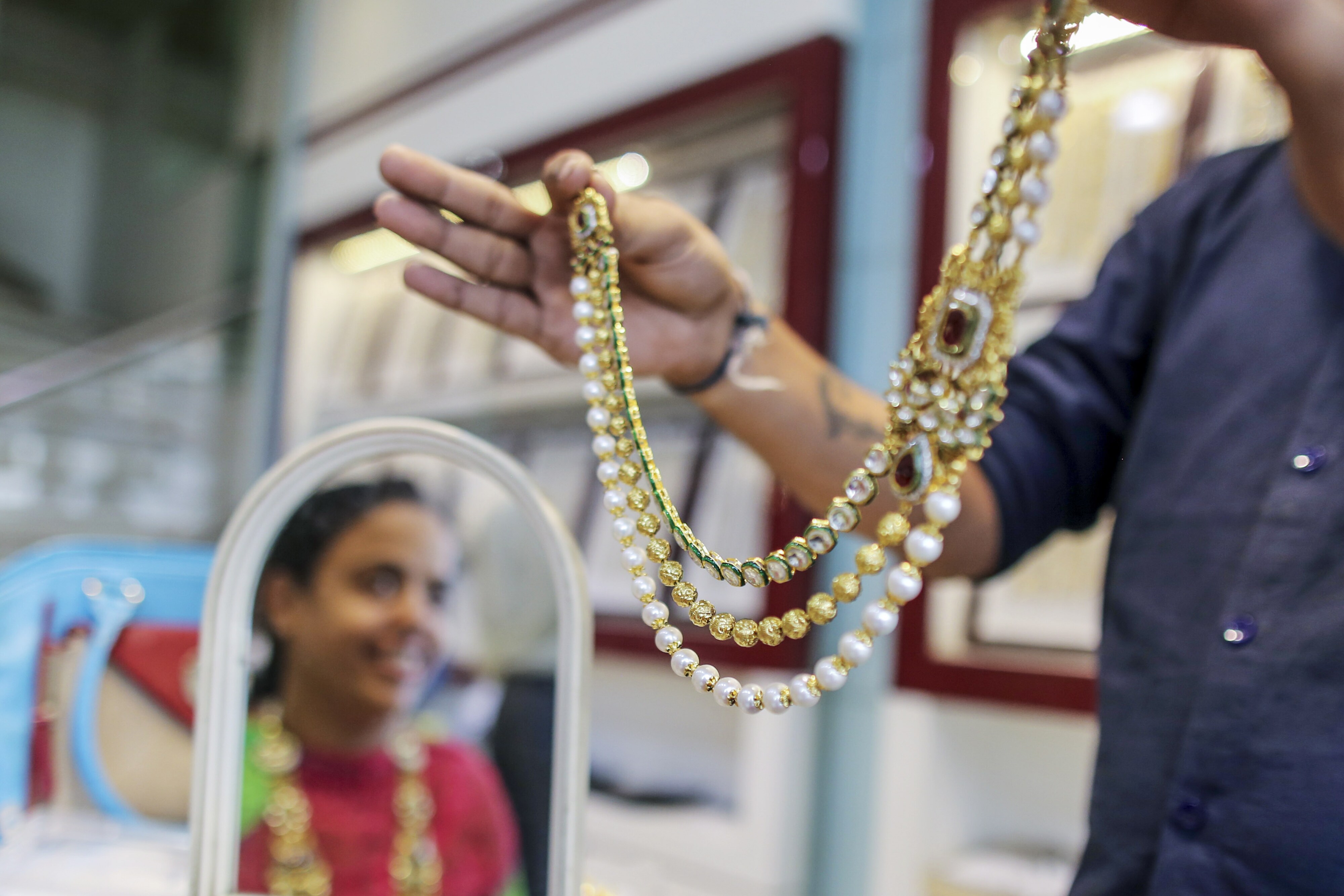
The 3 percent tax on gold jewellery is not likely to cause any major disruption to the overall gold demand, rating agency ICRA said.
"Gold jewellery demand is expected to be favourable over the near-term with uptick in both rural and urban demand.”
Rural consumption will benefit from favourable monsoon guidance, likely rise in minimum support prices, rural employment guarantee scheme and farm loans waiver in few states," ICRA Vice President and Co-Head, Corporate Ratings, K Srikumar said.
He said, the urban demand will gain traction from rising income levels, pay revision for state government employees and pensioners and favourable demographic spread.
"The long term fundamentals of the industry remain strong driven by the cultural underpinnings in the country, evolving lifestyle, and growing disposable income," he added.
The government announced a 3 percent tax on gold jewellery, in line with the 2-6 per cent rates indicated earlier in the draft goods and services tax (GST) rules.
Also Read: Jaitley Makes Case For Rate Cut; Experts Say RBI May Wait For GST
Under the present tax regime, jewellery retailers are levied a VAT of 1 percent in most states (except in Kerala, where 5 per cent VAT is levied) on sales and an excise duty of 1 percent is levied on the input side.
This apart, a duty of 10 percent is levied on bullion imports and 15 percent on jewellery imports. Against the cumulative current tax rate of 2 percent, the final GST rate at 3 percent is higher, while the import duty will continue at prevalent rates.
ICRA expects the same to be passed on to end customers and the higher tax is not likely to cause any major disruption to the gold jewellery demand.
The rating agency said organised retailers are especially expected to benefit at the cost of unorganised players as the overall supply chain is likely to be streamlined with the scheduled rollout of GST.
In recent years, the market share of organised players have increased, due to quality assurances, purity, availability of a wider designs and rising preference for fashion jewellery.
Post-demonetisation and regulatory restrictions, ICRA said there was churn in the market share of unorganised retailers who were affected by liquidity squeeze and higher compliance costs.
As the jewellery retailer can now claim input tax credit on purchases from goldsmiths or manufacturers, ICRA expects the structural shift and changing landscape to accelerate the formalisation of the industry.
It will be because retailers would prefer to source from organised players to claim input tax credits on jewellery and other services availed, it added.
Also Read: CLSA Upgrades Titan After GST Council Finalises Tax Rate On Gold Jewellery

-
Navigating Energy Crossroads: S Jaishankar's Call For Diversified Supply Chains At G20 Ministerial Meeting

As geopolitical fault lines continue to test maritime trade routes and commodity flows, Jaishankar's message remains pertinent: true economic resilience requires open markets, protected transit lines, and a genuine commitment to multilateral cooperation rather than coercion.
-
Indians Are Travelling, But Not Every Journey Is A Holiday | The Week In Whys
Pilgrims, patients and working women are the real travellers, and the system hasn't quite caught up with them.
-
Getting To Work Costs Women More | The Reason Why
It is not just about women paying more than men. It is about women paying much more in cities than in villages.
-
AI Bias In Investing Cannot Be Eliminated, But It Can Be Governed
Framing is a particularly important example as identical financial information presented in terms of gains rather than losses can lead an LLM to reach a different assessment.
-
Joining The Dots | Dark Skies, Steady Diya: Why Hope Holds This Diwali
With war, a weak rupee and foreign outflows weighing on sentiment, policymakers at the NDTV World Summit and market veterans at NDTV Profit Ignite: Diwali Edition offered the same advice: stay invested and filter out the noise.
-
The Curious Case of Equitas Small Finance Bank And A CEO Who Quit For Stock
PN Vasudevan believes persistent investor concerns over a perceived conflict of interest had become a governance overhang on Equitas Small Finance Bank's stock, even as the lender improved profitability and asset quality.
-
Talking Points This Week: AI Cash Burn, A Tiger Comeback And An India That Still Finds Its Own Path
India is not immune to higher oil or tighter global liquidity, yet its earnings base is broader, its domestic policy levers are still available.
-
Foreign Investors Own Half Of HDFC Bank and ICICI Bank. An LTCG Cut Could Matter Most Here
Foreign portfolio investors have US$115 billion parked in HDFC Bank, ICICI Bank. If the government cuts long-term capital gains tax, Jefferies says returning foreign money could land here first.
-
'Never Seen This Level Of Negativity': Sandeep Tandon Says The Next Rally May Be Closer Than You Think
Veteran investor Sandeep Tandon says foreign selling is easing, large-caps are due a comeback and mid-caps are crowded, while he turns positive on gold, power and pharma this Diwali.










