Conserving Tigers Has Economic Benefits, Too

Saving tigers in their biggest home is not just a moral call—it has immense economic value.
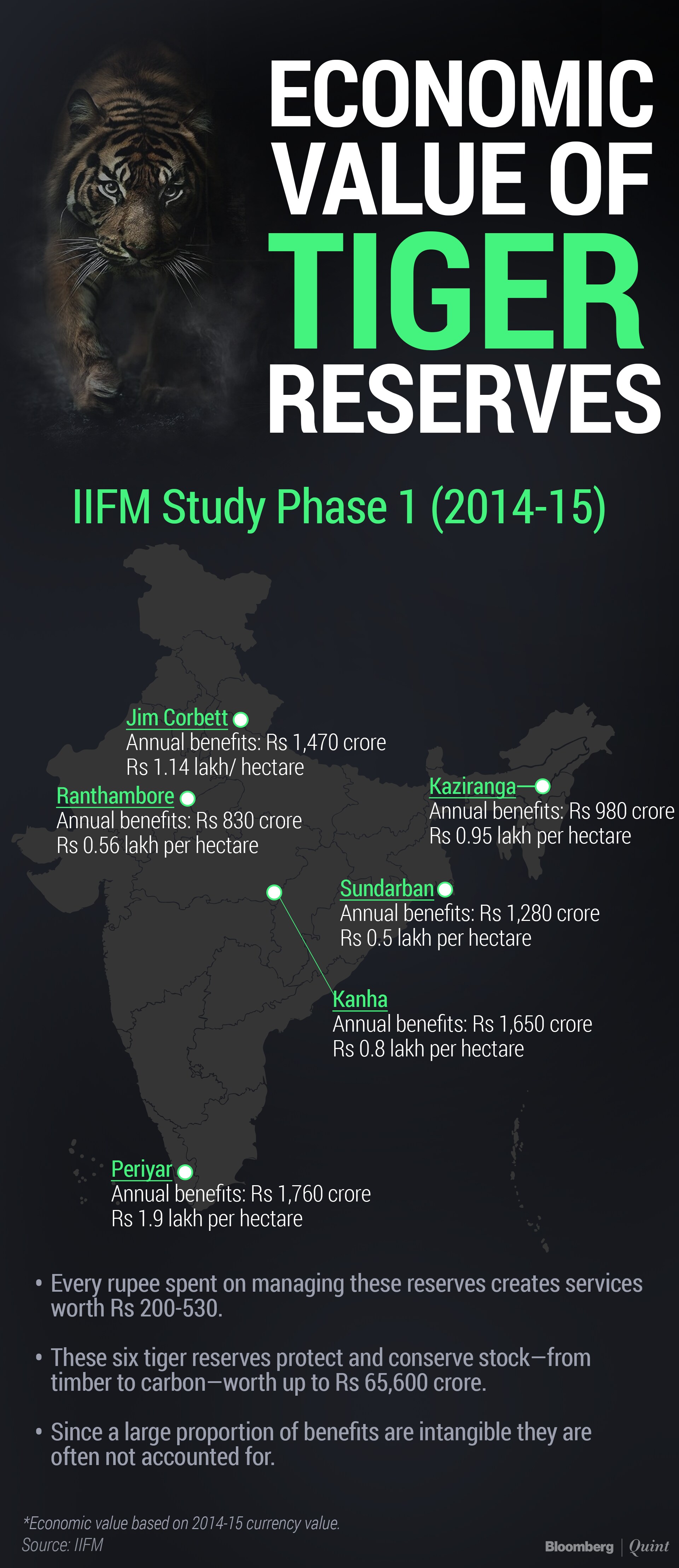
A comprehensive study by the Indian Institute of Forest Management, Bhopal, conducted in two phases over five years, has attempted to put an economic valuation to 16 tiger reserves in India.
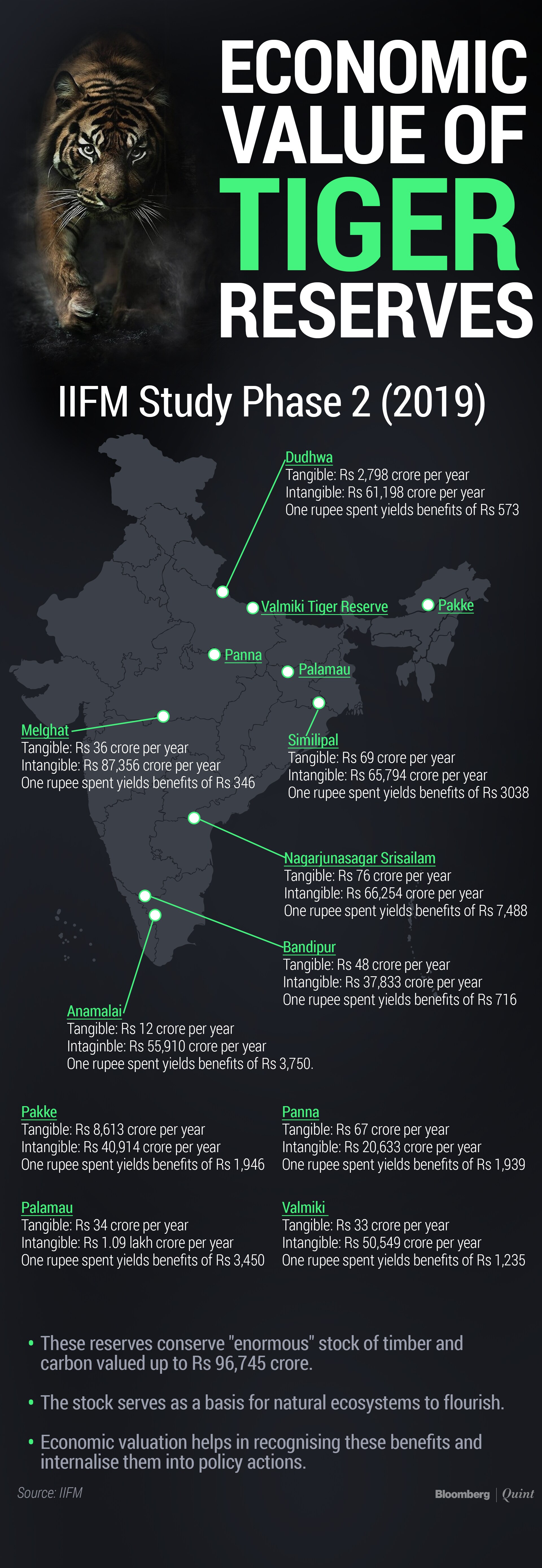
The second part of the study, released recently, showed that just ten tiger reserves ensure flow of economic benefits worth up to Rs 16,202 crore every year. Not just that, these reserves also conserve “enormous stock” of timber and carbon that is valued up to Rs 96,745 crore.
“The study findings also indicate that a sizeable proportion of flow benefits (as well as stock) are intangible and hence are often unaccounted for in the socio-economic scenario and policy formulation,” the report said. “Economic valuation helps in recognising these benefits and internalise them into policy actions.”
The report assumes significance with India witnessing a 33 percent rise in tiger population—the most on record since it started the big cat's census in 2006. India's tiger conservation efforts that go back to the 1970s when Project Tiger was started and was also lauded by the United Nations as the population of apex predator doubled in less than fifteen years. India is also home to three out of four tigers in the world.
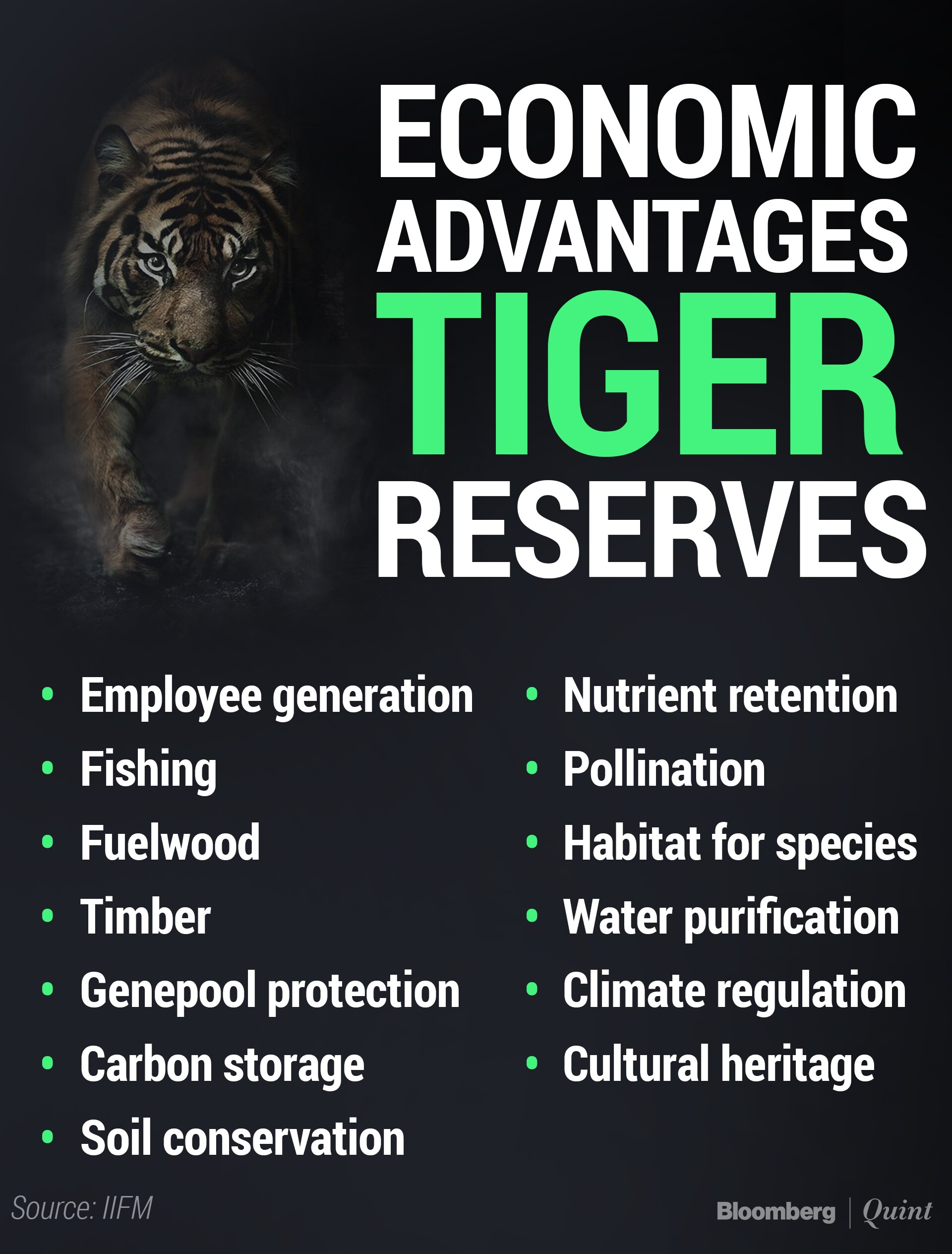
IIFM suggests that there are number of intangible economic benefits that come from tiger reserves. They can create jobs, promote soil conservation, help in pollination, water purification, and serve as a habitat for large variety of species. Besides, it helps protect gene-pool of innumerable organisms.
Not only that, the report suggest that human beings' health can benefit from being in proximity to natural reserves and forests.


-
A New Samvat Wishlist: Inclusive Prosperity And Human Development

India has strengthened its economic foundations through infrastructure, digital access and enterprise. Its next growth chapter must deepen productivity, create better livelihoods and widen participation in prosperity.
-
Love, Sex Aur Dhokha: The Audacious Plot To Spy On Jensen Huang
A Taipei dinner, a Singapore chip buyer and a suspected Chinese asset: inside the alleged spy operation that got close to NVIDIA's Jensen Huang.
-
Ten Things I Learnt This Samvat
Patience can be a trap. Cheap stocks can stay cheap. Leverage can wipe you out. What did Samvat 2082 teach us? Niraj Shah writes on 10 lessons from the year gone by.
-
Talking Points This Week: Tech Nerves, FII Buying, And A Faraway Banking Shock
The global markets are not shining this Diwali. The exception in the large markets is, India.
-
Midterm Rally Lasted A Day. The Hard Reality Of A Divided US May Last Two Years | Opinion
Between a contested AI boom, a debt ceiling that arrives in 2027 and a president with every incentive to act alone, the next two years may prove more volatile than the first day's rally suggests.
-
Blue Wave Will Derail the AI Trade but Won't Dismantle the AI Era | Unhedged Position
The Democrats' sweep of the US Congress will see politics collide with economic forces both over the long and short term.
-
It's Time To Take The GST Council's Bet On Trust Global
Payment records can prove India's services exports, and clear, proportionate rules can bring foreign digital sellers into the tax net.
-
Opinion | India at 38: From Innovation Overperformer to Innovation Powerhouse
India now has 453 VC-backed deep science startups, 18 of them late-stage, after 117 percent growth since 2020. Laurus Labs, at USD 9.3 billion, is the most valuable deep science company in any middle-income economy outside China.
-
Navigating Energy Crossroads: S Jaishankar's Call For Diversified Supply Chains At G20 Ministerial Meeting
As geopolitical fault lines continue to test maritime trade routes and commodity flows, Jaishankar's message remains pertinent: true economic resilience requires open markets, protected transit lines, and a genuine commitment to multilateral cooperation rather than coercion.









