Budget 2024: Rooftop Solar Support Can Make Power Free For Households After Four Years
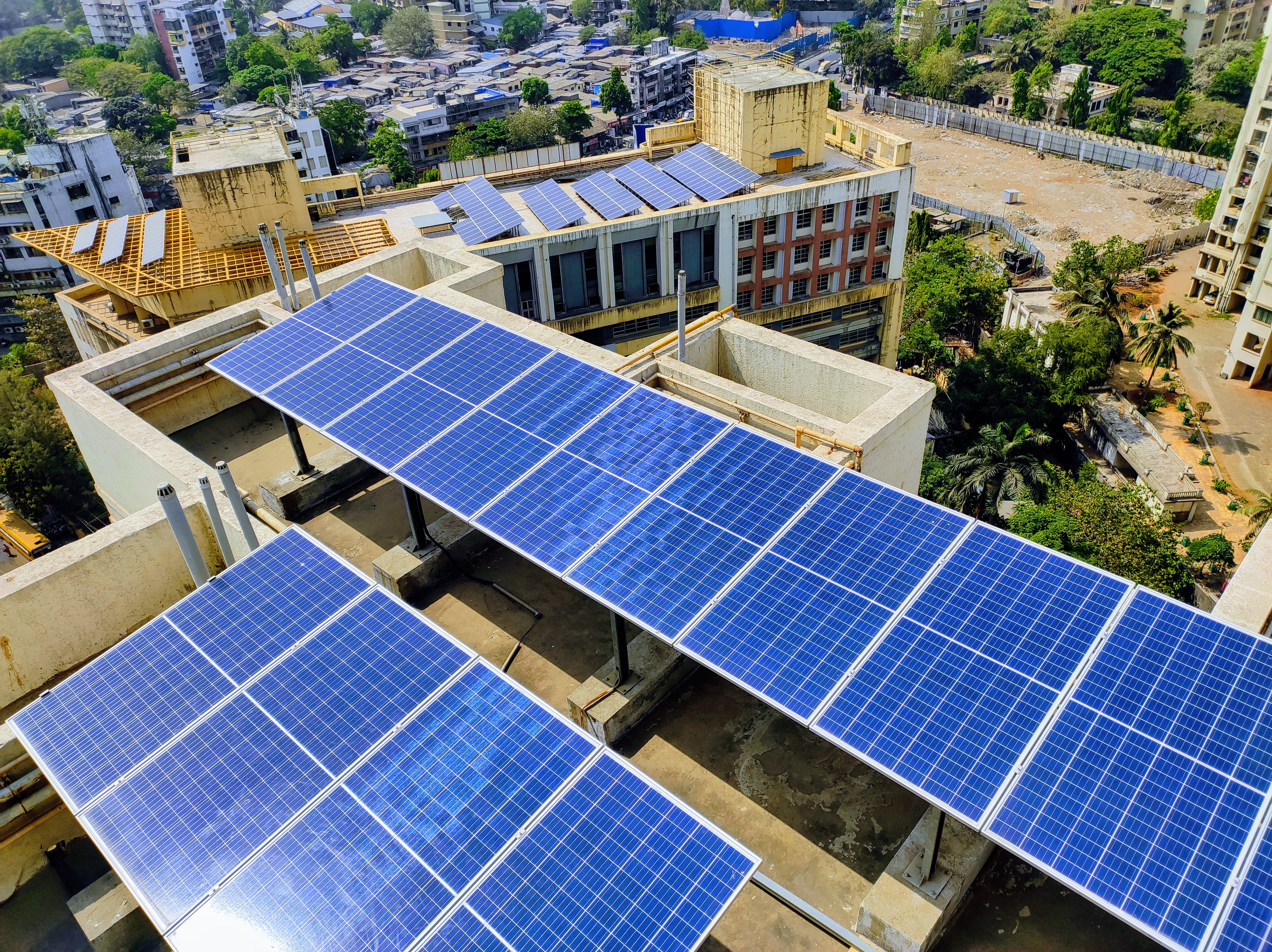
Allocation of free electricity for 300 units to 1 crore households under the Pradhan Mantri Suryodaya Yojana can make power free for the families consuming up to 300 units, four years after installation cost is recovered.
Once the installation cost of Rs 80,000 (after subsidy) for 2KW plant is recovered in four years—considering saving is Rs 15,000 to Rs 18,000 per annum—the surplus power generated can be sold on the grid, while anything up to 300 units consumed will come for free, according to industry experts and officials.
To get the full benefits of the scheme where 300 units are provided free, households should set up at least 2KW plants, assuming a 1KW plant generates 150 units a month, operating at 5-6 hours a day.
“If the consumption is less than 300 units, the surplus can be sold on the grid, while the household pays only for the additional purchase above 300 units,” said Rupesh Sankhe, vice president and senior power analyst with Elara Securities Ltd.
Suryodaya Scheme will help create 10GW additional rooftop capacity taking India's total installed capacity to 22 GW in the scheme's time period, Sankhe said.
The 10 GW capacity will be approximately 4% of peak demand of 240 GW expected by FY26 and will help India achieve its 40 GW rooftop solar target, if the programme is implemented properly, he said.
The initiative not only advances capacity addition but also addresses the chronic issue of poor financial viability and subsidy dependence of distribution companies, making significant stride towards sustainability and economic efficiency, said Anujesh Dwivedi, partner, Deloitte India.
Apart from the beneficiary households, distribution companies will benefit from the reduced need for investments in incremental network infrastructure and avoidance of AT&C losses, since the consumption happens at the plant site itself, he said.
According to Puneet Goyal, co-founder of solar engineering, procuring and construction company SunAlpha Energy Pvt., although details are awaited on the timeline for the project, implementation is going to be a big challenge given India's total panel manufacturing capacity is only around 40 GW.
The government also charges 40% customs duty on imports and there is an approved list of modules and manufacturers, which will likely come up again from April 1; that doesn't make the environment conducive for the rooftop solar sector, he said.
"If even 10% of the projected plan gets implemented, it's going to be a big achievement, considering the regulatory pitfalls and execution bottlenecks," Goyal said.
The government should rather focus on more practical and higher impact sectors, such as the commercial and industrial sector which with subsidies, clear policies and financing schemes will lead to lower manufacturing and service costs, which in turn would benefit the general public, he said.
The PM Suryodaya programme adds to an ongoing scheme for rooftop solarisation that was running over the last decade. About 40%, or 40 GW, of the government's initial target of installing 100 GW of solar capacity by 2022 was to come through rooftop solar systems, said Akshat Khetan, founder of AU Corporate and Legal Advisory Services.
However, the country is lagging on these two targets. At the end of last year, total solar installed capacity in the country had reached 73.3 GW, of which grid-connected rooftop solar contributed only about 11 GW.
"All states can leverage this opportunity as rooftop solar potential exists everywhere, unlike utility scale solar, which is primarily restricted to a few states," Khetan said.

-
Medicine Pricing: Where Must Profit Stop?

India must confront excessive margins, hidden incentives and regulatory gaps that threaten the integrity of medicine.
-
Why Amazon And Flipkart Are Struggling To Beat Meesho In India's Smaller Cities
With 274 million users and lowest-cost logistics, Meesho is defending its value commerce crown against giants like Amazon and Flipkart.
-
High US Salaries, No Green Card Certainty: The Financial Calculation Facing Indian H-1B Families
The suspension of PERM processing at eight technology employers does not cancel existing H-1B visas. What it does is force a question many Indian families have been avoiding: is the US salary worth tying your career and family plans to one employer?
-
Swiggy vs Eternal: Food Delivery's Two Rivals Are No Longer In The Same Race
Eternal is building a private AI assistant, dark.ai. Swiggy is still working out how to make Instamart pay, with an operating loss of Rs 895 crore in the July-September quarter while Blinkit stayed profitable.
-
Where You Live Shapes How You Get To Work | The Reason Why
Two-wheelers are the most popular way to get to work in India, accounting for nearly 43% of workplace commutes.
-
Unhedged Position: Can India See An Indonesia-Style Time Correction?
The Nifty is trading below levels it first clocked in 2024. Is there, then, as I have suggested in the headline, potential that the current time correction drags on painfully for the next three-five, even ten years?
-
Navigating Friction And Energy Realities: An Analysis Of Marco Rubio's October Visit To India
Occurring at a critical juncture marked by stalled trade negotiations and escalating geopolitical pressures over global energy supplies, the visit offers a profound window into modern US-India relations.
-
India Exports Capital. Why Not Export Trusteeship?
The big question, then, is whether India can build an institution that global borrowers, investors, banks, and lawyers can trust, even without an Indian connection.
-
France's Economy & Politics Are In Crisis | The Reason Why
Let's look at how the French economy and politics evolved under Nicolas Sarkozy, Franois Hollande and Emmanuel Macron.
-
You May Inherit The Business. You Must Earn Its Credibility.
Succession tests the founder's ability to share authority as much as it tests the next generation's readiness to assume it.










