Advisory Panel Suggests A Hundred Tweaks In GST Rules
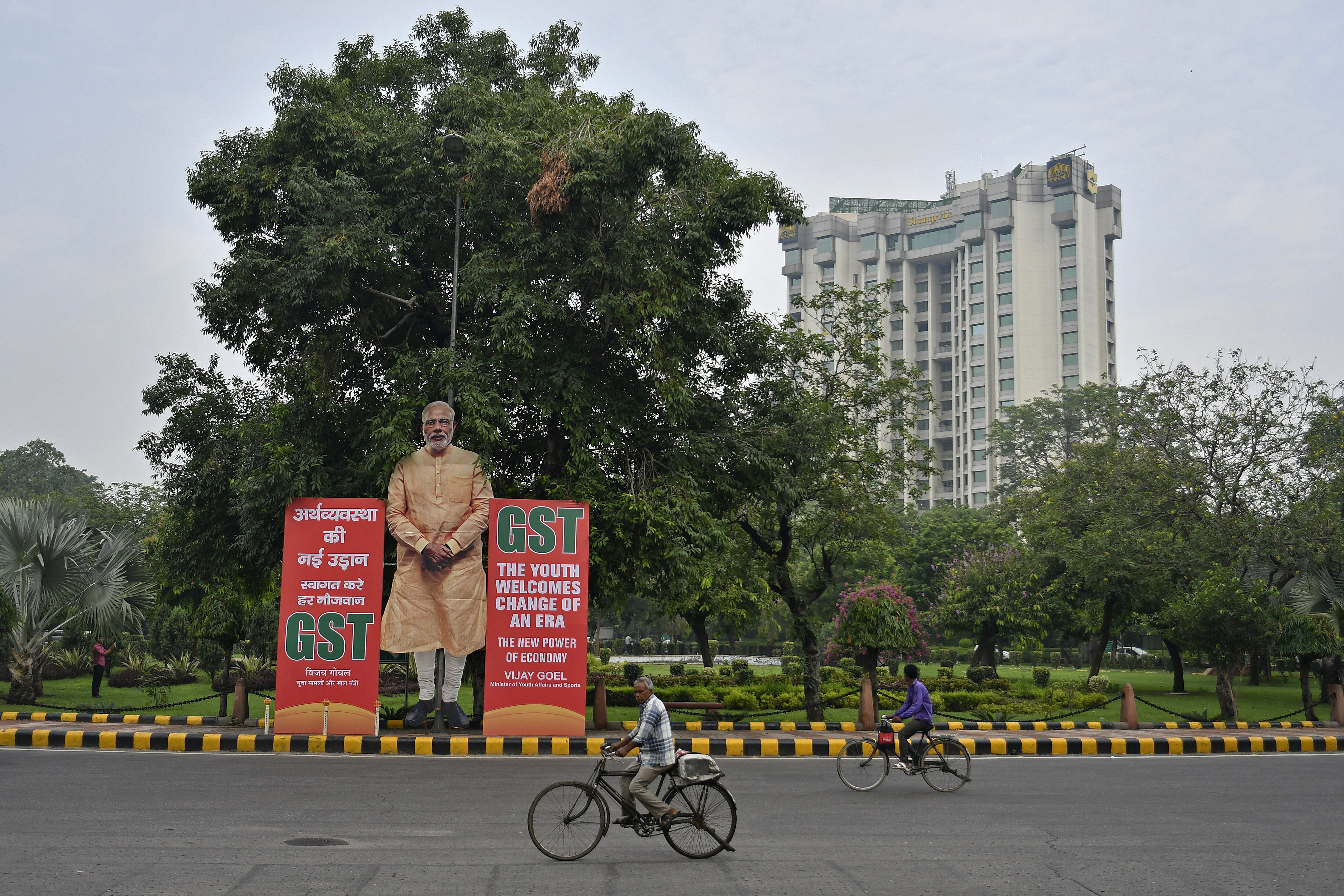
An advisory committee has suggested a slew of changes in the Goods and Services regime, including the broadening scope of the composition scheme and simplifying filing of returns.
The Law Advisory Committee set up by the Ministry of Finance has suggested around 100 changes in the GST Act such as including service providers in the composition scheme and allowing filing of summarised GSTR-3B returns beyond the March 2018 deadline, an official on the committee of the matter told BloombergQuint on the condition of anonymity.
Currently, service providers, with the exception of restaurant owners, cannot avail the scheme which allows businesses to pay a flat tax rate on their turnover. Traders and manufacturers pay a flat GST rate of 1 percent on their turnover, while restaurants are charged a regular GST rate of 5 percent.
There is no logical reason why composition scheme couldn't be availed by other service providers, MS Mani, senior director at Deloitte India told BloombergQuint. “Its objective is to simplify procedures for small taxpayers, so they don't have to maintain detailed books of account,” he added.
Compliance by small service providers would increase if composition scheme is made available for them.MS Mani, Senior Director, Deloitte India
Simplify Filing Of GST Return
The advisory group, set up on Nov. 2, also suggested a simpler return filing process, the official quoted above said.
It recommended that the government allow filing of summarised GSTR-3B returns beyond the prescribed deadline, move towards one consolidated return instead of multiple return forms such as GSTR-1, GSTR-2 and GSTR-3. It also suggested that taxpayers be allowed to revise their return filings.
Mani from Deloitte agrees. Allowing taxpayers time to file GSTR-3B returns after the deadline will increase compliance, he said.
Abolition Of Reverse Charge Mechanism
The panel has also suggested abolishing the reverse charge mechanism, under which the buyer of a good or service pays tax instead of the supplier. In its Oct. 6 meeting, the GST Council had decided that the mechanism will be suspended till March 31 next year and would be reviewed by a committee of experts.
Abolishing reverse charge will also lead to greater compliance, especially among medium and small scale enterprises, said Sumit Lunker, indirect tax partner at PwC India. “It will also encourage trade with legitimate unregistered dealers, and small taxpayers who were losing business as registered dealers chose not to do business with them,” he added.
An Alternative To E-Way Bills
The panel also recommended deferring electronic way bills till 2019, and suggested the government consider an alternate to such bills. The GST Council, in its meeting on Oct. 6, had decided that e-way bill system would be introduced in a staggered manner with effect from Jan. 1 next year and will be rolled out nationwide from April 1.
An e-way bill is an electronic document generated on the GSTN portal for movement of goods over Rs 50,000 in value.
The six-member advisory group submitted its report to Finance and Revenue Secretary Hasmukh Adhia yesterday. The panel was chaired by retired Chief Commissioner of Central Board of Excise and Customs Gautam Ray. Members of the panel included Praveen Khandelwal, Arghya Sen Gupta, Ajay Sahai, Om Prakash Mittal and Vinod Jain.
The panel gave over 100 recommendations in its report from about 700 representations it received on problems faced by taxpayers in the GST regime. Some of the other recommendations include:
- Input tax credit should be released within the same month, and matching and adjustment may be done later.
- Doing away with harmonised system of nomenclature (HSN) code in the invoice for easier return filing.
- Classification of items should be done in such a way that raw material and finished product are in the same slab. This will lead to clearing of refunds faster.
- Exempted or nil rated goods should not be counted in the aggregate turnover of a taxpayer.
- All job works should be taxed at 5 percent.
- Formation of a National Advance Ruling Authority. (An advance ruling authority would allow determining the tax liability of a business, and also plan its activities which are liable for payment of GST, in advance.)
- Search/raid only if the authority has evidence against a person and with the orders of a commissioner.
- Scrutiny of returns should be 0.5-1 percent only.
- No GST on interest charged for late payment.
- Input tax credit to be given on business expenses like, food, insurance, gift to employees, business assets.
- Issuing of consolidated debit note instead of invoice-wise debit note.
- No restrictions on refund of accumulated credit.
- Premises of assessee cannot be visited casually by the officers, without prior written permission of the Commissioner.

-
Navigating Friction And Energy Realities: An Analysis Of Marco Rubio's October Visit To India

Occurring at a critical juncture marked by stalled trade negotiations and escalating geopolitical pressures over global energy supplies, the visit offers a profound window into modern US-India relations.
-
India Exports Capital. Why Not Export Trusteeship?
The big question, then, is whether India can build an institution that global borrowers, investors, banks, and lawyers can trust, even without an Indian connection.
-
France's Economy & Politics Are In Crisis | The Reason Why
Let's look at how the French economy and politics evolved under Nicolas Sarkozy, Franois Hollande and Emmanuel Macron.
-
You May Inherit The Business. You Must Earn Its Credibility.
Succession tests the founder's ability to share authority as much as it tests the next generation's readiness to assume it.
-
Signing Deals Is One Thing; Making Them Work Is Another | The Week In Whys
Sometimes, things don't turn out as planned. Indian companies have lost some bids to rivals, some projects won't produce until 2030.
-
FOMC Wall, PERM Suspension, Hospital Stocks | Talking Points This Week
A PERM suspension would directly affect green-card sponsorship rather than H-1B visas, so the near-term earnings impact could remain relatively limited. The key question is whether this marks a new phase in US scrutiny of Indian IT.
-
Everything, Everywhere, All At Once: Dalal Street's Week To Forget | Joining The Dots
Visa curbs, a Starlink spat and cancer drug caps: what connects this week's shocks for Indian markets
-
India Is Going Abroad For Critical Minerals. But It May Take Years To Pay Off | The Reason Why
Although India's steps are in the right direction, they remain modest compared with India's growing dependence.
-
When Everyone Has AI, What Gives You An Edge?
India's young workforce is entering an uncertain world of work where powerful AI tools are becoming widely accessible. The advantage will belong to those who combine deep expertise with digital fluency, and the distinctly human capabilities that technology cannot manufacture.
-
Wrong Labels, High Pesticide Residues Holding Back Agri Exports | The Reason Why
India needs stronger domestic food-safety and labelling standards, with best practices becoming part of everyday business for farmers, traders and food companies.










