GST: Abolish IGST To Make Tax System Effective, Says Manish Sisodia
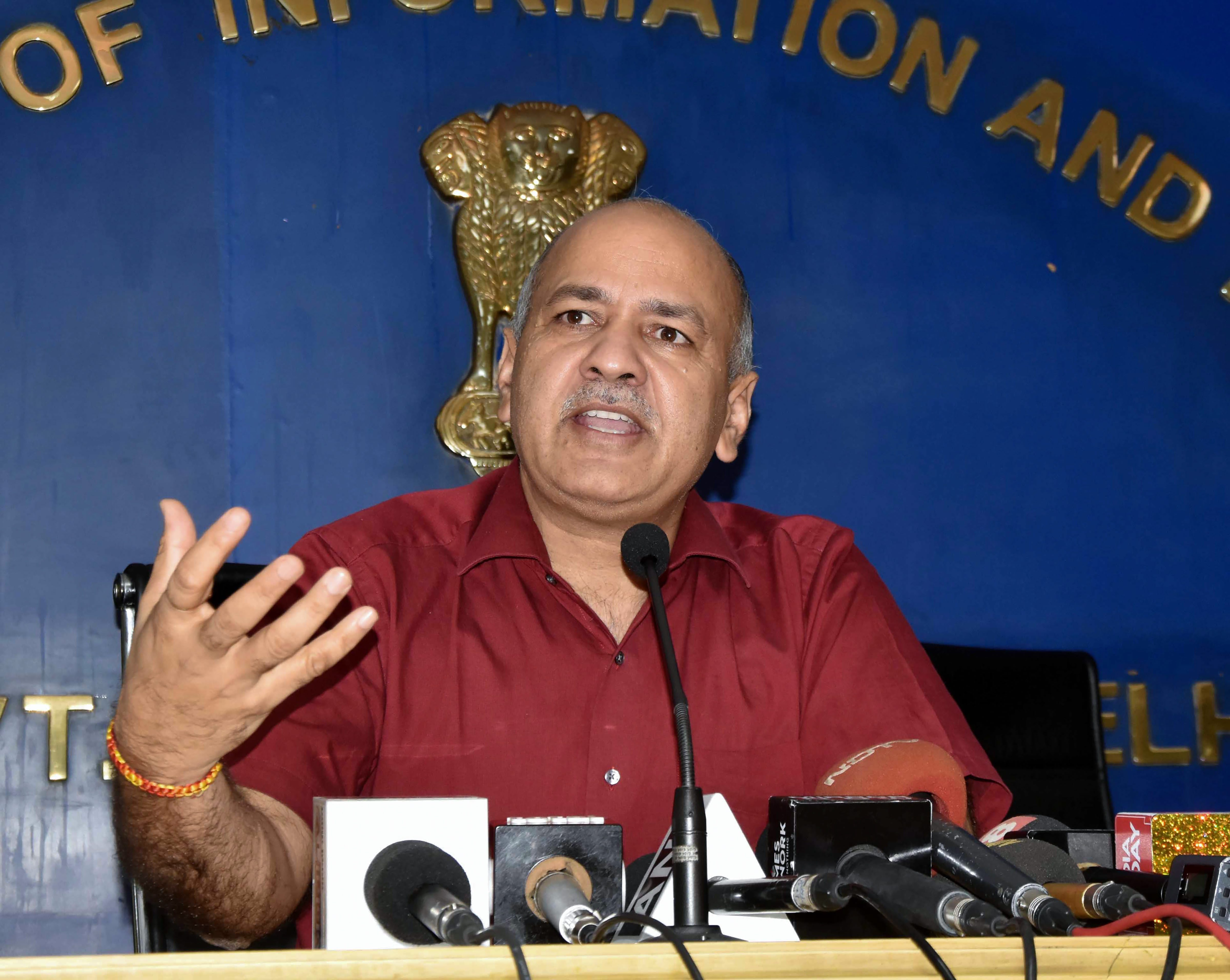
Delhi Deputy Chief Minister Manish Sisodia today demanded abolishing the Integrated Goods and Services Tax, saying Rs 1.8 lakh crore has accumulated in the IGST fund but the money is lying idle.
He also favoured bringing real estate within the fold of GST as that will help deal with black money and called for doing away the ‘inspector raj' associated with the electronic way or e-way bill system.
Sisodia said GST was first conceptualised as ‘one nation, one tax' but with five tax slabs, it's now ‘one nation, several taxes'.
He said he had opposed IGST from the beginning and had suggested sticking with only Central GST and State GST.
“I feel IGST is a bad idea. In the last GST Council meeting, we got the figure of Rs 1,81,418 crore IGST which we have collected and is lying idle in an escrow account. This is neither in the account of state government nor the central government, Sisodia said at an ASSOCHAM event in New Delhi.
It's not helping central or state governments or traders as it is just lying idle. It's a loss to the economy.Manish Sisodia, Deputy Chief Minister, Delhi
Under GST, the tax levied on consumption of goods or rendering of service is split 50:50 between the Centre and states. That's known as the Central GST or CGST and State GST or SGST.
On inter-state movement of goods as well as imports, an Integrated GST or IGST is levied, which accrues to the Centre. A cess is levied on top of these taxes on sin and luxury goods which constitutes the compensation kitty used to make good any revenue shortfall faced by states following GST implementation.
IGST is an interim tax paid by businesses and can be adjusted when they pay CGST or SGST.
“After one year if we can decide to abolish IGST... this is not required. Today or tomorrow we have to do it if we have to make GST effective. IGST is the biggest problem in way of GST”, Sisodia said.
He said the requirement of e-way bill should be done away with for intra-state movement of goods.
“Inspector raj should be done away with. We should do data driven inspection. If everything is online, then you do not need inspectors to ask drivers about goods being transported in the truck,” Sisodia said.
“E-way bill is not a good idea and it should not be there for intra-state, because intra-state means district to district you are putting inspectors for inspection. When everything is data driven and online, then why the need for physical presence of inspectors? You check data and go to godowns and showrooms,”he reasoned.
E-way bill system was launched on April 1 for movement of goods between the states. The requirement of e-way bill for intra-state or within the state movement of goods was launched in a phased manner beginning April 15.
Touted as an anti-evasion measure, transporters of goods worth over Rs 50,000 are required to present e-way bill to a GST inspector, if asked. The measure was expected to help boost tax collections by clamping down on trade that was happening on cash basis.
On the issue of fewer tax slabs, Sisodia said there is a problem in the very foundation of GST. He said GST should have been fixed at a particular rate instead of various slabs of 5, 12, 18 and 28 percent in addition to cess.
GST, which had subsumed over a dozen local taxes, was rolled out on July 1, 2017.
The Centre has on various occasions defended the multi-tier GST structure, saying it was required to keep inflation under check.
Union Minister Arun Jaitley too had said there cannot be a single GST rate in a country like India where a large segment of population is still below poverty line. As an example, he had said that a hawai chappal and a BMW car could not be taxed at the same rate.

-
High US Salaries, No Green Card Certainty: The Financial Calculation Facing Indian H-1B Families

The suspension of PERM processing at eight technology employers does not cancel existing H-1B visas. What it does is force a question many Indian families have been avoiding: is the US salary worth tying your career and family plans to one employer?
-
Swiggy vs Eternal: Food Delivery's Two Rivals Are No Longer In The Same Race
Eternal is building a private AI assistant, dark.ai. Swiggy is still working out how to make Instamart pay, with an operating loss of Rs 895 crore in the July-September quarter while Blinkit stayed profitable.
-
Where You Live Shapes How You Get To Work | The Reason Why
Two-wheelers are the most popular way to get to work in India, accounting for nearly 43% of workplace commutes.
-
Unhedged Position: Can India See An Indonesia-Style Time Correction?
The Nifty is trading below levels it first clocked in 2024. Is there, then, as I have suggested in the headline, potential that the current time correction drags on painfully for the next three-five, even ten years?
-
Navigating Friction And Energy Realities: An Analysis Of Marco Rubio's October Visit To India
Occurring at a critical juncture marked by stalled trade negotiations and escalating geopolitical pressures over global energy supplies, the visit offers a profound window into modern US-India relations.
-
India Exports Capital. Why Not Export Trusteeship?
The big question, then, is whether India can build an institution that global borrowers, investors, banks, and lawyers can trust, even without an Indian connection.
-
France's Economy & Politics Are In Crisis | The Reason Why
Let's look at how the French economy and politics evolved under Nicolas Sarkozy, Franois Hollande and Emmanuel Macron.
-
You May Inherit The Business. You Must Earn Its Credibility.
Succession tests the founder's ability to share authority as much as it tests the next generation's readiness to assume it.
-
Signing Deals Is One Thing; Making Them Work Is Another | The Week In Whys
Sometimes, things don't turn out as planned. Indian companies have lost some bids to rivals, some projects won't produce until 2030.
-
FOMC Wall, PERM Suspension, Hospital Stocks | Talking Points This Week
A PERM suspension would directly affect green-card sponsorship rather than H-1B visas, so the near-term earnings impact could remain relatively limited. The key question is whether this marks a new phase in US scrutiny of Indian IT.









