A Minimum Work Threshold May Go Against The Spirit Of MGNREGA
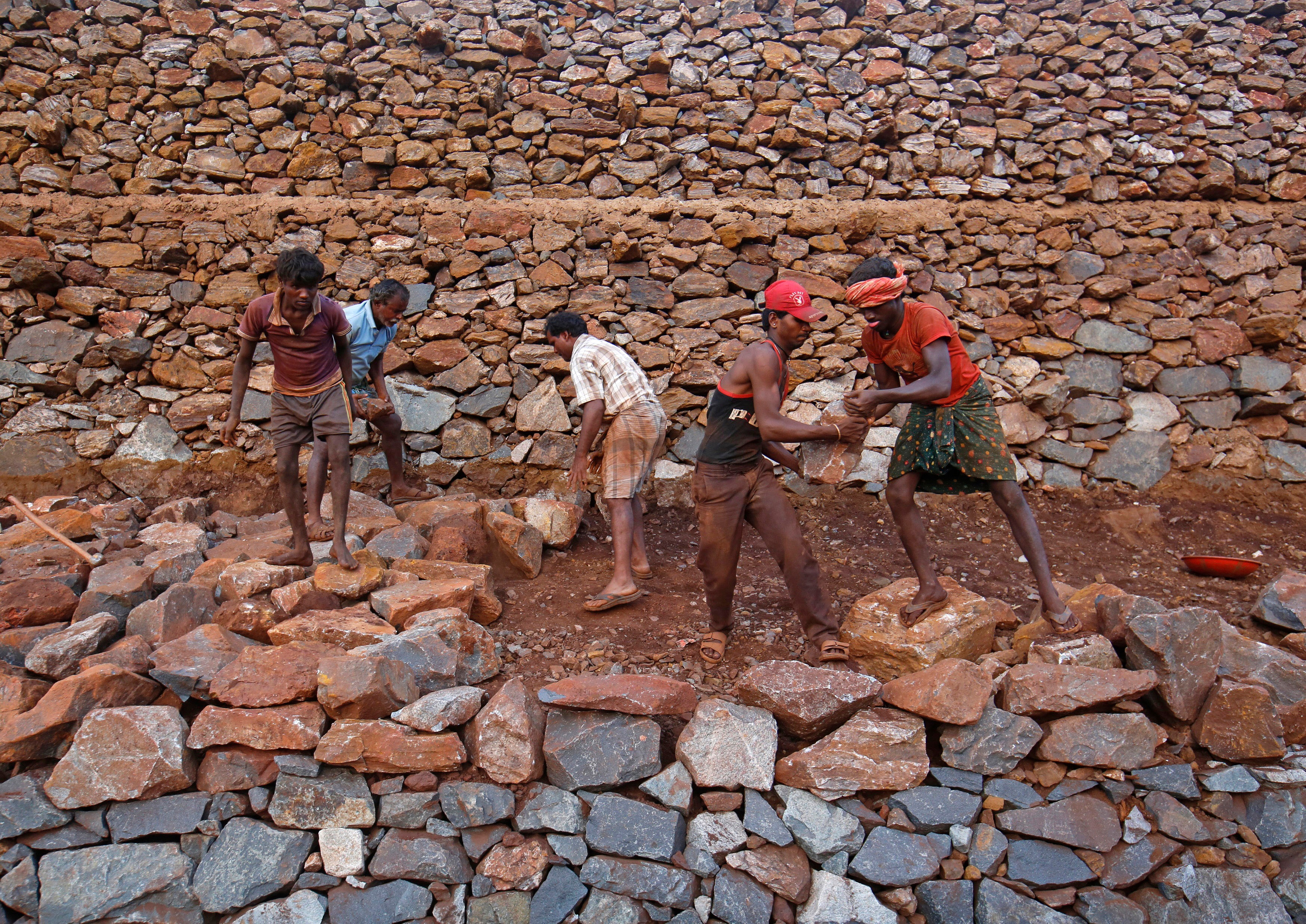
The central government may define the minimum work requirement under the rural jobs guarantee scheme to claim benefits for ensuring better targeting and optimal use of funds. But that could stifle fund flow and go against the spirit of decentralisation envisioned in the scheme, according to economists.
New Delhi may be considering defining how much of work must be done to qualify for a day's wage under the programme, after considering the bill at the end of the second quarter, The Economic Times reported. States have had the responsibility of defining work till now, leading to varying standards.
The Mahatma Gandhi National Rural Employment Guarantee Act, or MGNREGA, provides 100 days of guaranteed wage employment in a financial year to every rural household whose adult members volunteer to do unskilled manual work. The scheme is demand-driven with the central government transferring resources to states, based on the demand for employment in each state.
The guidelines and outcomes of the programme need to be region- and season-specific, said NR Bhanumurthy, vice chancellor at the BR Ambedkar School of Economics.
According to Rajendran Narayanan, faculty at Azim Premji University, Bengaluru, and an MGNREGA researcher, the focus on targeting may impact the effectiveness of the scheme.
"Targeting could lead to a supply-driven approach. The programme was envisioned to offer work to people, should they choose to want it. There needs to be a choice for self-selection."
There are also concerns surrounding the nature of work and how uniformity can be achieved as states have different terrains and requirements.
The scheme would be most effective if it remained decentralised, Amalendu Jyotishi, a professor with the School of Development at Azim Premji University, told BQ Prime. "More than state governments, the autonomy should be with gram panchayats, who understand the local needs and the kind and conditionality of work," he said.
The Need To Define Daily Limits
Defining of minimum work is expected to ensure proper targeting so that intended beneficiaries are not left out inadvertently, according to a senior government official with the knowledge of the matter.
Audit reports and the CAG in the past have also highlighted the need for tightening leakages and ensuring quality of work in states, said the official, who didn't want to be identified as details are not public.
Part of the exercise is also expected to involve sending out teams to states and tracking the spend of the funds already released. The teams would also be looking at the assets being created and the valuation of such assets through the programme, the senior official said.
The finance ministry declined comment. BQ Prime awaits response on queries emailed to the Ministry of Rural Development on the exercise and a prospective timeline.
Other Possible Measures
"It becomes important to remember that from a macroeconomic perspective, the employment guarantee programme works as an automatic stabiliser where the larger goal is creating employment rather than a productive effect," Jyotishi said.
Based on his research, Narayanan said there are two levels of exclusion already at play at the grassroots level, where worker households are not getting work despite wanting it or are not getting work for as long as they want.
To counter the unmet demand and corruption, Narayanan suggested that the government funds and programme implementation functionaries must increase. To counter corruption, there is a need to empower existing state and local-level social audit teams, he said.
"Social audit is meant to be a part of the programme to validate the work done and check corruption. So, more support for social audit as part of programmes and an increase in the budgetary allotment are some of the measures the centre could look at."
According to Bhanumurthy, the most important component of the scheme is the social audit. Only a budgetary allocation of 1% is mandated for social audits and that too is often subsumed in the overall administrative costs, which has around 6% allocation, he said.
“Social audit expenses need to be kept out of administrative costs and it must be made mandatory to utilise the allocation for it," he said. "That should determine to what extent the monitoring and evaluation happens at the gram panchayat level."
Of the Rs 73,000 crore budgeted for MGNREGA this fiscal, Rs 59,942 crore has been transferred to states.
A PTI report suggested that the Ministry of Rural Development has sought additional funds of about Rs 25,000 crore for the rural jobs scheme, a clear indication of a rise in demand for work.
Last year, the government's expenditure on MGNREGA touched Rs 98,000 crore. Approval for any additional expenditure will require a parliamentary nod, which will be presented by the finance ministry in its first supplementary demand for grants in the upcoming winter session of Parliament.

-
It's Time To Take The GST Council's Bet On Trust Global

Payment records can prove India's services exports, and clear, proportionate rules can bring foreign digital sellers into the tax net.
-
Opinion | India at 38: From Innovation Overperformer to Innovation Powerhouse
India now has 453 VC-backed deep science startups, 18 of them late-stage, after 117 percent growth since 2020. Laurus Labs, at USD 9.3 billion, is the most valuable deep science company in any middle-income economy outside China.
-
Navigating Energy Crossroads: S Jaishankar's Call For Diversified Supply Chains At G20 Ministerial Meeting
As geopolitical fault lines continue to test maritime trade routes and commodity flows, Jaishankar's message remains pertinent: true economic resilience requires open markets, protected transit lines, and a genuine commitment to multilateral cooperation rather than coercion.
-
Indians Are Travelling, But Not Every Journey Is A Holiday | The Week In Whys
Pilgrims, patients and working women are the real travellers, and the system hasn't quite caught up with them.
-
Getting To Work Costs Women More | The Reason Why
It is not just about women paying more than men. It is about women paying much more in cities than in villages.
-
AI Bias In Investing Cannot Be Eliminated, But It Can Be Governed
Framing is a particularly important example as identical financial information presented in terms of gains rather than losses can lead an LLM to reach a different assessment.
-
Joining The Dots | Dark Skies, Steady Diya: Why Hope Holds This Diwali
With war, a weak rupee and foreign outflows weighing on sentiment, policymakers at the NDTV World Summit and market veterans at NDTV Profit Ignite: Diwali Edition offered the same advice: stay invested and filter out the noise.
-
The Curious Case of Equitas Small Finance Bank And A CEO Who Quit For Stock
PN Vasudevan believes persistent investor concerns over a perceived conflict of interest had become a governance overhang on Equitas Small Finance Bank's stock, even as the lender improved profitability and asset quality.
-
Talking Points This Week: AI Cash Burn, A Tiger Comeback And An India That Still Finds Its Own Path
India is not immune to higher oil or tighter global liquidity, yet its earnings base is broader, its domestic policy levers are still available.










