RBI MPC Preview: Rate Cut Of 25 Basis Points In Sight Amid Cooling Inflation
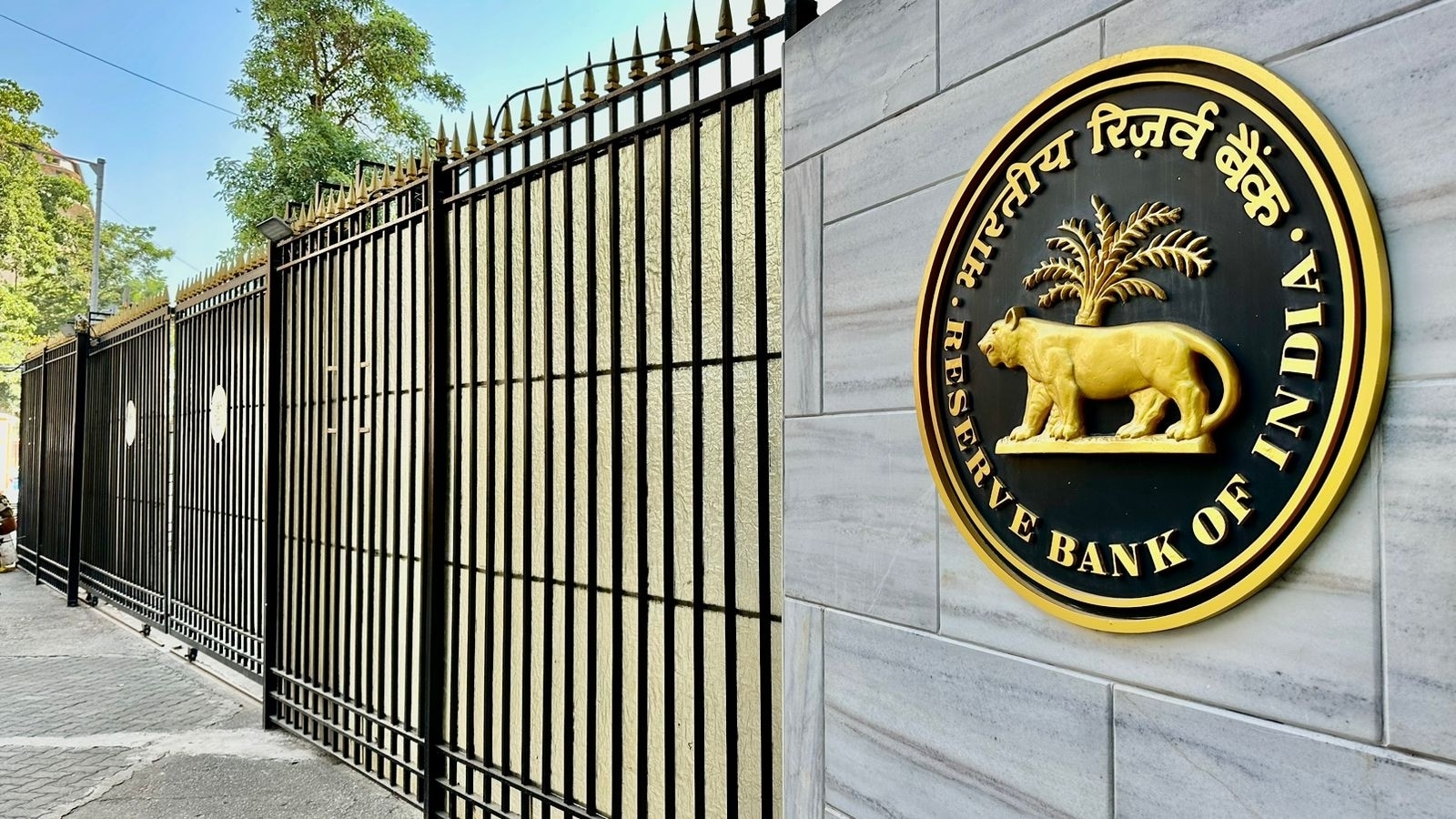
The Reserve Bank of India's Monetary Policy Committee is expected to continue to cut the benchmark lending rate in June. The RBI will announce the decision on June 6.
This is shortly after better than estimated GDP growth in the January-March quarter, even as India's retail inflation has slipped to its lowest in nearly six years.
All 30 economists polled by Bloomberg expect the MPC to continue to cut rates for the third straight meeting. The benchmark lending rate, or the repo rate, is expected to come down by another 25 basis points to 5.75%.
Notably, one basis point is one-hundredth of a percentage point.
"We believe the RBI MPC could likely deliver a third successive repo rate cut of 25 basis points on June 6 while retaining the stance as 'accommodative'," said Aastha Gudwani, chief India economist at Barclays.
GDP: Better Than Estimated
The GDP growth rate rose to a four-quarter high of 7.4% in the January-March period, while GVA rose 6.8% during the fourth quarter. For the full year, GDP is estimated to have grown by 6.5%, which is the same as compared to the second advance estimate of 6.5%.
However, the key driver of higher GDP growth was also the widening of net indirect taxes due to lower subsidies, which added 1.3 percentage points to headline growth, said Gudwani. Real GVA growth at 6.8% was also higher than estimate, explained by the upward revision of the Q3FY25 print, and better operating profit growth driving up manufacturing GVA, said Gudwani, who retained the growth forecast at 6.5% for FY26 as well.
Retail Inflation
India's retail inflation has slipped to its lowest since July 2019, moderating to 3.16% in April. Food and beverage inflation eased to 2.14% led by contracting vegetable inflation.
CPI inflation for FY26 is projected at 4%, with Q1 inflation at 3.6%, by the RBI.
The benign inflationary patterns suggest an aggressive rate cut trajectory by India's central bank with key policy rate likely to breach the neutral rate by March 2026, though the transmission of rate cuts on deposits may not be even, said Soumya Kanti Ghosh, group chief economic advisor at the SBI.
Barring any food price shocks, Ghosh expects cumulative rate cuts of about 125-150 basis points, with inflation expected to breach 3% consistently for next three months. Jumbo rate cuts of 50 basis points could be a better signalling mechanism than secular 25 basis points tranches spread over the horizon, he added.
Banking Liquidity
The Reserve Bank of India will pay Rs 2.69 lakh crore—the highest-ever surplus—as dividend to the central government for FY25. This compares with Rs 2.1 lakh crore in FY24. Economists had pegged the surplus transfer to the government in the range of Rs 2.5-3.5 lakh crore for the fiscal.
The RBI dividend is a substantial durable liquidity infusion, the impact of which on system liquidity will be felt once government expenditure picks-up, said Gaura Sengupta, chief economist at IDFC First bank.
System liquidity which is currently averaging at Rs 1.6 trillion or 0.7% of Net Demand and Time Liabilities (NDTL) in May 2025, could rise to Rs 5 trillion (2% of NDTL) by August-end, according to her estimates. While it might not spell the end of open market operations purchases by the RBI, it does push-out the need for OMO purchases towards the second half of FY26, she said, estimating incremental OMO purchases of Rs 1.6 trillion in the remainder of FY26. This will keep system liquidity surplus at 1% of NDTL by March 2026.

-
Blue Wave Will Derail the AI Trade but Won't Dismantle the AI Era | Unhedged Position

The Democrats' sweep of the US Congress will see politics collide with economic forces both over the long and short term.
-
It's Time To Take The GST Council's Bet On Trust Global
Payment records can prove India's services exports, and clear, proportionate rules can bring foreign digital sellers into the tax net.
-
Opinion | India at 38: From Innovation Overperformer to Innovation Powerhouse
India now has 453 VC-backed deep science startups, 18 of them late-stage, after 117 percent growth since 2020. Laurus Labs, at USD 9.3 billion, is the most valuable deep science company in any middle-income economy outside China.
-
Navigating Energy Crossroads: S Jaishankar's Call For Diversified Supply Chains At G20 Ministerial Meeting
As geopolitical fault lines continue to test maritime trade routes and commodity flows, Jaishankar's message remains pertinent: true economic resilience requires open markets, protected transit lines, and a genuine commitment to multilateral cooperation rather than coercion.
-
Indians Are Travelling, But Not Every Journey Is A Holiday | The Week In Whys
Pilgrims, patients and working women are the real travellers, and the system hasn't quite caught up with them.
-
Getting To Work Costs Women More | The Reason Why
It is not just about women paying more than men. It is about women paying much more in cities than in villages.
-
AI Bias In Investing Cannot Be Eliminated, But It Can Be Governed
Framing is a particularly important example as identical financial information presented in terms of gains rather than losses can lead an LLM to reach a different assessment.
-
Joining The Dots | Dark Skies, Steady Diya: Why Hope Holds This Diwali
With war, a weak rupee and foreign outflows weighing on sentiment, policymakers at the NDTV World Summit and market veterans at NDTV Profit Ignite: Diwali Edition offered the same advice: stay invested and filter out the noise.
-
The Curious Case of Equitas Small Finance Bank And A CEO Who Quit For Stock
PN Vasudevan believes persistent investor concerns over a perceived conflict of interest had become a governance overhang on Equitas Small Finance Bank's stock, even as the lender improved profitability and asset quality.










