RBI Monetary Policy: Repo Rate Retained But 'Space There For Cuts'; Inflation Outlook Lowered
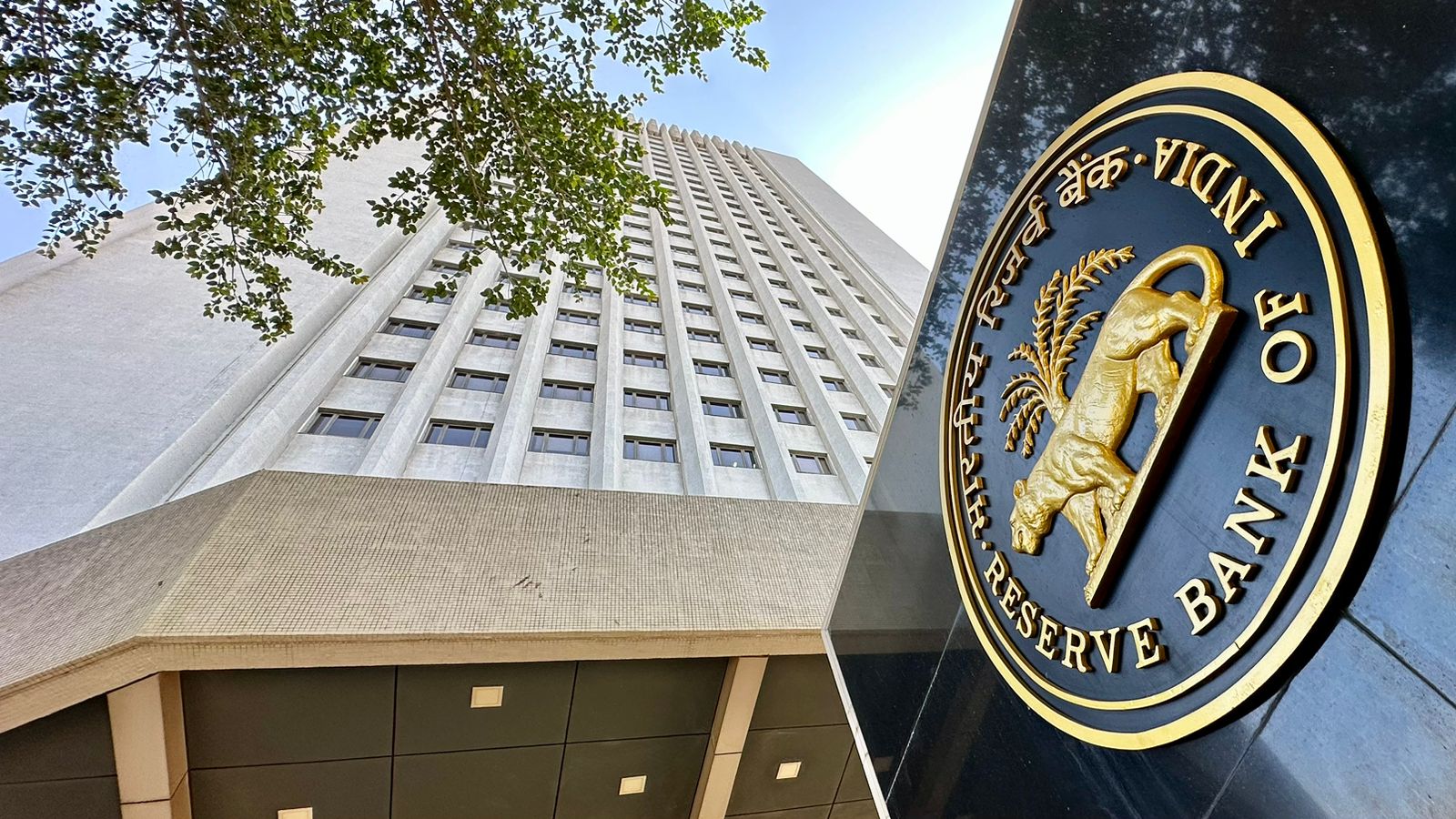
The Reserve Bank of India's Monetary Policy Committee, led by RBI Governor Sanjay Malhotra, retained the benchmark repo rate at 5.5%, after front-loading the three rate cuts in February, April and June this year. However, the RBI revised the CPI inflation forecast downward while revising the GDP growth forecast upward.
Space for monetary action has opened up, Malhotra said, adding that the MPC considers it prudent to wait before beginning to cut rates further.
Amidst benign inflation, prevailing global uncertainties and tariff-related developments are likely to decelerate growth in H2:2025-26 and beyond, stated the resolution of the MPC. "The current macroeconomic conditions and the outlook have opened up policy space for further supporting growth," it stated.
After the review, the Monetary Policy Committee decided the following:
To maintain the policy repo rate at 5.5% unanimously.
The standing deposit facility rate, pegged 25 basis points below the repo rate, remains unchanged at 5.25%.
The marginal standing facility rate, which is 25 basis points above the repo rate, remains unchanged at 5.75%.
The committee also retained its stance at 'neutral'.
CPI Inflation: Revised Downward
Speaking about inflation, the RBI Governor said that the inflation outlook has turned even more benign than previously estimated.
Healthy progress of the southwest monsoon, higher Kharif sowing, adequate reservoir levels and a comfortable buffer stock of food grains should keep food prices benign.
The recently implemented GST rate rationalisation would lead to a reduction in prices of several items in the CPI basket.
Despite the anticipation of moderate momentum during H2, large unfavourable base effects are likely to exert upward pressure on headline CPI inflation, especially in Q4.
The RBI revised the inflation forecast from 3.7% in June to 3.1% in August to 2.6% in October. CPI inflation is projected at 1.8% for Q2 and Q3, 4% for Q4, and 4.5% for Q1 next year.
GDP Growth: Revised Upward
Growth continues to be below expectations, Malhotra said, despite an upward revision to the full-year forecast. The implementation of several growth-inducing structural reforms, including streamlining of GST, are expected to offset some of the adverse effects of the external headwinds.
Looking ahead, an above-normal monsoon, good progress of kharif sowing and adequate reservoir levels have further brightened prospects of agriculture and rural demand.
Buoyancy in the services sector coupled with steady employment conditions are supportive of demand, which is expected to get a further boost from the rationalisation of goods and services tax (GST) rates.
Rising capacity utilisation, conducive financial conditions, and improving domestic demand should continue to facilitate fixed investment. However, ongoing tariff and trade policy uncertainties will impact external demand for goods and services.
Prolonged geopolitical tensions and volatility in international financial markets caused by risk-off sentiments of investors also pose downside risks to the growth outlook.
Real GDP growth is projected at 6.8%, up from 6.5% estimated previously. Q2 is projected at 7%, Q3 at 6.4%, and Q4 at 6.2%. Q1 next year is projected at 6.4%. Risks are evenly balanced.
The RBI will continue to actively manage liquidity to anchor rates, the Governor said.

-
High US Salaries, No Green Card Certainty: The Financial Calculation Facing Indian H-1B Families

The suspension of PERM processing at eight technology employers does not cancel existing H-1B visas. What it does is force a question many Indian families have been avoiding: is the US salary worth tying your career and family plans to one employer?
-
Swiggy vs Eternal: Food Delivery's Two Rivals Are No Longer In The Same Race
Eternal is building a private AI assistant, dark.ai. Swiggy is still working out how to make Instamart pay, with an operating loss of Rs 895 crore in the July-September quarter while Blinkit stayed profitable.
-
Where You Live Shapes How You Get To Work | The Reason Why
Two-wheelers are the most popular way to get to work in India, accounting for nearly 43% of workplace commutes.
-
Unhedged Position: Can India See An Indonesia-Style Time Correction?
The Nifty is trading below levels it first clocked in 2024. Is there, then, as I have suggested in the headline, potential that the current time correction drags on painfully for the next three-five, even ten years?
-
Navigating Friction And Energy Realities: An Analysis Of Marco Rubio's October Visit To India
Occurring at a critical juncture marked by stalled trade negotiations and escalating geopolitical pressures over global energy supplies, the visit offers a profound window into modern US-India relations.
-
India Exports Capital. Why Not Export Trusteeship?
The big question, then, is whether India can build an institution that global borrowers, investors, banks, and lawyers can trust, even without an Indian connection.
-
France's Economy & Politics Are In Crisis | The Reason Why
Let's look at how the French economy and politics evolved under Nicolas Sarkozy, Franois Hollande and Emmanuel Macron.
-
You May Inherit The Business. You Must Earn Its Credibility.
Succession tests the founder's ability to share authority as much as it tests the next generation's readiness to assume it.
-
Signing Deals Is One Thing; Making Them Work Is Another | The Week In Whys
Sometimes, things don't turn out as planned. Indian companies have lost some bids to rivals, some projects won't produce until 2030.
-
FOMC Wall, PERM Suspension, Hospital Stocks | Talking Points This Week
A PERM suspension would directly affect green-card sponsorship rather than H-1B visas, so the near-term earnings impact could remain relatively limited. The key question is whether this marks a new phase in US scrutiny of Indian IT.









