New India Cooperative Bank Fiasco: Depositors Move To PSU Banks
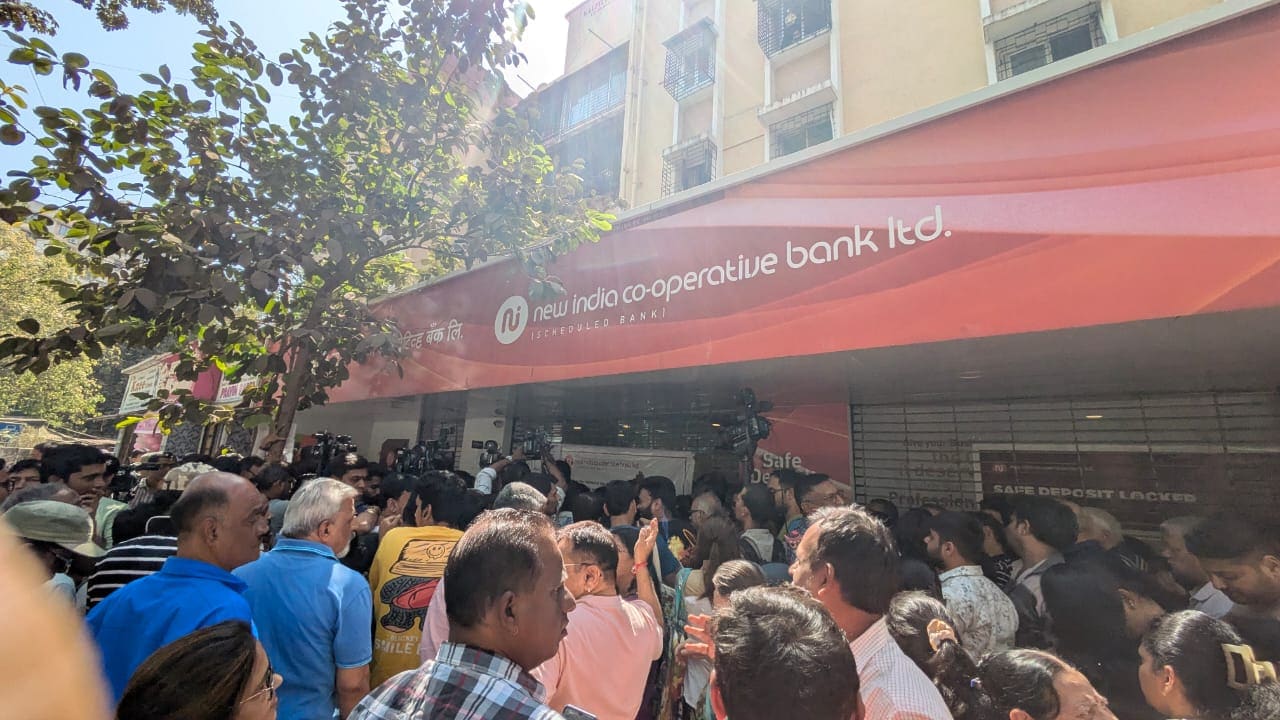
After the Reserve Bank of India placed business restrictions on New India Cooperative Bank on account of poor governance, some Mumbai based depositors are moving to public sector banks, a dozen people told NDTV Profit.
"We are opening our society account at State Bank of India now as it is safer," Mohammad Zulfikar, a secretary at Tulip Apartments in Mumbai's Mira Road said.
"Earlier, society accounts were only opened with urban cooperative banks, which was mandated by the registrar but since this is an unfortunate scenario, we are moving to SBI... as we have to pay for water and gas bills," he said.
This shift towards large public sector banks has come as the RBI took a series of actions against New India Cooperative Bank this month. On February 14, the RBI superseded the bank's board due to concerns over poor governance.
This action came a day after the RBI imposed several restrictions on the bank, including a six-month ban on issuing new loans and suspending deposit withdrawals.
These restrictions prompted a large number of the bank's customers to gather at its 28 branches, primarily located in Mumbai.
"My family and I, we have three accounts with the bank. We have large fixed deposits as well with this bank. I have initiated the deposit insurance and credit guarantee corporation DICGC process but we will open new accounts with either SBI or Bank of India now," Jaspreet, a resident Mumbaikar said.
This move to state-owned banks shows the lack of confidence among depositors in urban cooperative banks especially in metro cities such as Mumbai. As per RBI data, Andhra Pradesh, Gujarat, Karnataka, Maharashtra and Tamil Nadu account for 79% share for such banks.
Reports said that Economic Offences Wing of the Mumbai Police arrested Abhimanyu Bhoan, former Chief Executive Officer of New India Cooperative Bank in connection with embezzlement of Rs 122 crore. Police has also arrested Hitesh Mehta, the former General Manager and his accomplice Dharmesh Paun, a developer, who helped him route the money.
This has yet again brought to light the poor health of urban cooperative banks in India, difficulties these lenders face and policy endeavors that must be geared to consolidate and strengthen this sector.
"This is a response when any bank goes into trouble. PSU banks get benefitted for a period of 3-6 months," Asutosh K Mishra, Head of Research - Institutional Equity at Ashika Stock Broking Ltd, said.
Since the PMC Bank debacle in 2019, the RBI has imposed business restrictions on 66 UCBs under Section 35A, data compiled by NDTV Profit and RBI showed.
Of the total 66 such banks, 21 banks are based in Maharashtra.
Apart from PMC, banks that have run into trouble include Guru Raghavendra Cooperative Bank, Maharashtra State Cooperative Bank and Abhyudaya Cooperative Bank.
Section 35A of the Banking Regulation Act, 1949, gives the RBI the power to issue directions to banks in order to protect public interest, banking policy and prevent them from harming depositors or the lender itself.
Over the years, nearly a third of the newly licensed banks became financially unsound, a report on developments in cooperative banking released by the RBI in late December said.
Starting 2004-05, the RBI initiated a process of consolidation, including amalgamation of unviable UCBs with their viable counterparts, closure of non-viable entities and suspension of issuance of new licences. As a result, the number of UCBs declined steadily over the last two decades from 1,926 to 1,472, the report said.
Further, with small finance banks, non-banking financial companies and financial technology companies gaining prominence by providing last mile credit, urban cooperative banks were left behind, people said.
Anything happening in the sector creates a reputational risk for other banks as well. With the scare that any urban cooperative bank might get doomed after the New India Cooperative Bank debacle, depositors are now shifting their bank accounts from other UCBs such as Bharat Cooperative Bank and even Cosmos Cooperative Bank, bankers said.
"I do not think that depositors have lost confidence in urban cooperative banks because of problems at New India Coop Bank...depositors whose risk appetite is tested are moving out; that's natural," former Deputy Governor of RBI R Gandhi said.
He also added that it is good that such reaction takes place as it's healthy that depositors do react to risk events, instead of blindly keeping faith. It compels all banks to be vigilant about their operations.
Apart from cash shortage, another factor that is concerning is the quality of loans or possible evergreening of loans given the asset quality of New India Cooperative Bank was poor.
In 2023-24 (Apr-Mar), the bank reported a net loss of Rs 23 crore as compared with Rs 30.74 crore a year ago, according to its annual report.
While deposits grew over 1% on year to Rs 2,436 crore as on March 31, 2024, advances of the bank fell by nearly 12% on year to Rs 1,175 crore.
For 2023-24, the bank's gross non-performing assets ratio rose to 7.96%, higher than 7.50% a year ago and net NPA worsened to 5.43% from 5.26% a year ago.

-
High US Salaries, No Green Card Certainty: The Financial Calculation Facing Indian H-1B Families

The suspension of PERM processing at eight technology employers does not cancel existing H-1B visas. What it does is force a question many Indian families have been avoiding: is the US salary worth tying your career and family plans to one employer?
-
Swiggy vs Eternal: Food Delivery's Two Rivals Are No Longer In The Same Race
Eternal is building a private AI assistant, dark.ai. Swiggy is still working out how to make Instamart pay, with an operating loss of Rs 895 crore in the July-September quarter while Blinkit stayed profitable.
-
Where You Live Shapes How You Get To Work | The Reason Why
Two-wheelers are the most popular way to get to work in India, accounting for nearly 43% of workplace commutes.
-
Unhedged Position: Can India See An Indonesia-Style Time Correction?
The Nifty is trading below levels it first clocked in 2024. Is there, then, as I have suggested in the headline, potential that the current time correction drags on painfully for the next three-five, even ten years?
-
Navigating Friction And Energy Realities: An Analysis Of Marco Rubio's October Visit To India
Occurring at a critical juncture marked by stalled trade negotiations and escalating geopolitical pressures over global energy supplies, the visit offers a profound window into modern US-India relations.
-
India Exports Capital. Why Not Export Trusteeship?
The big question, then, is whether India can build an institution that global borrowers, investors, banks, and lawyers can trust, even without an Indian connection.
-
France's Economy & Politics Are In Crisis | The Reason Why
Let's look at how the French economy and politics evolved under Nicolas Sarkozy, Franois Hollande and Emmanuel Macron.
-
You May Inherit The Business. You Must Earn Its Credibility.
Succession tests the founder's ability to share authority as much as it tests the next generation's readiness to assume it.
-
Signing Deals Is One Thing; Making Them Work Is Another | The Week In Whys
Sometimes, things don't turn out as planned. Indian companies have lost some bids to rivals, some projects won't produce until 2030.
-
FOMC Wall, PERM Suspension, Hospital Stocks | Talking Points This Week
A PERM suspension would directly affect green-card sponsorship rather than H-1B visas, so the near-term earnings impact could remain relatively limited. The key question is whether this marks a new phase in US scrutiny of Indian IT.









