India To Become World's Second Largest Economy By 2075, Says Goldman Sachs
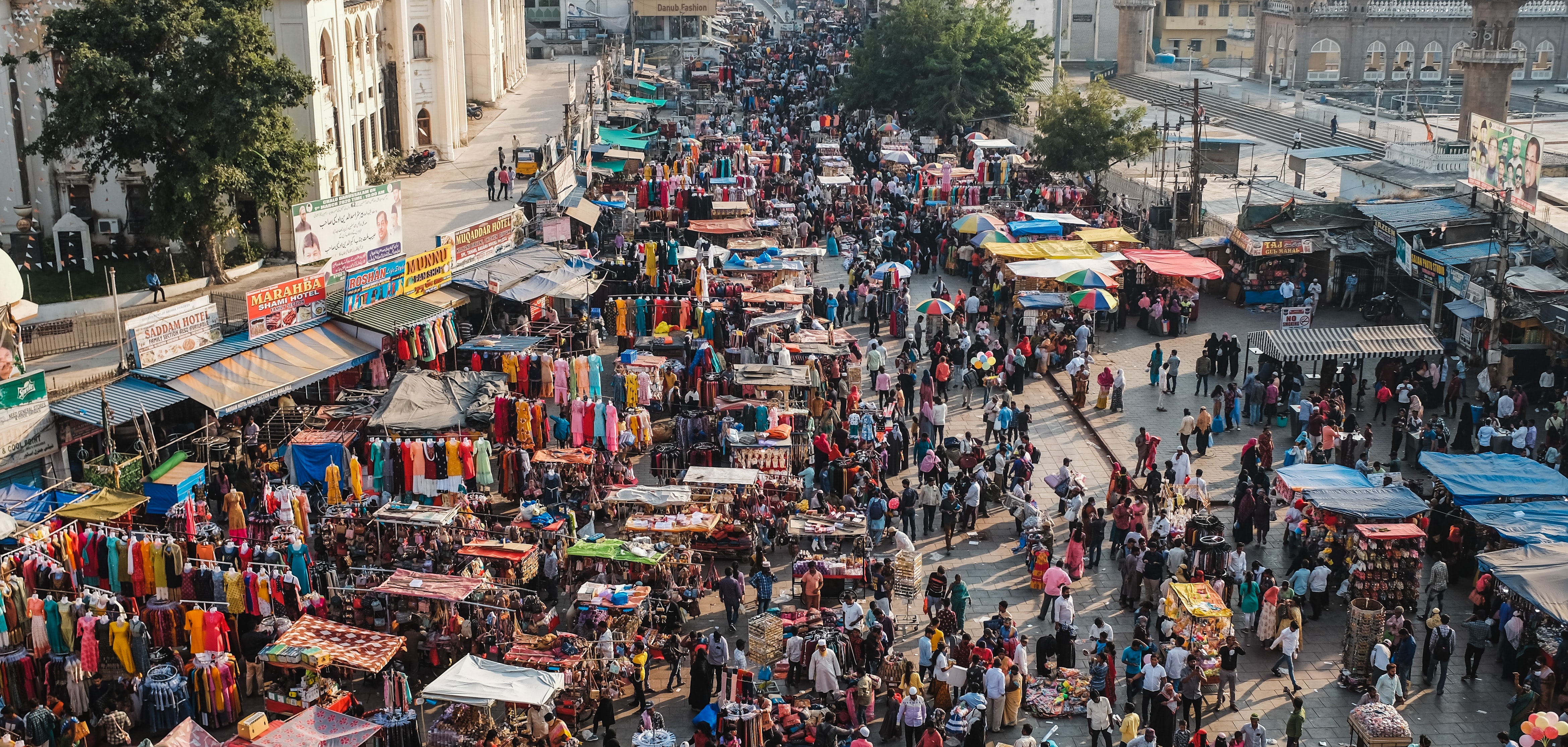
India will have the world's second-largest economy by 2075, aided by capital investment and favourable demographics, according to Goldman Sachs Research's India economist, Santanu Sengupta.
He expects the Indian economy to surpass the U.S. with a GDP projection of $52.5 trillion, trailing only China's $57 trillion, Sengupta said in an article on Goldman Sachs' website.
For India, a key to realising the potential of that growing population is boosting participation within its labour force as well as providing training and skills for its immense pool of talent, Sengupta said.
"Over the next two decades, the dependency ratio of India will be one of the lowest among regional economies," he said. According to Sengupta, the country has the "best ratio" between its working-age population and its number of children and elderly.
"So that really is the window for India to get it right in terms of setting up manufacturing capacity, continuing to grow services, and continuing the growth of infrastructure."

Increasing worker productivity will translate into greater output for each unit of labour, he said.
Growing capital investment will also help in achieving this feat. Driven by favourable demographics, India's savings rate is likely to increase with falling dependency ratios, rising income, and deeper financial sector development, which is likely to make the pool of capital available to drive further investment, Sengupta said.
However, downside risks include relatively lower net exports and fluctuations in commodity prices. "It's a very domestic-demand-driven economy compared to many others, especially in the region, which is more export-dependent," Sengupta said.
The country's growth until now has been mainly driven by domestic consumption as the main driver—around 55–60% of the overall economy plus domestic investments, he said.
Moreover, as India imports most of the commodities, price fluctuations, such as volatility in energy prices due to global macro factors, remain a risk.
Even as the Indian government aims to reach net zero emissions by 2070, transitioning to green energy is a "large investment opportunity, but it'll take time, and in the interim, fossil fuels are going to be the majority share of energy needs until India transitions to green energy".

-
Where You Live Shapes How You Get To Work | The Reason Why

Two-wheelers are the most popular way to get to work in India, accounting for nearly 43% of workplace commutes.
-
High US Salaries, No Green Card Certainty: The Financial Calculation Facing Indian H-1B Families
The suspension of PERM processing at eight technology employers does not cancel existing H-1B visas. What it does is force a question many Indian families have been avoiding: is the US salary worth tying your career and family plans to one employer?
-
Unhedged Position: Can India See An Indonesia-Style Time Correction?
The Nifty is trading below levels it first clocked in 2024. Is there, then, as I have suggested in the headline, potential that the current time correction drags on painfully for the next three-five, even ten years?
-
Navigating Friction And Energy Realities: An Analysis Of Marco Rubio's October Visit To India
Occurring at a critical juncture marked by stalled trade negotiations and escalating geopolitical pressures over global energy supplies, the visit offers a profound window into modern US-India relations.
-
India Exports Capital. Why Not Export Trusteeship?
The big question, then, is whether India can build an institution that global borrowers, investors, banks, and lawyers can trust, even without an Indian connection.
-
France's Economy & Politics Are In Crisis | The Reason Why
Let's look at how the French economy and politics evolved under Nicolas Sarkozy, Franois Hollande and Emmanuel Macron.
-
You May Inherit The Business. You Must Earn Its Credibility.
Succession tests the founder's ability to share authority as much as it tests the next generation's readiness to assume it.
-
Signing Deals Is One Thing; Making Them Work Is Another | The Week In Whys
Sometimes, things don't turn out as planned. Indian companies have lost some bids to rivals, some projects won't produce until 2030.
-
FOMC Wall, PERM Suspension, Hospital Stocks | Talking Points This Week
A PERM suspension would directly affect green-card sponsorship rather than H-1B visas, so the near-term earnings impact could remain relatively limited. The key question is whether this marks a new phase in US scrutiny of Indian IT.
-
Everything, Everywhere, All At Once: Dalal Street's Week To Forget | Joining The Dots
Visa curbs, a Starlink spat and cancer drug caps: what connects this week's shocks for Indian markets









