GST Cuts To Usher In 'Golden Era' For Consumption-Driven Sectors? Industry Leaders Share Insights
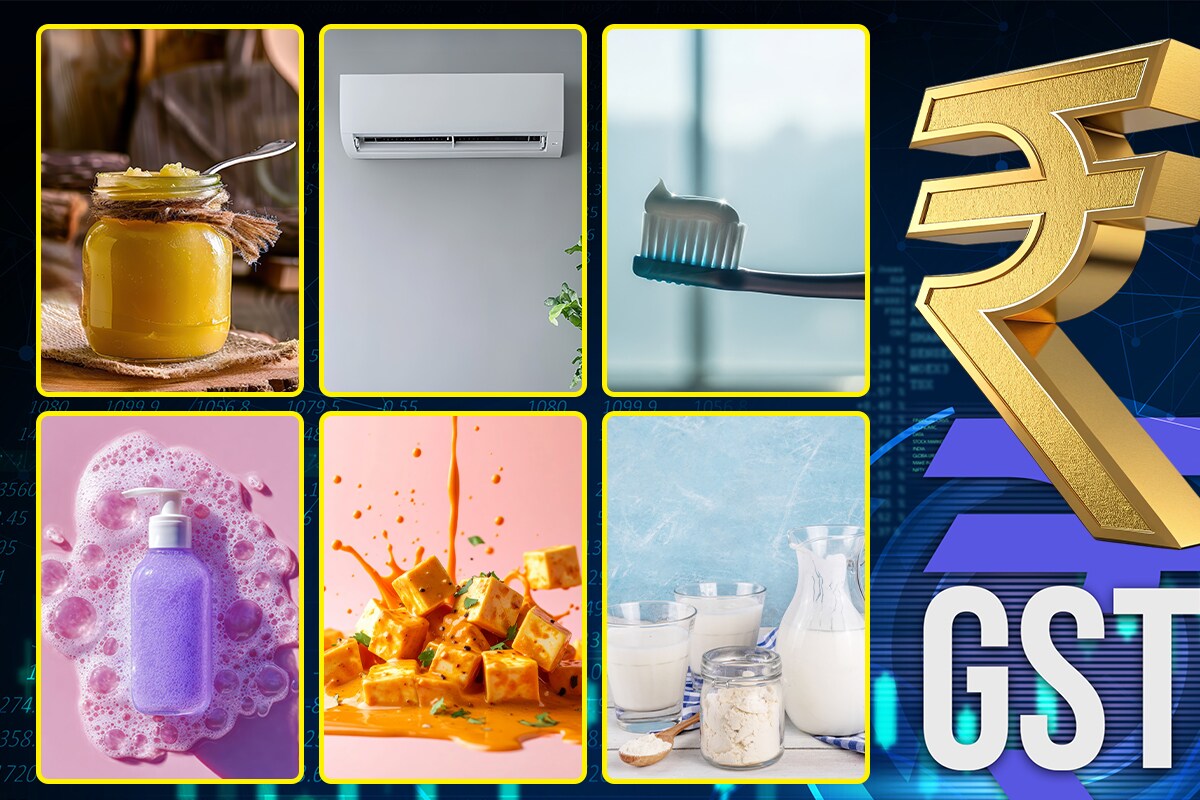
The upcoming GST revamp has created a buzz, with the key focus being on daily-use items. Products such as ghee, butter, toothpaste, shampoo, paneer, pumpkin, paratha, and milk powder, which are currently taxed at 12% and 18%, could potentially move down to the 5% slab. Industry leaders expect this move to increase consumption and offer a boost to the small and medium enterprises.
B Thiagarajan, Managing Director of Blue Star Ltd., believes this move will drive consumption growth, calling fiscal 2026 to fiscal 2031 a "golden period" for consumer durables. In an interview with NDTV Profit Thiagarajan further added that with the implementation time just ahead of the festive season, could encourage customers to purchase multiple products due to reduction in per-unit cost.
He further noted that some consumer durables were already on a strong growth path and the rate cut decision makes it more favourable for the companies. However, he added that global economic headwinds continue to remain a concern.
From the food industry's standpoint, Heritage Foods Ltd. Chief Executive Officer Srideep Nair Kesavan said that a GST rate cut would boost consumption and reduce dependency on edible oil.
Ghee, contributing about Rs 35,000 crore in revenue, stands to gain the most from this change. He also termed the timing of the rate cut as “very opportune.”
Chandrakant Salunkhe, President of the SME Chamber of India and SME Export Promotion Council, during the discussion highlighted that the GST cut would give a significant boost to SMEs.
Meanwhile, Sanjay Nayar, President of ASSOCHAM, who welcomed the rationalisation also pointed that there is a need for further groundwork. He stressed that the MSME sector also require a secular pickup and strong, lasting consumption trends.
According to Nayar, the real impact will only become clear over the next year, depending on how consumption patterns will change.
It is not just the daily items that will get cheaper. Even pharmaceutical products, medical equipment, cement abd cars will see a likely decline in prices. The services sector may also undergo rationalisation.
On the other spectrum, high-end goods may continue to remain expensive. A special 40% GST rate is being proposed for luxury cars, SUVs, motorbikes above 350 cc, carbonated beverages, tobacco, and related products.
However, it remains uncertain whether the compensation cess regime will be phased out, replaced with an additional levy, or subsumed within the GST framework.
The final decision will rest with the GST Council, which meets on Sept. 3 and Sept. 4 in New Delhi.

-
Unhedged Position: Can India See An Indonesia-Style Time Correction?

The Nifty is trading below levels it first clocked in 2024. Is there, then, as I have suggested in the headline, potential that the current time correction drags on painfully for the next three-five, even ten years?
-
Navigating Friction And Energy Realities: An Analysis Of Marco Rubio's October Visit To India
Occurring at a critical juncture marked by stalled trade negotiations and escalating geopolitical pressures over global energy supplies, the visit offers a profound window into modern US-India relations.
-
India Exports Capital. Why Not Export Trusteeship?
The big question, then, is whether India can build an institution that global borrowers, investors, banks, and lawyers can trust, even without an Indian connection.
-
France's Economy & Politics Are In Crisis | The Reason Why
Let's look at how the French economy and politics evolved under Nicolas Sarkozy, Franois Hollande and Emmanuel Macron.
-
You May Inherit The Business. You Must Earn Its Credibility.
Succession tests the founder's ability to share authority as much as it tests the next generation's readiness to assume it.
-
Signing Deals Is One Thing; Making Them Work Is Another | The Week In Whys
Sometimes, things don't turn out as planned. Indian companies have lost some bids to rivals, some projects won't produce until 2030.
-
FOMC Wall, PERM Suspension, Hospital Stocks | Talking Points This Week
A PERM suspension would directly affect green-card sponsorship rather than H-1B visas, so the near-term earnings impact could remain relatively limited. The key question is whether this marks a new phase in US scrutiny of Indian IT.
-
Everything, Everywhere, All At Once: Dalal Street's Week To Forget | Joining The Dots
Visa curbs, a Starlink spat and cancer drug caps: what connects this week's shocks for Indian markets
-
India Is Going Abroad For Critical Minerals. But It May Take Years To Pay Off | The Reason Why
Although India's steps are in the right direction, they remain modest compared with India's growing dependence.
-
When Everyone Has AI, What Gives You An Edge?
India's young workforce is entering an uncertain world of work where powerful AI tools are becoming widely accessible. The advantage will belong to those who combine deep expertise with digital fluency, and the distinctly human capabilities that technology cannot manufacture.









