Zomato Denies Merger Talks With Rival Swiggy: Report
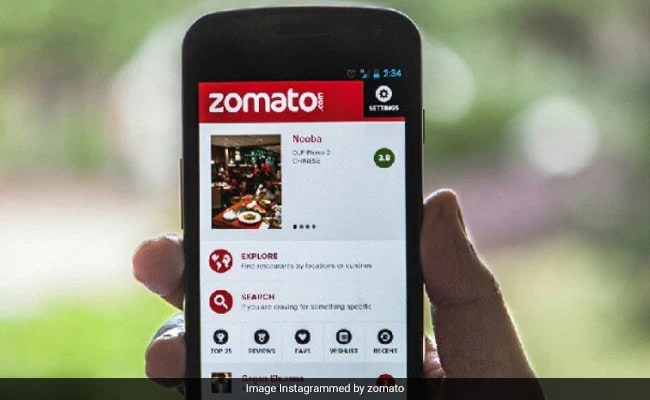
As merger reports of Bengaluru-based Swiggy and Gurugram-based Zomato -- two biggest players in the burgeoning online food delivery market -- resurfaced, Deepinder Goyal-led Zomato on Tuesday refuted reports, saying they are not in talks with anyone.
"We have tremendous focus on our business metrics and have seen great success in our goal towards profitability. We are not in talks with Swiggy for a merger or acquisition," a company spokesperson said in a statement shared with IANS.
A First Post report, citing sources, mentioned that the merger talks between the two food delivery platforms have revived as the competition is set to grow with Amazon's reported expansion into online food delivery business in the country and Uber Eats flexing muscles for an aggressive expansion in the country.
In 2017, media reports had surfaced that the two players were in merger talks.
The Zomato spokesperson further said that the latest "speculation is absolutely untrue". Swiggy, however, refused to comment on the report.
Amazon is gearing up to launch its own online food delivery division to compete with food delivery apps in the Indian market.
The retail behemoth already has a robust existing workforce in the country that can be utilized along with hiring more delivery partners to beat the competition.
According to Prabhu Ram, Head-Industry Intelligence Group (IIG), CMR, the food delivery business is no longer a two-horse race and is increasingly witnessing cut-throat competition.
"With the entry of new players, including the likes of Amazon and Uber Eats, a potential merger of Zomato and Swiggy would make sense," Mr Ram told IANS.
Zomato is currently delivering 13 lakh orders a day from 1,50,000 restaurants across India at more than 10 orders per restaurant per day.
The company's revenue for the first half of the financial year 2019-20 saw a massive three-fold jump -- from $63 million in the same period in 2018-2019 to $205 million. Zomato is currently present in 556 cities.
Swiggy has expanded its services to 500 cities in India, matching rival Zomato's reach in the country. Swiggy, which has added 60,000 new restaurants in the past six months, said in October it would expand to 600 cities by December 2019.
Since April 2019, Swiggy has increased the number of restaurant partners by almost 1.8 times to 1.4 lakh restaurants currently. In tier-3 and tier-4 cities specifically, Swiggy has onboarded over 15,000 restaurants in the last six months.
The market is piping hot as according to a recent study by business consultancy firm Market Research Future, the online food ordering market in India is likely to grow at over 16 per cent annually to touch $17.02 billion by 2023.
Uber Eats last week told IANS that it is not only going to stay put in the growing food tech industry in India but is also building strong linkages with restaurant partners for a seamless delivery experience for its customers.
In the next three years, the food tech industry in India is going to grow from $4 billion to $15 billion.
"This industry is perfect for Uber Eats. Right now, we are more focused on delivery with the restaurant partners. We are learning in the India market and making our mark in that space before we can add anything more to it," Mr Kotecha told IANS.
The Zomato-Swiggy merger, if happens, will immediately come under the scrutiny of the Competition Commission of India (CCI).
"Combining the market reach and strength of the two players would enable them to take on intensified competition better. That said, it remains to be seen if such a potential merger would come under the regulatory scanner," added Mr Ram.

-
Talking Points This Week: Tech Nerves, FII Buying, And A Faraway Banking Shock

The global markets are not shining this Diwali. The exception in the large markets is, India.
-
Midterm Rally Lasted A Day. The Hard Reality Of A Divided US May Last Two Years | Opinion
Between a contested AI boom, a debt ceiling that arrives in 2027 and a president with every incentive to act alone, the next two years may prove more volatile than the first day's rally suggests.
-
Blue Wave Will Derail the AI Trade but Won't Dismantle the AI Era | Unhedged Position
The Democrats' sweep of the US Congress will see politics collide with economic forces both over the long and short term.
-
It's Time To Take The GST Council's Bet On Trust Global
Payment records can prove India's services exports, and clear, proportionate rules can bring foreign digital sellers into the tax net.
-
Opinion | India at 38: From Innovation Overperformer to Innovation Powerhouse
India now has 453 VC-backed deep science startups, 18 of them late-stage, after 117 percent growth since 2020. Laurus Labs, at USD 9.3 billion, is the most valuable deep science company in any middle-income economy outside China.
-
Navigating Energy Crossroads: S Jaishankar's Call For Diversified Supply Chains At G20 Ministerial Meeting
As geopolitical fault lines continue to test maritime trade routes and commodity flows, Jaishankar's message remains pertinent: true economic resilience requires open markets, protected transit lines, and a genuine commitment to multilateral cooperation rather than coercion.
-
Indians Are Travelling, But Not Every Journey Is A Holiday | The Week In Whys
Pilgrims, patients and working women are the real travellers, and the system hasn't quite caught up with them.
-
Getting To Work Costs Women More | The Reason Why
It is not just about women paying more than men. It is about women paying much more in cities than in villages.
-
AI Bias In Investing Cannot Be Eliminated, But It Can Be Governed
Framing is a particularly important example as identical financial information presented in terms of gains rather than losses can lead an LLM to reach a different assessment.









