Zepto’s ‘Super Saver’ Takes On Modern Trade, Challenging It’s Hold On Value Retail
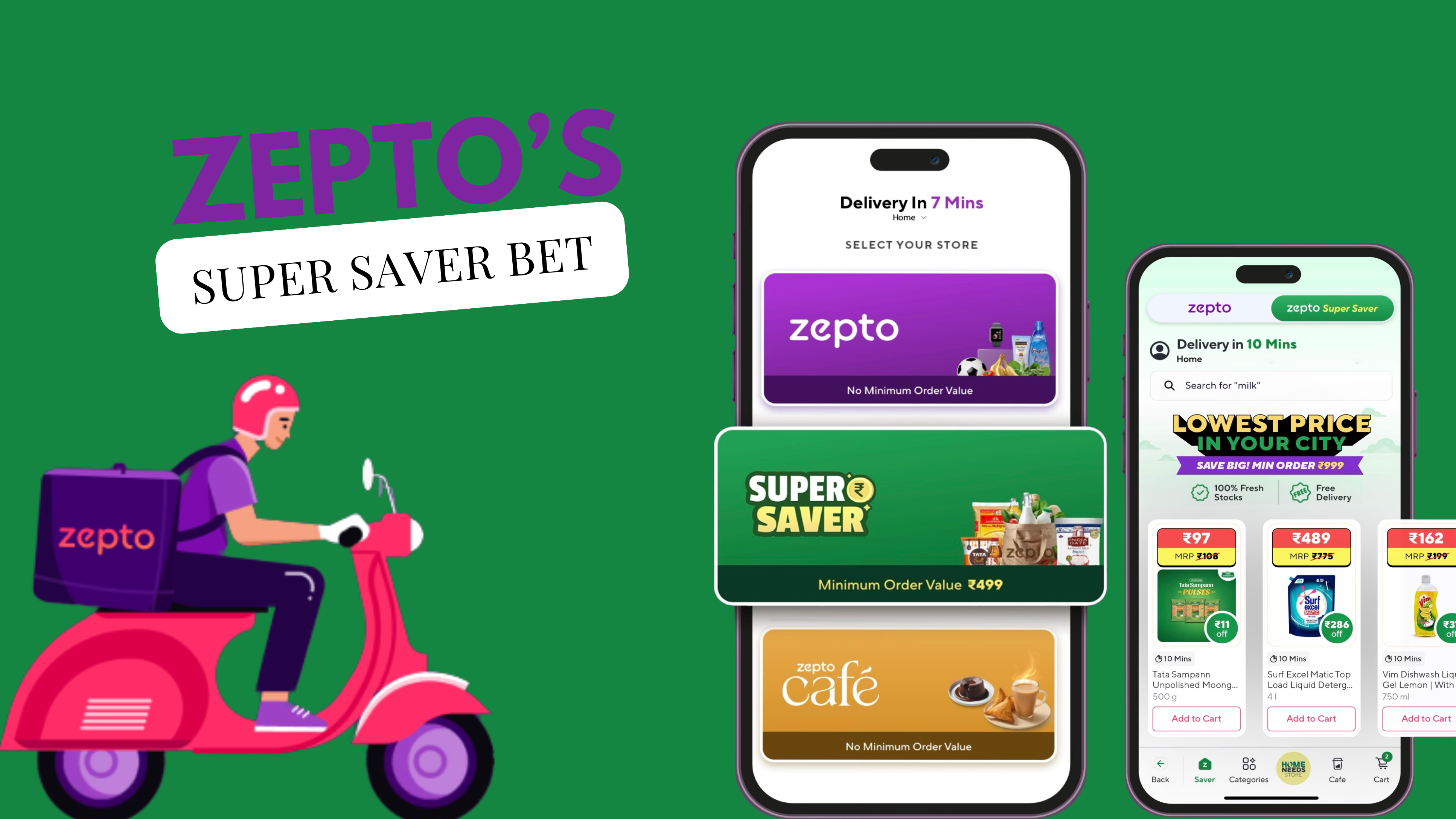
Modern trade has long been the preferred choice for bulk buying and routine monthly shopping, even with the rise of quick commerce, due to its competitive pricing and discounts. Meanwhile, platforms such as Zepto, Zomato's Blinkit, and Swiggy's Instamart have largely catered to consumers' weekly top-ups or unplanned daily needs.
However, HSBC noted that Zepto's new “Super Saver” option could be reshaping the quick commerce landscape by breaking into a third vector of retail—value retail, which has traditionally been dominated by modern trade and mom-and-pop stores.
Zepto's Super Saver program, which offers high discounts but requires a minimum order value of Rs 999, is aimed at capturing planned grocery purchases. While this leads to lower profit margins in percentage terms, absolute earnings before interest, tax, depreciation, and amortisation remain healthy due to a significantly higher average order value, as HSBC noted.
By comparison, Blinkit's average AOV is around Rs 670. HSBC estimates that if Blinkit were to introduce a similar model, its Ebitda margins would drop to around 3.5% from 6%, with a potential decline in absolute Ebitda as well. Given this, HSBC believes it may not make strategic sense for Blinkit to replicate Zepto's move.
Blinkit's Focus on Convenience Over Value
Unlike Zepto, Blinkit has positioned itself as a convenience-driven platform rather than a value-driven one. HSBC pointed out that Blinkit has consistently been the most expensive among quick commerce players and does not offer loyalty programmes like Zepto Pass or Swiggy One.
Instead, its strategy revolves around expanding categories, use cases, and geographical reach, which helped it sustain approximately 20% quarter-on-quarter user and order growth in the third quarter of fiscal 2025, despite increasing competition.
The launch of Zepto's Super Saver program also coincided with an online exchange between Zepto co-founder Aadit Palicha and Zomato Ltd. Chief Executive Officer Deepinder Goyal.
Goyal, in an interview with The Economic Times, claimed that Zepto accounted for more than half of the Rs 5,000 crore quarterly cash burn in the quick commerce sector.
“We don't engage in deep discounting, and our execution has been good… and we have to make sure our growth rate stays intact. The discipline with which we invest our cash should also stay intact. That's the focus,” Goyal said in the interview.
Palicha dismissed the claim on LinkedIn, calling it “verifiably untrue” and saying it may have been an “honest mistake.”
Broader Market Trends
A separate note by UBS highlighted monetisation trends in the quick commerce sector. Swiggy's discounting remained stable at 21.4% in February 2025, with delivery fees increasing slightly month-on-month but remaining lower than in prior years.
The rise in platform fees has helped offset the decline in delivery charges, with more customers opting for subscription plans to waive delivery fees.
A Citi Research report from Feb. 10 estimated Blinkit's market share at 41%, followed by Swiggy Instamart at 23%, with Zepto likely at par or higher than Instamart.

-
High US Salaries, No Green Card Certainty: The Financial Calculation Facing Indian H-1B Families

The suspension of PERM processing at eight technology employers does not cancel existing H-1B visas. What it does is force a question many Indian families have been avoiding: is the US salary worth tying your career and family plans to one employer?
-
Swiggy vs Eternal: Food Delivery's Two Rivals Are No Longer In The Same Race
Eternal is building a private AI assistant, dark.ai. Swiggy is still working out how to make Instamart pay, with an operating loss of Rs 895 crore in the July-September quarter while Blinkit stayed profitable.
-
Where You Live Shapes How You Get To Work | The Reason Why
Two-wheelers are the most popular way to get to work in India, accounting for nearly 43% of workplace commutes.
-
Unhedged Position: Can India See An Indonesia-Style Time Correction?
The Nifty is trading below levels it first clocked in 2024. Is there, then, as I have suggested in the headline, potential that the current time correction drags on painfully for the next three-five, even ten years?
-
Navigating Friction And Energy Realities: An Analysis Of Marco Rubio's October Visit To India
Occurring at a critical juncture marked by stalled trade negotiations and escalating geopolitical pressures over global energy supplies, the visit offers a profound window into modern US-India relations.
-
India Exports Capital. Why Not Export Trusteeship?
The big question, then, is whether India can build an institution that global borrowers, investors, banks, and lawyers can trust, even without an Indian connection.
-
France's Economy & Politics Are In Crisis | The Reason Why
Let's look at how the French economy and politics evolved under Nicolas Sarkozy, Franois Hollande and Emmanuel Macron.
-
You May Inherit The Business. You Must Earn Its Credibility.
Succession tests the founder's ability to share authority as much as it tests the next generation's readiness to assume it.
-
Signing Deals Is One Thing; Making Them Work Is Another | The Week In Whys
Sometimes, things don't turn out as planned. Indian companies have lost some bids to rivals, some projects won't produce until 2030.
-
FOMC Wall, PERM Suspension, Hospital Stocks | Talking Points This Week
A PERM suspension would directly affect green-card sponsorship rather than H-1B visas, so the near-term earnings impact could remain relatively limited. The key question is whether this marks a new phase in US scrutiny of Indian IT.









