Yuan Retreat Shows China Can’t Crush A Market This Big
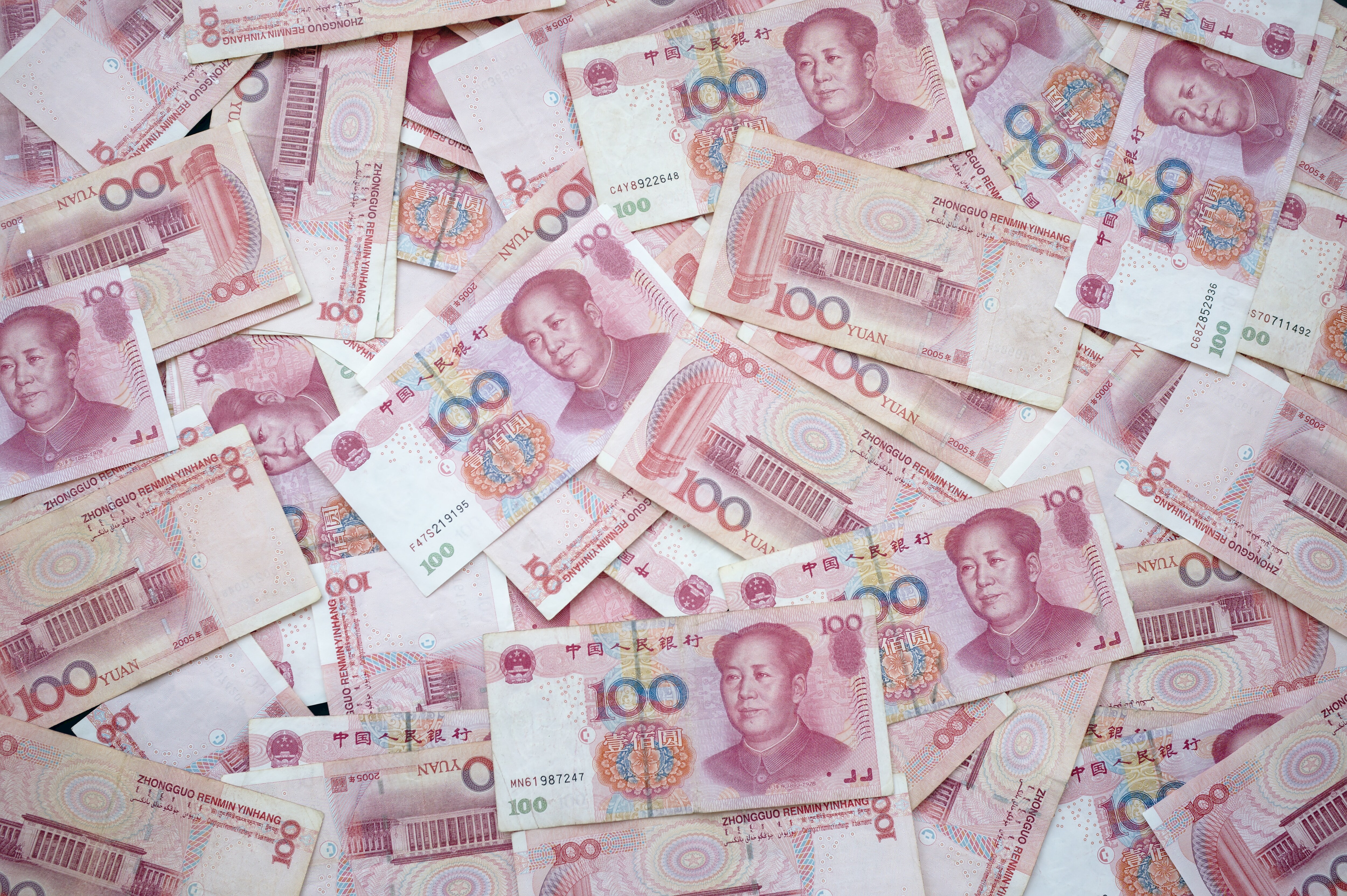
(Bloomberg Opinion) -- There are limits to Chinese exceptionalism. The slide in the nation's currency — and how authorities handle it — says a lot about the constraints that a global system has on individual countries. It also shows how a monetary world dominated by the dollar and the Federal Reserve determines choices at home for even the weightiest of Asian economies.
In a couple of decades, China's rapid growth has propelled the economy from being smaller than a middle-ranking European country's to one widely predicted to soon surpass the US. A generation of western officials intoned that the most significant event of their lifetimes was China's rise to stardom. That hasn't translated into good options to stop the yuan's present swoon. Weakness in the face of the rampaging greenback is an almost universal condition. There's little sign that Beijing expects, let alone desires, a big rally against the dollar. The yuan skidded to a 14-year low last week. It fell about 6% in the third quarter, a slightly smaller retreat than the yen, the Thai baht and the dollars of Taiwan and Australia. (South Korea's won was Asia's worst performer, tumbling around 9%.)
Nor has the response of the People's Bank of China been a million miles from its counterparts across the region. The specific tools deployed to counter the slide may differ, but the approach and goals resemble a standard central bank playbook: jawboning, tinkering with rules here, some incremental changes there. The objective is to cushion the currency's decline, give local firms time to adjust, and try to ensure that the drop isn't so precipitous that the fabric of commercial life is sundered.It's natural for the yuan's decline to reflect current economic situation. China's growth this year has been relatively anemic and Beijing has been guardedly putting stimulus into the economy, including some modest reductions in interest rates and reserve requirements for lenders. Inflation is well below levels in the US, where rates are rising quickly — as they are in pretty much every other major economy.
Beijing has been leaning against the yuan's downward trajectory. For a month, the central bank used the daily reference rate, or fixing, its most widely used tool for guiding market expectations, to indicate its distaste for bearish bets. Officials have slashed the amount of foreign-exchange deposits that banks must set aside as reserves and made it more expensive to wager against the yuan via derivatives. Late Wednesday, the PBOC warned that “the authority” of the fixing need to be protected. Ominous words in a one-party state that loathes instability.
The invocation of financial stability under siege was enough to give the yuan its first gain Thursday in nine days — wi
th a huge assist from forces far beyond China. The Bank of England's swoop into markets to buy UK debt in an effort to stem a pension-fund collapse buoyed markets globally. China's tut-tutting came hours before the dramatic rescue. Good luck or good timing, more work awaits Beijing. While the BOE tamped down some volatility, its purchases will cease in the middle of October.
The past few weeks have seen the Japanese Ministry of Finance go from verbal fusillades to actual intervention to buy yen, the first such step in a generation. The Bank of Japan is estimated to have spent more on the afternoon of Sept. 22 to support the yen than in the whole of 1998, the last time it resorted to such purchases. South Korea pledged Wednesday it will buy more of its own debt. Indonesia and India have also intervened outright to buttress their currencies. What's driving them south is aggressive tightening by the Fed that has juiced the greenback.Local idiosyncrasies may be amplifying or mitigating swings; they are not the underlying driver. (The proximity of a crucial Communist Party gathering this month may be adding an extra layer of concern at the PBOC. The congress is expected to give President Xi Jinping a third five-year term.) Home-grown economic headaches include a youth unemployment rate that approached 20% in July — even with a shrinking labor force. House prices are declining and lenders are contending with a boycott on mortgage payments by homebuyers who are waiting for cash-strapped developers to complete delayed projects.Softness in the yuan is limiting Beijing's options for promoting a recovery from the economic slowdown. China lowered rates modestly in September and, prior to the global market tumult of the past 10 days, had been expected to do so again soon. The risk now is that reductions in borrowing costs work against efforts to manage the yuan's decline. (Their effectiveness would be questionable, in any case, given the weight on growth from the Covid-zero strategy and a real-estate bust.)
The days of freezing out market forces in foreign-exchange are done. Beijing ended a hard peg to the greenback in 2005, and the size of the global currency market has swollen to $6.6 trillion a day, according to the Bank for International Settlements. The yuan now moves up or down in response to some of the same kinds of forces driving markets in every nation: the relative performance of the economy within a global framework of growth, inflation, interest rates and capital flows. When the peg ended 17 years ago, forecasters climbed over each other to project yuan appreciation. Little attention was given to what a pronounced slide would look like and what might cause it. China's ascent is often said to have reshaped capitalism. In monetary matters, the country appears to be hemmed in by very conventional and traditional influences. Almost normal. More From Bloomberg Opinion:
- The Yuan's Slide Is Too Big for Beijing to Stop: Daniel Moss
- A Surprise Winner as Emerging Markets Crumble: Shuli Ren
- Gilt Market Carnage Prompts Risky BOE U-Turn: Mark Gilbert
This column does not necessarily reflect the opinion of the editorial board or Bloomberg LP and its owners.
Daniel Moss is a Bloomberg Opinion columnist covering Asian economies. Previously, he was executive editor of Bloomberg News for economics.
More stories like this are available on bloomberg.com/opinion
©2022 Bloomberg L.P.

-
Love, Sex Aur Dhokha: The Audacious Plot To Spy On Jensen Huang

A Taipei dinner, a Singapore chip buyer and a suspected Chinese asset: inside the alleged spy operation that got close to NVIDIA's Jensen Huang.
-
Ten Things I Learnt This Samvat
Patience can be a trap. Cheap stocks can stay cheap. Leverage can wipe you out. What did Samvat 2082 teach us? Niraj Shah writes on 10 lessons from the year gone by.
-
Talking Points This Week: Tech Nerves, FII Buying, And A Faraway Banking Shock
The global markets are not shining this Diwali. The exception in the large markets is, India.
-
Midterm Rally Lasted A Day. The Hard Reality Of A Divided US May Last Two Years | Opinion
Between a contested AI boom, a debt ceiling that arrives in 2027 and a president with every incentive to act alone, the next two years may prove more volatile than the first day's rally suggests.
-
Blue Wave Will Derail the AI Trade but Won't Dismantle the AI Era | Unhedged Position
The Democrats' sweep of the US Congress will see politics collide with economic forces both over the long and short term.
-
It's Time To Take The GST Council's Bet On Trust Global
Payment records can prove India's services exports, and clear, proportionate rules can bring foreign digital sellers into the tax net.
-
Opinion | India at 38: From Innovation Overperformer to Innovation Powerhouse
India now has 453 VC-backed deep science startups, 18 of them late-stage, after 117 percent growth since 2020. Laurus Labs, at USD 9.3 billion, is the most valuable deep science company in any middle-income economy outside China.
-
Navigating Energy Crossroads: S Jaishankar's Call For Diversified Supply Chains At G20 Ministerial Meeting
As geopolitical fault lines continue to test maritime trade routes and commodity flows, Jaishankar's message remains pertinent: true economic resilience requires open markets, protected transit lines, and a genuine commitment to multilateral cooperation rather than coercion.
-
Indians Are Travelling, But Not Every Journey Is A Holiday | The Week In Whys
Pilgrims, patients and working women are the real travellers, and the system hasn't quite caught up with them.