Your Face Or Fingerprint Could Soon Replace Your Plane Ticket
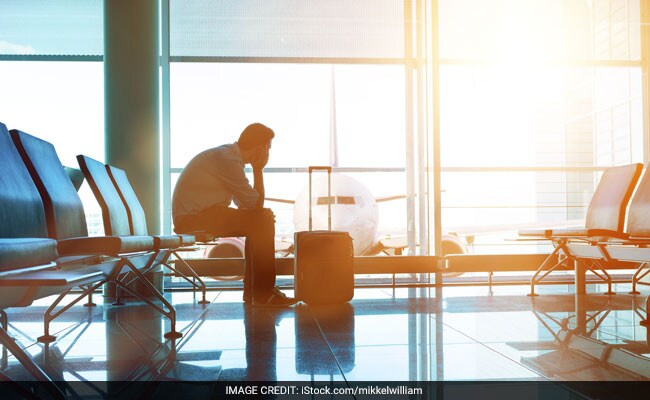
Headed on a trip? You may soon be able to ditch your boarding pass in favor of your fingers or face.
On Wednesday, Delta announced a new biometric identification pilot program that will eventually let you use your fingerprints instead of a plane ticket. That followed a JetBlue announcement hours earlier that it is testing a program in Boston that will match pictures of customers' faces with the passport database maintained by U.S. Custom and Border Protections.
Delta's program, which kicked off at D.C.'s Reagan National Airport, is in partnership with Clear, a company that already lets customers skip to the front of security lines without identification. To be eligible for the program, one must be a member of Delta's frequent flyer SkyMiles program and a Clear subscriber.
The first phase of Delta's program will allow its elite-tier passengers to use their fingerprints, rather than their boarding passes, to enter member lounges. A planned second phase would allow Delta frequent flyers to use their fingerprint in lieu of a boarding pass. Per its privacy policy, which will cover the Delta program, Clear keeps users' biometric information for the term of their subscriptions. Users can ask for their information to be removed from the company's servers and close their accounts at any time.
The airline has also announced it will use facial recognition technology for bag drops, with a pilot testing program at Minneapolis-St. Paul International Airport in the summer.
JetBlue's program works in concert with two entities: the U.S. Customs and Border Protection (CBP) and a tech firm called SITA. Flyers at Boston's Logan International Airport and Aruba's Queen Beatrix International Airport will have the option of going into the normal boarding line, or one with a camera that will snap their picture. SITA will send that photo to the CBP, to match it against the agency's database of passport and visa photos. The match process is instant, JetBlue said.
Neither JetBlue nor SITA has access to the photo database, and the airline will not store users' biometric information, JetBlue confirmed in an email.
If the facial scan fails to work, passengers will be moved to the traditional line - so don't travel without your ID just yet.
Using biometric data for identification may sound convenient, but people should consider some things before signing up, said Jeramie Scott, national security counsel for the Electronic Privacy Information Center.
Neither company has released details on how the government may use information on when and where people's faces have been scanned, he said, nor are there laws to prevent the government from using these types of programs as part of larger surveillance plans.
"It's a technology that can easily be used for mass, indiscriminate surveillance," he said, of facial recognition technology. "Any use for facial recognition for something like this - where it's the government or companies running a facial recognition search on people - needs to be scrutinized very closely by the public, because of the serious risk of mission creep."
U.S. Customs and Border Protection did not immediately respond to a request for comment.
(This story has not been edited by NDTV staff and is auto-generated from a syndicated feed.)

-
High US Salaries, No Green Card Certainty: The Financial Calculation Facing Indian H-1B Families

The suspension of PERM processing at eight technology employers does not cancel existing H-1B visas. What it does is force a question many Indian families have been avoiding: is the US salary worth tying your career and family plans to one employer?
-
Swiggy vs Eternal: Food Delivery's Two Rivals Are No Longer In The Same Race
Eternal is building a private AI assistant, dark.ai. Swiggy is still working out how to make Instamart pay, with an operating loss of Rs 895 crore in the July-September quarter while Blinkit stayed profitable.
-
Where You Live Shapes How You Get To Work | The Reason Why
Two-wheelers are the most popular way to get to work in India, accounting for nearly 43% of workplace commutes.
-
Unhedged Position: Can India See An Indonesia-Style Time Correction?
The Nifty is trading below levels it first clocked in 2024. Is there, then, as I have suggested in the headline, potential that the current time correction drags on painfully for the next three-five, even ten years?
-
Navigating Friction And Energy Realities: An Analysis Of Marco Rubio's October Visit To India
Occurring at a critical juncture marked by stalled trade negotiations and escalating geopolitical pressures over global energy supplies, the visit offers a profound window into modern US-India relations.
-
India Exports Capital. Why Not Export Trusteeship?
The big question, then, is whether India can build an institution that global borrowers, investors, banks, and lawyers can trust, even without an Indian connection.
-
France's Economy & Politics Are In Crisis | The Reason Why
Let's look at how the French economy and politics evolved under Nicolas Sarkozy, Franois Hollande and Emmanuel Macron.
-
You May Inherit The Business. You Must Earn Its Credibility.
Succession tests the founder's ability to share authority as much as it tests the next generation's readiness to assume it.
-
Signing Deals Is One Thing; Making Them Work Is Another | The Week In Whys
Sometimes, things don't turn out as planned. Indian companies have lost some bids to rivals, some projects won't produce until 2030.
-
FOMC Wall, PERM Suspension, Hospital Stocks | Talking Points This Week
A PERM suspension would directly affect green-card sponsorship rather than H-1B visas, so the near-term earnings impact could remain relatively limited. The key question is whether this marks a new phase in US scrutiny of Indian IT.









