Yes Bank Looks To Blame Rival For Bad Press
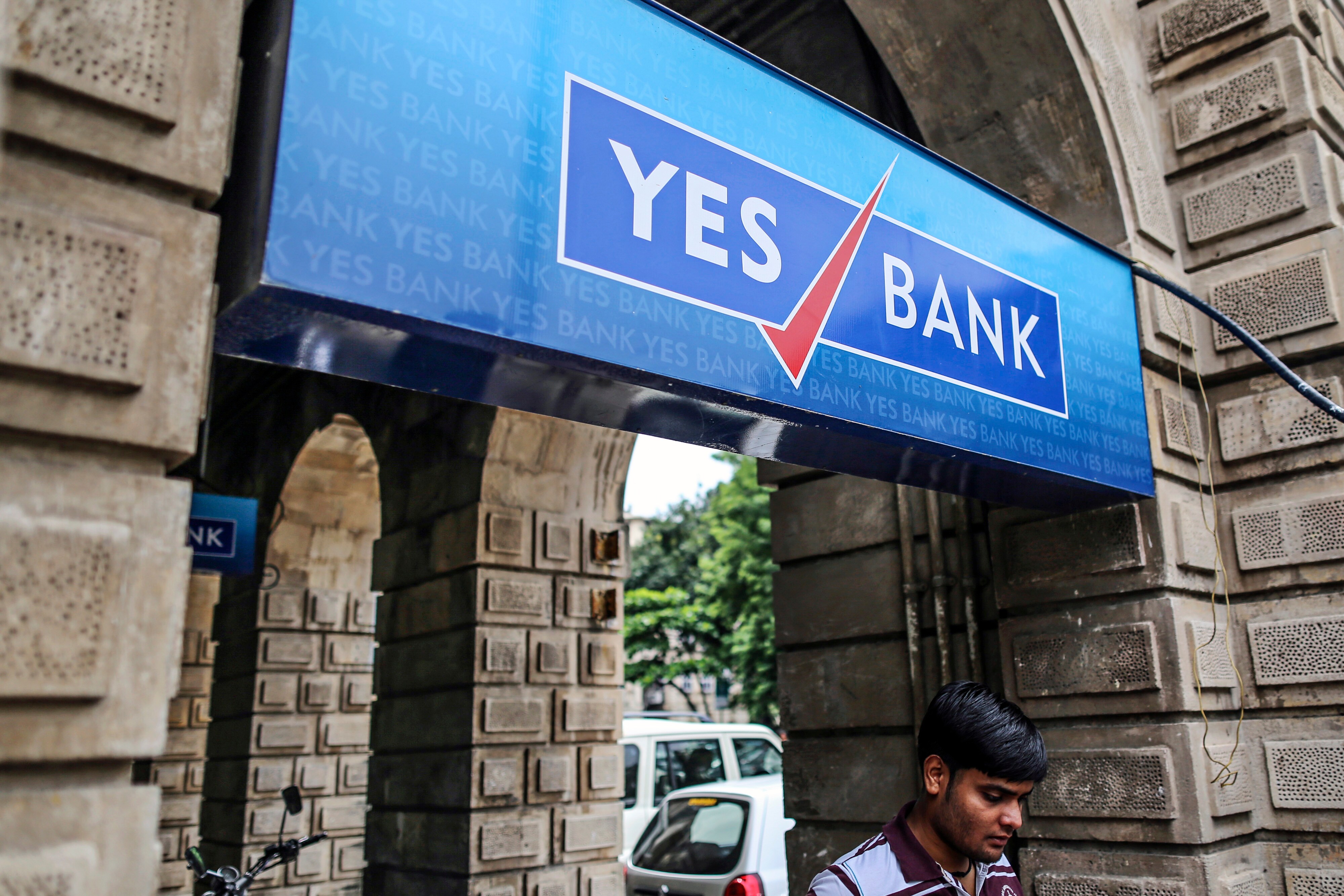
Search the internet for Yes Bank Ltd. and you'd have to look hard to find a positive story. Regulatory trouble, director resignations and stock price under pressure.
While none of those events are imaginary, the bank rather blame a rival for the bad press.
Yes Bank has accused financial newspaper Business Standard of publishing malicious and defamatory news reports, suggesting this was done at the behest of Uday Kotak, owner of the newspaper and rival Kotak Mahindra Bank Ltd.
In a filing with the stock exchanges, Yes Bank enclosed a letter addressed to senior editors at Business Standard accusing the newspaper of “a persistent attack on a public trust institution like Yes Bank Ltd., which is going through a transition phase in its life cycle”.
The pattern/sequel of articles published by Business Standard in the last two+ months would clearly indicate that there is explicit malice and prejudice, which the journalist(s) of Business Standard are trying to demonstrate. Probably they are doing it at the behest of our competitors (also given the inherent conflict of interest given the common Promoter ownership of Business Standard and Kotak Mahindra Bank) or market manipulators, which only an internal investigation by Business Standard would reveal the extra-motivation received by such journalist(s).Yes Bank Letter
The bank has labelled the “continuous negative propaganda” as an “attempt to destabilise” it and “undermine the confidence of the stakeholders in the bank”.
Kotak Mahindra Bank and its subsidiaries hold about 2,000 shares in Business Standard Ltd., which is less than 0.0013 percent of its capital, said Rohit Rao, chief communication officer at the Kotak Mahindra Group.
Promoter Uday Kotak does not have any stake in Business Standard. Ownership of Business Standard is with the Kotak family and there is no presence of the Kotak family on the board of Business Standard. The company is independently run under the chairmanship of Mr. TN Ninan, one of the most respected figures in journalism.Rohit Rao, Chief Communication Officer, Kotak Mahindra Group
Curiously, of the 13 stories listed in the letter as having caused this alleged offence, three are syndicated from news agencies and a quick check on the remaining shows they are news reports covering stock price movements or important board-related developments. One is an opinion column on the leadership changes in the banking industry and another is on allegations of GST evasion, which Yes Bank has commented on in the story.
The stories are spread over September, October, November—that's say four stories a month — which does not suggest any unusual volume either. Yes Bank has been in the news for weeks now as its founder Rana Kapoor was denied a term extension as managing director and chief executive officer by the Reserve Bank of India.
The bank also witnessed the resignation of three independent directors, one of whom served as board chairman. Among them one director raised governance issues in a comment to Bloomberg that was reported on by other media as well.
One of the two external members appointed to a search committee, tasked with finding Kapoor's successor, also quit mid-way through the process. The other has now been appointed as independent director.
Most of the Business Standard stories listed by Yes Bank in its complaint seem to be routine news coverage of these developments. Making it unclear why the bank is passing the buck.

-
High US Salaries, No Green Card Certainty: The Financial Calculation Facing Indian H-1B Families

The suspension of PERM processing at eight technology employers does not cancel existing H-1B visas. What it does is force a question many Indian families have been avoiding: is the US salary worth tying your career and family plans to one employer?
-
Swiggy vs Eternal: Food Delivery's Two Rivals Are No Longer In The Same Race
Eternal is building a private AI assistant, dark.ai. Swiggy is still working out how to make Instamart pay, with an operating loss of Rs 895 crore in the July-September quarter while Blinkit stayed profitable.
-
Where You Live Shapes How You Get To Work | The Reason Why
Two-wheelers are the most popular way to get to work in India, accounting for nearly 43% of workplace commutes.
-
Unhedged Position: Can India See An Indonesia-Style Time Correction?
The Nifty is trading below levels it first clocked in 2024. Is there, then, as I have suggested in the headline, potential that the current time correction drags on painfully for the next three-five, even ten years?
-
Navigating Friction And Energy Realities: An Analysis Of Marco Rubio's October Visit To India
Occurring at a critical juncture marked by stalled trade negotiations and escalating geopolitical pressures over global energy supplies, the visit offers a profound window into modern US-India relations.
-
India Exports Capital. Why Not Export Trusteeship?
The big question, then, is whether India can build an institution that global borrowers, investors, banks, and lawyers can trust, even without an Indian connection.
-
France's Economy & Politics Are In Crisis | The Reason Why
Let's look at how the French economy and politics evolved under Nicolas Sarkozy, Franois Hollande and Emmanuel Macron.
-
You May Inherit The Business. You Must Earn Its Credibility.
Succession tests the founder's ability to share authority as much as it tests the next generation's readiness to assume it.
-
Signing Deals Is One Thing; Making Them Work Is Another | The Week In Whys
Sometimes, things don't turn out as planned. Indian companies have lost some bids to rivals, some projects won't produce until 2030.
-
FOMC Wall, PERM Suspension, Hospital Stocks | Talking Points This Week
A PERM suspension would directly affect green-card sponsorship rather than H-1B visas, so the near-term earnings impact could remain relatively limited. The key question is whether this marks a new phase in US scrutiny of Indian IT.









