Yes Bank Crisis: Could RBI Have Done This Differently?
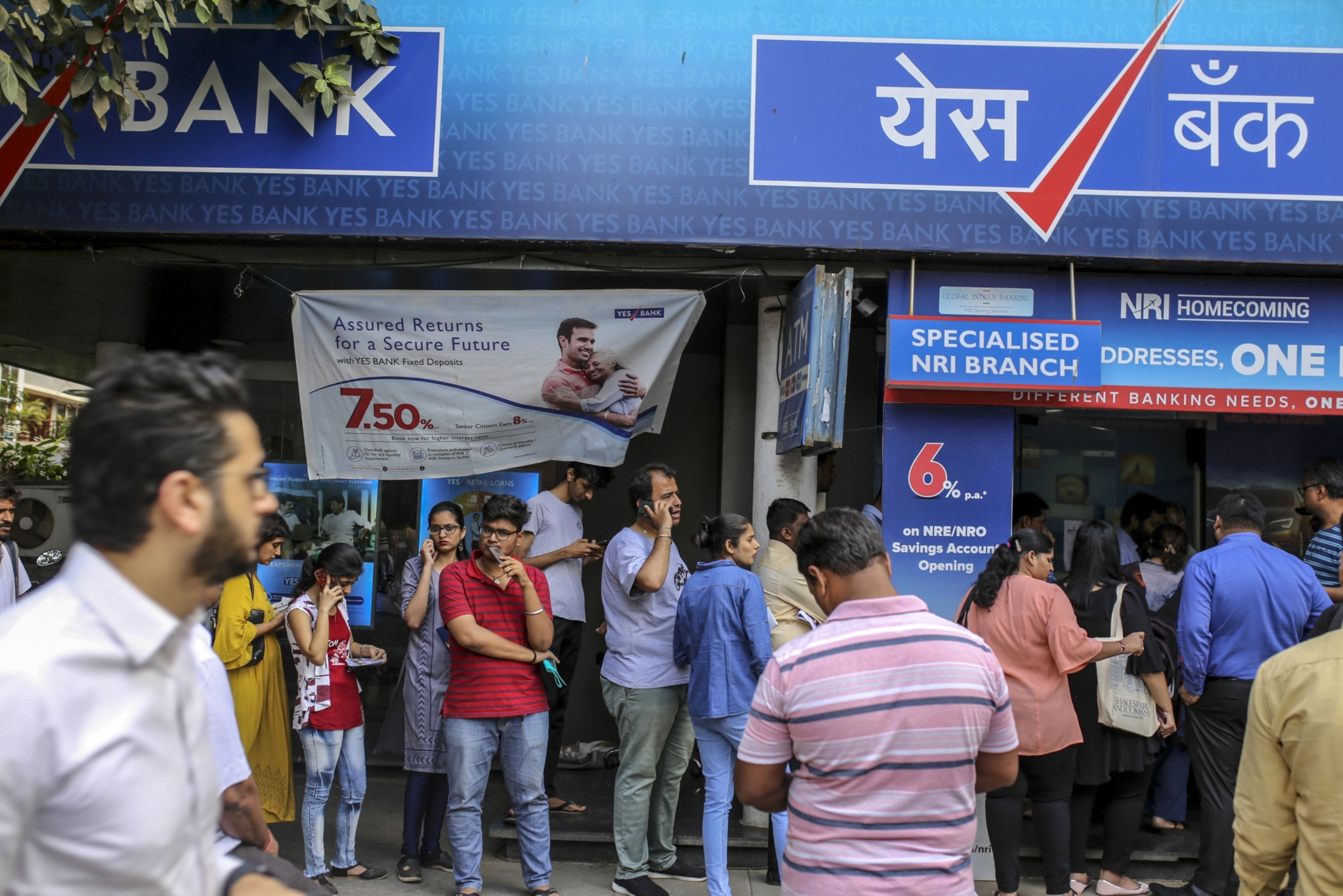
The suspension of the board of directors of Yes Bank Ltd. and imposition of a month-long moratorium on the bank under Section 45 of the Banking Regulation Act may have sent shock waves across the financial sector, but it was generally known that the bank was fast reaching a point of no return.
For the last several years, Yes Bank had been facing governance problems arising out of family disputes between the main promotors of the bank. It was only in 2017 that the Reserve Bank of India sat up when it found that Yes Bank was not divulging a true picture of the quality of its assets. It removed the promotor-CEO and also appointed a former deputy governor of the RBI on the board of the bank. Defaults by a number of large borrowers revealed that Yes Bank had been indulging in high-risk lending without adequate risk-mitigating measures. There were even rumours in the market at the time that the bank was taking exposure in many stressed corporates who were unable to get loans from other financial institutions. Yes Bank started facing liquidity problems and RBI started pushing it to raise more capital. Problems were further compounded by the slowdown in economic growth and as a financial intermediary the bank could not remain unaffected by declining performance of the real sector.
Did RBI Wait Too Long?
Questions are now understandably being raised on whether RBI waited too long and whether effective regulatory and supervisory oversight was lacking.
RBI's view is that it was trying to find a market-led solution to the problems being faced by Yes Bank. For this purpose, RBI was pushing Yes Bank to arrange for more capital. The management of Yes Bank was engaged in gaining time by giving vague proposals. Only when RBI found that no credible investor was coming forward, it decided to invoke provisions of Section 45 of the Banking Regulation Act. During this period the market capitalisation of Yes Bank continued to plummet and the equity value of the Bank eroded.
As things have unfolded and given the continued governance problems and absence of risk management practices, earlier and more decisive action by the RBI could have perhaps preserved some net worth of the bank.
As regards the appropriateness of the measures now being put in place, these are certainly positive. The moratorium period will be used for drawing up a scheme for revival or reconstruction of the bank. There are some who will argue that why should taxpayers money be used to bail out a private bank. Given the criticality of the financial intermediation sector in any economy, failure of a bank can have economy-wide ramifications, and a run on one bank can very quickly have a contagion effect. For this reason, globally there is a practice of designating some banks as systemically important, which from a regulatory perspective cannot be allowed to fail. In India, RBI has identified State Bank of India, ICICI Bank Ltd. and HDFC Bank Ltd. as Domestic Systemically Important Banks or D-SIBs. For these banks, an additional equity requirement is applied. Yes Bank is not a D-SIB but has large deposits of more than Rs 2 lakh crore and large asset base of over Rs 2.2 lakh crore.
The collapse of such a bank has the potential of triggering economy-wide shocks. RBI and government stepping in could not be avoided.
The Reconstruction Plan
There are many legitimate concerns about the type of reconstruction that RBI will design. The RBI has placed in the public domain an outline of a proposed scheme for the revival of Yes Bank. Assurance has been given to depositors that their deposits are safe and to the staff that their jobs will be protected. It has also been announced that SBI has expressed willingness to make an investment in Yes Bank and participate in the reconstruction scheme. These are welcome measures. SBI's participation should be based on commercial viability considerations.
Though its equity has eroded, Yes Bank has some underlying strengths like a sound franchise, robust IT systems, skilled manpower and an extensive network of branches.
SBI should be able to harness these strengths and with proper pricing, its investment can become commercially attractive. The government and RBI will have to be careful lest an impression is created that SBI is stepping in at their behest. If such a perception is created, questions of interests of minority shareholders of SBI and other SEBI-related regulatory issues will crop up.
CM Vasudev is former Secretary - Economic Affairs, Government of India; and former chairman of HDFC Bank.
Also Read: Believe SBI's Contribution To Yes Bank Won't Exceed Rs 10,000 Crore
The views expressed here are those of the author and do not necessarily represent the views of BloombergQuint or its editorial team.

-
A New Samvat Wishlist: Inclusive Prosperity And Human Development

India has strengthened its economic foundations through infrastructure, digital access and enterprise. Its next growth chapter must deepen productivity, create better livelihoods and widen participation in prosperity.
-
Love, Sex Aur Dhokha: The Audacious Plot To Spy On Jensen Huang
A Taipei dinner, a Singapore chip buyer and a suspected Chinese asset: inside the alleged spy operation that got close to NVIDIA's Jensen Huang.
-
Ten Things I Learnt This Samvat
Patience can be a trap. Cheap stocks can stay cheap. Leverage can wipe you out. What did Samvat 2082 teach us? Niraj Shah writes on 10 lessons from the year gone by.
-
Talking Points This Week: Tech Nerves, FII Buying, And A Faraway Banking Shock
The global markets are not shining this Diwali. The exception in the large markets is, India.
-
Midterm Rally Lasted A Day. The Hard Reality Of A Divided US May Last Two Years | Opinion
Between a contested AI boom, a debt ceiling that arrives in 2027 and a president with every incentive to act alone, the next two years may prove more volatile than the first day's rally suggests.
-
Blue Wave Will Derail the AI Trade but Won't Dismantle the AI Era | Unhedged Position
The Democrats' sweep of the US Congress will see politics collide with economic forces both over the long and short term.
-
It's Time To Take The GST Council's Bet On Trust Global
Payment records can prove India's services exports, and clear, proportionate rules can bring foreign digital sellers into the tax net.
-
Opinion | India at 38: From Innovation Overperformer to Innovation Powerhouse
India now has 453 VC-backed deep science startups, 18 of them late-stage, after 117 percent growth since 2020. Laurus Labs, at USD 9.3 billion, is the most valuable deep science company in any middle-income economy outside China.
-
Navigating Energy Crossroads: S Jaishankar's Call For Diversified Supply Chains At G20 Ministerial Meeting
As geopolitical fault lines continue to test maritime trade routes and commodity flows, Jaishankar's message remains pertinent: true economic resilience requires open markets, protected transit lines, and a genuine commitment to multilateral cooperation rather than coercion.









