Yen’s Recent Rebound Has Limits With Month-End Reversal Expected
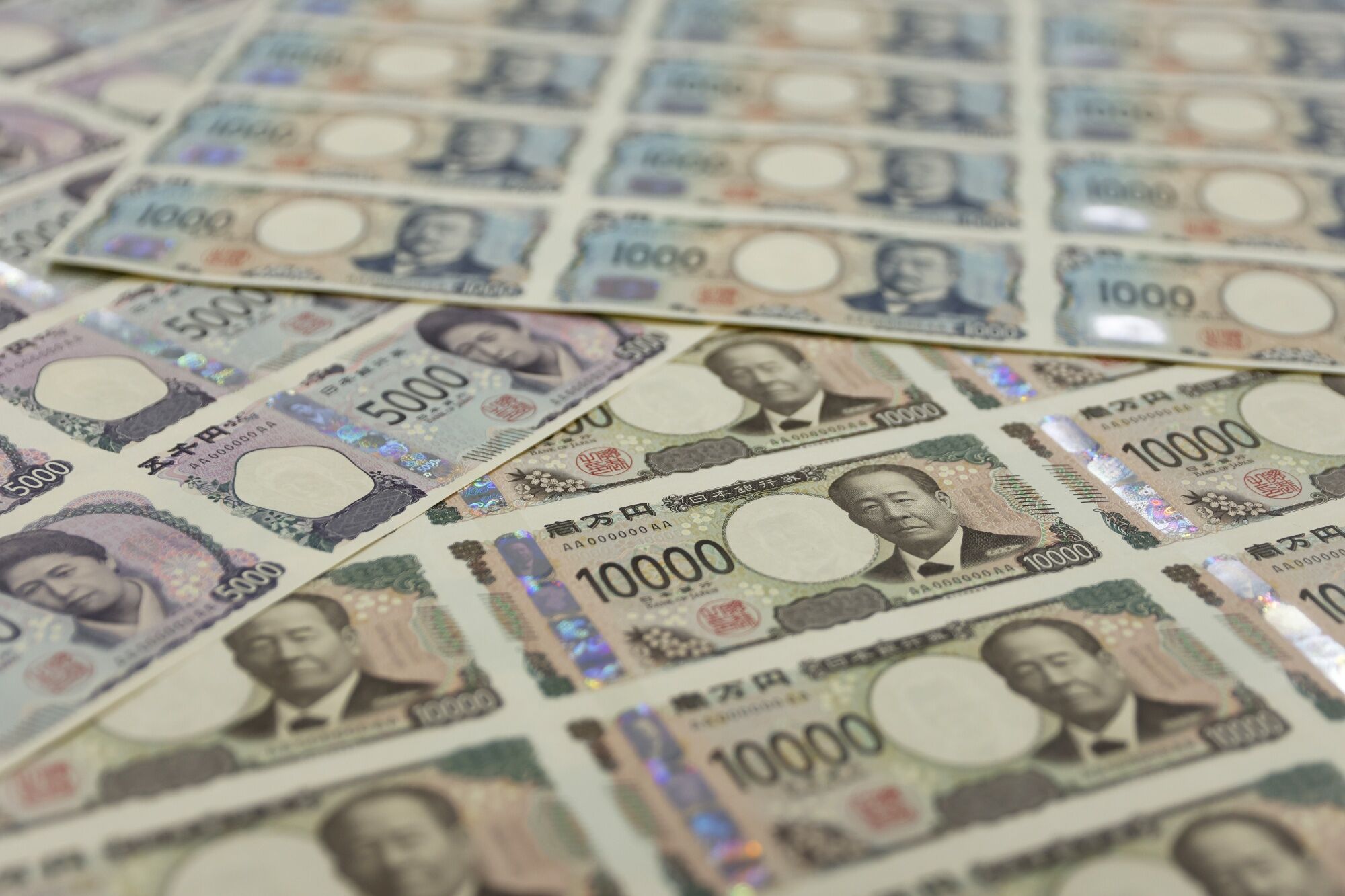
(Bloomberg) -- The yen is under pressure once again as August draws to a close.
The currency has slumped against major trading peers in the final days of every month since February, and despite moments of brief respite, the trend is holding.
The recent moves of Japanese equities and bond markets have left asset managers racing to rejigger their portfolios to meet stringent allocation rules across asset classes at the end of the month. That rebalancing alongside hedging flows is behind the yen selling, according to traders in New York and Europe.

The global rates outlook — the Bank of Japan signaled it will stick to its current policy of monetary easing while the US explores further rate increases — and soaring hedging costs mean end-of-the-month yen selloffs are unlikely to stop anytime soon.
“With the BOJ remaining dovish, we look for an eventual test of 150,” wrote Win Thin, global head of currency strategy at Brown Brothers Harriman & Co. “The fundamental story continues to move in favor of the greenback.”
The yen traded at 145.83 per dollar at 10:42 a.m. in Tokyo on Thursday after touching its weakest since November on Tuesday at 147.37. It was at 159.48 versus the euro, near a 15-year weak point of 159.76 reached on Wednesday.
Deutsche Bank AG's measure of yen strength versus global trading peers closed at a record low on Wednesday, according to data going back to 2000. The recent weakness has also set the yen within sight of 150, a level that traders and analysts believe could trigger Japanese officials to intervene to slow the yen's decline.
A Trader's Guide to Japanese Policymakers' Language on the Yen
The options market appears aware of the intervention risks. One-week volatility jumped to 8.67% Thursday from an opening level of 7.4% at the start of the New York session Tuesday when the yen slid past 147. Even as the dollar fell after US data Wednesday, the yen slumped against most of its other G-10 peers.
“Markets may start getting nervous about FX intervention but really, it won't do much as long as BOJ remains dovish,” Thin said.
Japan's negative policy rate and other yen roadblocks have led strategists from Goldman Sachs Group Inc. and JPMorgan Chase & Co. to take a more bearish stance on the currency.
Goldman Sees Yen Falling to 1990 Levels as BOJ Stays Dovish
Lofty hedging costs are also a consideration for portfolios managers and corporations as positions are adjusted at month end. For a Japanese investor, the cost to hedge a US bond or equity is at two-decade high of 5.72% while the cost on a euro investment hedge has risen above 4% for the first time since 2008.
Until the Federal Reserve starts cutting rates — a 2024 event according to swaps traders — the likelihood of yen buying to hedge remains remote.
--With assistance from Carter Johnson and Yumi Teso.
(Adds Thursday's currency levels, updates rates throughout.)
More stories like this are available on bloomberg.com
©2023 Bloomberg L.P.

-
Navigating Energy Crossroads: S Jaishankar's Call For Diversified Supply Chains At G20 Ministerial Meeting

As geopolitical fault lines continue to test maritime trade routes and commodity flows, Jaishankar's message remains pertinent: true economic resilience requires open markets, protected transit lines, and a genuine commitment to multilateral cooperation rather than coercion.
-
Indians Are Travelling, But Not Every Journey Is A Holiday | The Week In Whys
Pilgrims, patients and working women are the real travellers, and the system hasn't quite caught up with them.
-
Getting To Work Costs Women More | The Reason Why
It is not just about women paying more than men. It is about women paying much more in cities than in villages.
-
AI Bias In Investing Cannot Be Eliminated, But It Can Be Governed
Framing is a particularly important example as identical financial information presented in terms of gains rather than losses can lead an LLM to reach a different assessment.
-
Joining The Dots | Dark Skies, Steady Diya: Why Hope Holds This Diwali
With war, a weak rupee and foreign outflows weighing on sentiment, policymakers at the NDTV World Summit and market veterans at NDTV Profit Ignite: Diwali Edition offered the same advice: stay invested and filter out the noise.
-
The Curious Case of Equitas Small Finance Bank And A CEO Who Quit For Stock
PN Vasudevan believes persistent investor concerns over a perceived conflict of interest had become a governance overhang on Equitas Small Finance Bank's stock, even as the lender improved profitability and asset quality.
-
Talking Points This Week: AI Cash Burn, A Tiger Comeback And An India That Still Finds Its Own Path
India is not immune to higher oil or tighter global liquidity, yet its earnings base is broader, its domestic policy levers are still available.
-
Foreign Investors Own Half Of HDFC Bank and ICICI Bank. An LTCG Cut Could Matter Most Here
Foreign portfolio investors have US$115 billion parked in HDFC Bank, ICICI Bank. If the government cuts long-term capital gains tax, Jefferies says returning foreign money could land here first.
-
'Never Seen This Level Of Negativity': Sandeep Tandon Says The Next Rally May Be Closer Than You Think
Veteran investor Sandeep Tandon says foreign selling is easing, large-caps are due a comeback and mid-caps are crowded, while he turns positive on gold, power and pharma this Diwali.
-
Indians Stay With Family, Not In Hotels | The Reason Why
India still lacks enough clean, reliable and affordable hotels for budget-conscious travellers.










