WTO's Blanket Food Export Exemptions A Concern For India's Domestic Food Security
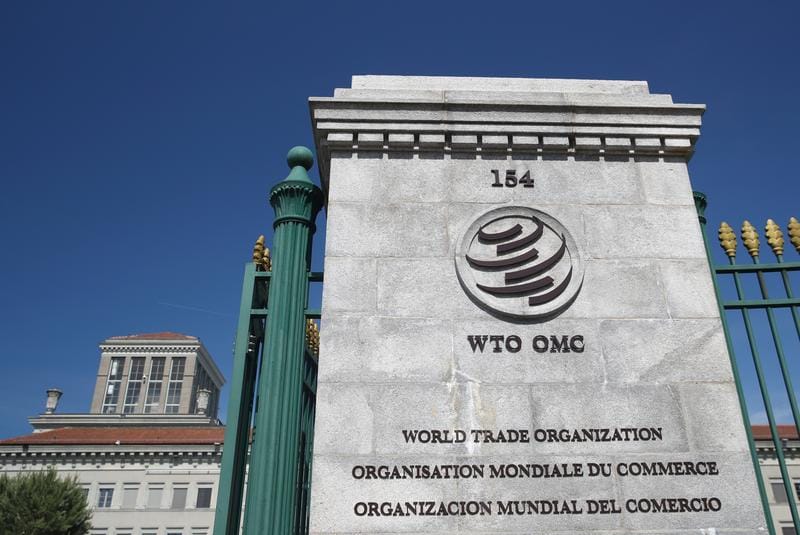
India is not in favour of extending blanket exemptions from export restrictions under the aegis of the WTO on food grains purchased for the UN's World Food Programme (WFP) as it would restrict its policy space to deal with domestic food security concerns, an official statement said on Saturday.
In the agriculture sector, the proponents on export restrictions are seeking outcome on two issues - exemption of food material purchased for non-commercial humanitarian purposes by the WFP from the application of export restrictions, and advance notification of export restrictive measures.
These issues would figure in the 12th ministerial conference (MC) of the World Trade Organization (WTO), beginning here from June 12. MC is the highest decision making body of the 164-member organisation. It is meeting after a gap of four years.
The Indian delegation at the conference is headed by Commerce and Industry Minister Piyush Goyal.
Discussions on the agri sector are significant in the WTO as the supply chain of food grains in the global markets has been affected due to the ongoing war between Ukraine and Russia.
Under the WTO rules, members can temporarily impose export prohibitions or restrictions to prevent or relieve critical shortages of food material or other products essential to the country.
The commerce ministry said that India has concerns with making notification requirements burdensome for developing countries in view of the sensitivities regarding shortages, price escalations and the implications of providing advance notice of such measures on the effectiveness of policies.
“With reference to contributions to WFP, India has been a significant contributor to the WFP over the years and has not imposed export restrictions for WFP procurement, at the same time extending support to neighbours with food supplies. Blanket exemptions for the WFP is a concern for India in view of domestic food security,” it said.
A group of about 70-80 countries, led by Singapore, is pushing member countries of the WTO to accept binding commitments of not extending export restrictions on food grains procured by the WFP.
The ministry also said that in the agriculture sector, in May, WTO chief Ngozi Okonjo-Iweala brought three draft texts on agriculture, trade and food security and exemption of the WFP from export restrictions for negotiations.
“India has reservations about some of the provisions in the draft decisions and has been engaging in the process of discussions and negotiations in order to be able to preserve the rights under the Agreement on Agriculture without undermining the existing Ministerial mandates,” it added.
On the proposed agreement on fisheries subsidies, it said that countries like India cannot be expected to sacrifice their future policy space because some members provided considerable subsidies to overexploit fisheries resources and are able to continue to engage in unsustainable fishing.
“India needs special and differential treatment to protect the livelihoods of poor fishers and address food security concerns of a nation, have the necessary policy space for developing the fisheries sector, and sufficient time to put in place systems to implement the disciplines under over capacity and over fishing, illegal, unreported, unregulated and over fished,” it said.
India believes that the fisheries agreement has to be seen in the context of existing international instruments and the laws of the sea.
“The sovereign rights of coastal states to explore and manage the living resources within their maritime jurisdiction, enshrined in international instruments, must be protected,” the ministry said.
On e-commerce, the ministry said that India is of the view that negotiation on rules and disciplines in e-commerce would be premature given the highly asymmetrical nature of the existing global e-commerce space and lack of understanding on the implications of the multi-faceted dimensions of issues related to the sector.
“Developing countries need to preserve flexibility to implement policies to 'catch-up' with the developed countries in the digital arena. We first need to focus on improving domestic physical and digital infrastructure, creating supportive policy and regulatory framework and developing our digital capabilities,” it said.
Further on the WTO response to the pandemic, India has raised its concerns on additional 'permanent' disciplines in the WTO agreements to respond to the pandemic.
“India does not want to conflate the challenges of pandemic to areas like market access, reforms, export restrictions, and transparency,” it said adding India wants that the WTO response needs to address supply side constraints.

-
Blue Wave Will Derail the AI Trade but Won't Dismantle the AI Era | Unhedged Position

The Democrats' sweep of the US Congress will see politics collide with economic forces both over the long and short term.
-
It's Time To Take The GST Council's Bet On Trust Global
Payment records can prove India's services exports, and clear, proportionate rules can bring foreign digital sellers into the tax net.
-
Opinion | India at 38: From Innovation Overperformer to Innovation Powerhouse
India now has 453 VC-backed deep science startups, 18 of them late-stage, after 117 percent growth since 2020. Laurus Labs, at USD 9.3 billion, is the most valuable deep science company in any middle-income economy outside China.
-
Navigating Energy Crossroads: S Jaishankar's Call For Diversified Supply Chains At G20 Ministerial Meeting
As geopolitical fault lines continue to test maritime trade routes and commodity flows, Jaishankar's message remains pertinent: true economic resilience requires open markets, protected transit lines, and a genuine commitment to multilateral cooperation rather than coercion.
-
Indians Are Travelling, But Not Every Journey Is A Holiday | The Week In Whys
Pilgrims, patients and working women are the real travellers, and the system hasn't quite caught up with them.
-
Getting To Work Costs Women More | The Reason Why
It is not just about women paying more than men. It is about women paying much more in cities than in villages.
-
AI Bias In Investing Cannot Be Eliminated, But It Can Be Governed
Framing is a particularly important example as identical financial information presented in terms of gains rather than losses can lead an LLM to reach a different assessment.
-
Joining The Dots | Dark Skies, Steady Diya: Why Hope Holds This Diwali
With war, a weak rupee and foreign outflows weighing on sentiment, policymakers at the NDTV World Summit and market veterans at NDTV Profit Ignite: Diwali Edition offered the same advice: stay invested and filter out the noise.
-
The Curious Case of Equitas Small Finance Bank And A CEO Who Quit For Stock
PN Vasudevan believes persistent investor concerns over a perceived conflict of interest had become a governance overhang on Equitas Small Finance Bank's stock, even as the lender improved profitability and asset quality.










