WTO Chief Criticizes Rich Nations for Embrace of Protectionism
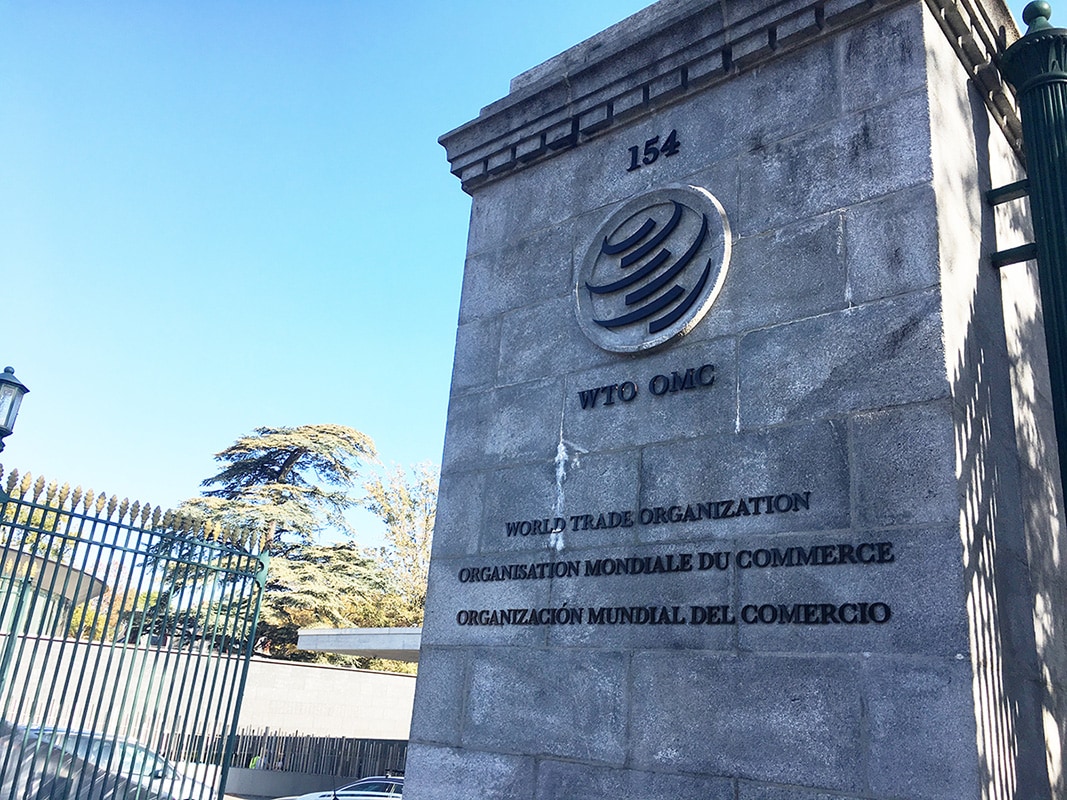
(Bloomberg) -- The head of the World Trade Organization sharply criticized western governments for embracing protectionist policies and shifting toward a power-based global trading system.
“Recent unilateral protectionist measures by some developed countries coupled with a more general reticence about the multilateral trading system and the WTO is seen as cynical and hypocritical by developing countries,” WTO Director-General Ngozi Okonjo-Iweala said Monday at a conference in Berlin.
“The latter feel that rich countries who have benefited immensely from the multilateral trading system to develop their economies now no longer want to compete on a level playing field and would prefer instead to shift to a power-based rather than a rules-based system,” she said.
Though Okonjo-Iweala didn't single out any country, US administrations under Presidents Joe Biden and Donald Trump have called for more domestic production in key industries and a larger focus on economic security — after more than a quarter-century of American policy fostering globalization.

Okonjo-Iweala, who is a dual American and Nigerian citizen, encouraged western economies to shift production facilities into nations from the global south as a way of building resilience in global supply chains after three years of historic disruptions.
“The right response is to de-concentrate, diversify and deepen global trade by bringing more countries and communities from the margins to the mainstream,” she said. “Extending global production and trade networks to Africa, Latin America and Asia would make them simultaneously more resilient to localized shocks and more inclusive in socio-economic terms.”
QuickTake: How Trump Could Deal Another Blow to Hobbled WTO
Okonjo-Iweala commended the European Union for investing in vaccine manufacturing in Africa. At the same time, she urged European leaders to help find “rational solutions” to address migration flows from Africa.
Climate Finance
Okonjo-Iweala highlighted the contrast between China and America's infrastructure loans to countries in the developing world.
She cited academic research that found China's Belt and Road Initiative provided $428 billion in finance to developing countries between 2013 and 2017. “It is a reality across the African continent, for example, that people see the impact of new or improved physical infrastructure built with Chinese assistance,” she said.
During the same time period, the US offered $185 billion in loans, she said, and the government in Washington attaches too many conditions to its funding, which makes them “less attractive.”
Okonjo-Iweala also faulted western governments for failing to offer sufficient financing to help developing countries transition to green economies as a means to reduce the effects of climate change.
“Western governments have missed an opportunity,” she said. “Falling short on climate finance pledges was not just bad for people on the planet, it sent a damaging political signal.”
WTO Reform
German Foreign Minister Annalena Baerbock acknowledged that the west is “not perfect” and said a more critical analysis of Europe's trade policies would help make the 27-nation trading bloc stronger.
Baerbock, who was hosting the conference at her ministry, told attendees that the WTO is an important forum to help solve problems that arise amid tensions between the US and China.
“We are working toward this with all our power,” Baerbock said. “We will also continue to seek new ways forward with difficult partners, even if we are not in agreement on all issues.”
--With assistance from Iain Rogers.
More stories like this are available on bloomberg.com
©2023 Bloomberg L.P.

-
Navigating Energy Crossroads: S Jaishankar's Call For Diversified Supply Chains At G20 Ministerial Meeting

As geopolitical fault lines continue to test maritime trade routes and commodity flows, Jaishankar's message remains pertinent: true economic resilience requires open markets, protected transit lines, and a genuine commitment to multilateral cooperation rather than coercion.
-
Indians Are Travelling, But Not Every Journey Is A Holiday | The Week In Whys
Pilgrims, patients and working women are the real travellers, and the system hasn't quite caught up with them.
-
Getting To Work Costs Women More | The Reason Why
It is not just about women paying more than men. It is about women paying much more in cities than in villages.
-
AI Bias In Investing Cannot Be Eliminated, But It Can Be Governed
Framing is a particularly important example as identical financial information presented in terms of gains rather than losses can lead an LLM to reach a different assessment.
-
Joining The Dots | Dark Skies, Steady Diya: Why Hope Holds This Diwali
With war, a weak rupee and foreign outflows weighing on sentiment, policymakers at the NDTV World Summit and market veterans at NDTV Profit Ignite: Diwali Edition offered the same advice: stay invested and filter out the noise.
-
The Curious Case of Equitas Small Finance Bank And A CEO Who Quit For Stock
PN Vasudevan believes persistent investor concerns over a perceived conflict of interest had become a governance overhang on Equitas Small Finance Bank's stock, even as the lender improved profitability and asset quality.
-
Talking Points This Week: AI Cash Burn, A Tiger Comeback And An India That Still Finds Its Own Path
India is not immune to higher oil or tighter global liquidity, yet its earnings base is broader, its domestic policy levers are still available.
-
Foreign Investors Own Half Of HDFC Bank and ICICI Bank. An LTCG Cut Could Matter Most Here
Foreign portfolio investors have US$115 billion parked in HDFC Bank, ICICI Bank. If the government cuts long-term capital gains tax, Jefferies says returning foreign money could land here first.
-
'Never Seen This Level Of Negativity': Sandeep Tandon Says The Next Rally May Be Closer Than You Think
Veteran investor Sandeep Tandon says foreign selling is easing, large-caps are due a comeback and mid-caps are crowded, while he turns positive on gold, power and pharma this Diwali.
-
Indians Stay With Family, Not In Hotels | The Reason Why
India still lacks enough clean, reliable and affordable hotels for budget-conscious travellers.










