Wipro’s Taking It One Quarter At A Time Amid Warnings Of Fiscal Growth Decline
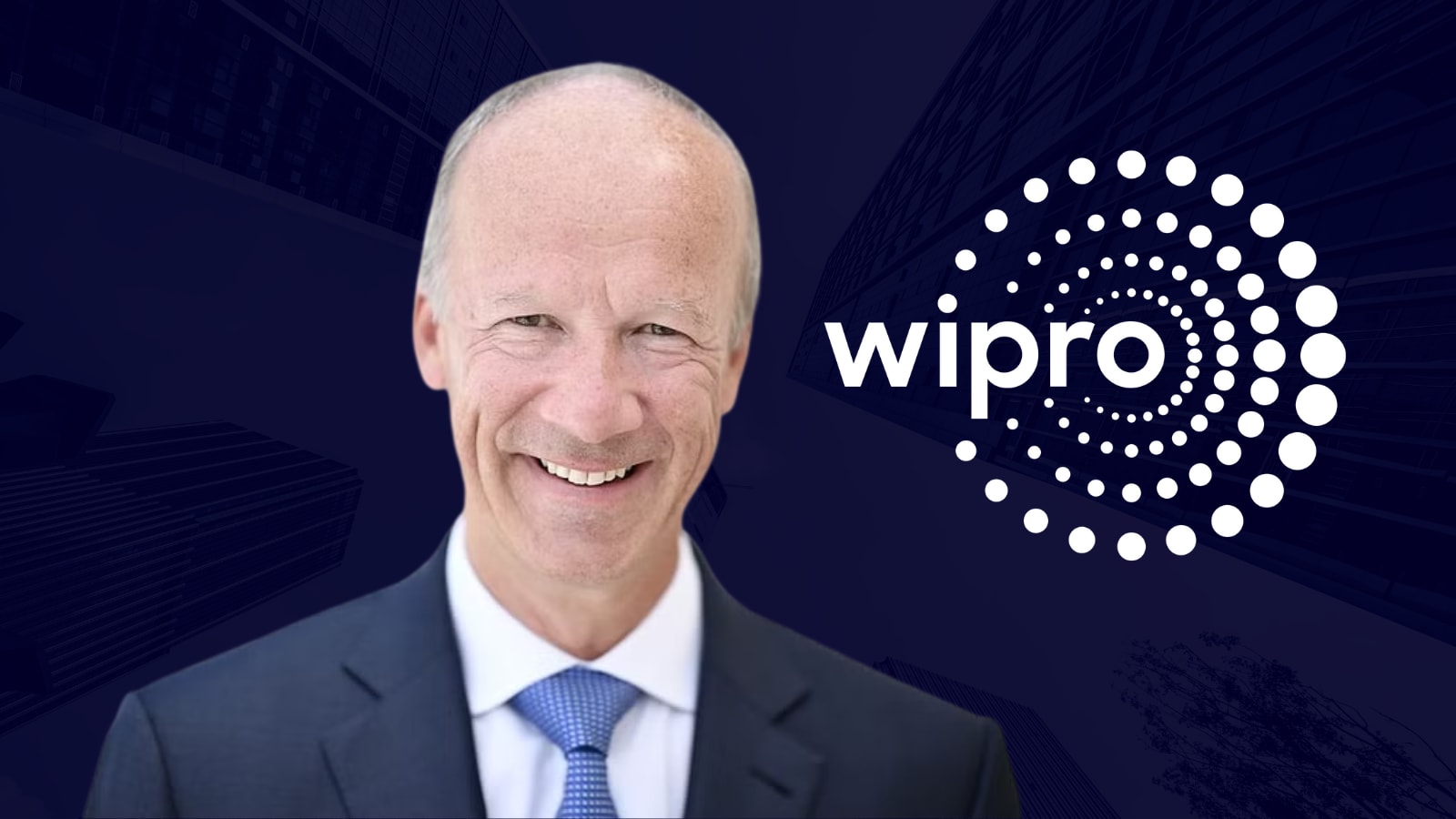
Wipro Ltd. is cautious on its growth outlook for fiscal 2024, even as analysts have warned of a rare fiscal growth decline for the company.
India's fourth-largest IT firm guided for -2% to +1% sequential revenue growth in the July-September quarter after its first-quarter earnings fell but met Bloomberg estimates as well as its own guidance of -3% to -1% growth.
But analysts weren't enthused.
Motilal Oswal Financial Services Ltd. as well as DAM Capital Advisors Ltd. expect the Bengaluru-based software services firm to clock a rare revenue decline in fiscal 2024 after guiding for negative growth in the first two quarters. While DAM Capital expects Wipro's revenue to decline 1.8% year-on-year in constant currency terms, Motilal Oswal has pegged the shrinkage at 1.7%.
Thierry Delaporte, Wipro's Paris-based chief executive officer, still wants to take things one quarter at a time, given the uncertain and evolving macroeconomic picture.
"We're guiding for the quarter and not for the year," Delaporte told BQ Prime during a virtual chat on Tuesday. "Uncertainty remains, I believe, across markets."
"We continue to have a solid volume of large deals, but it is the smaller discretionary spends that have actually reduced from where they were a few quarters ago. Based on that, we are guiding for -2% to +1% for Q2. We are not guiding beyond that."
Wipro clocked a total contract value, or deal wins, of $3.7 billion in the April-June quarter, implying a book-to-bill ratio of 1.3. The valuation of large deals was also healthy at $1.2 billion. In fact, Wipro's TCV has remained above the $3 billion mark for five quarters now.
That, however, isn't reflected in the top line.
"Despite strong deal wins, order book, and outlook over the same, Wipro's growth guidance remains tepid as it remains unclear on conversion timelines," DAM Capital's Anmol Garg and Vivek Doshi said in a July 13 research report. "We believe the company is witnessing a higher magnitude of deal pauses/cancellations than its peers."
Motilal Oswal concurred. "Given Wipro's broader presence in discretionary areas, the conversion is a challenge, as enterprises are cautious and reprioritising spends."
Delaporte, however, defended Wipro's dealmaking strategy.
"The dealmaking over the past few quarters is a reflection of the type and strategic nature of the deals we are closing," he said. "Large deals are coming in, small deals are not."
When they will start coming in is anyone's guess, as things haven't materially changed from a quarter ago. They are more of the same, Delaporte said.
"What I can only observe is that, reflecting on Q2 vs. Q1, I would say that the situation hasn't fundamentally changed. It hasn't deteriorated, nor has it dramatically improved. It's more or less in the same context, impacted by the macroeconomic environment, where uncertainties prevail in most of the industries. A feel for the second half is too early to tell."
But Wipro will be ready for the revival, whenever it happens.
"Our fundamentals are stronger than ever. Our transformation is aligned with the strategy defined three years ago," Delaporte said. "Nothing has changed from that standpoint. When growth comes back, we will be ready."
Watch the full video here:

-
Navigating Friction And Energy Realities: An Analysis Of Marco Rubio's October Visit To India

Occurring at a critical juncture marked by stalled trade negotiations and escalating geopolitical pressures over global energy supplies, the visit offers a profound window into modern US-India relations.
-
India Exports Capital. Why Not Export Trusteeship?
The big question, then, is whether India can build an institution that global borrowers, investors, banks, and lawyers can trust, even without an Indian connection.
-
France's Economy & Politics Are In Crisis | The Reason Why
Let's look at how the French economy and politics evolved under Nicolas Sarkozy, Franois Hollande and Emmanuel Macron.
-
You May Inherit The Business. You Must Earn Its Credibility.
Succession tests the founder's ability to share authority as much as it tests the next generation's readiness to assume it.
-
Signing Deals Is One Thing; Making Them Work Is Another | The Week In Whys
Sometimes, things don't turn out as planned. Indian companies have lost some bids to rivals, some projects won't produce until 2030.
-
FOMC Wall, PERM Suspension, Hospital Stocks | Talking Points This Week
A PERM suspension would directly affect green-card sponsorship rather than H-1B visas, so the near-term earnings impact could remain relatively limited. The key question is whether this marks a new phase in US scrutiny of Indian IT.
-
Everything, Everywhere, All At Once: Dalal Street's Week To Forget | Joining The Dots
Visa curbs, a Starlink spat and cancer drug caps: what connects this week's shocks for Indian markets
-
India Is Going Abroad For Critical Minerals. But It May Take Years To Pay Off | The Reason Why
Although India's steps are in the right direction, they remain modest compared with India's growing dependence.
-
When Everyone Has AI, What Gives You An Edge?
India's young workforce is entering an uncertain world of work where powerful AI tools are becoming widely accessible. The advantage will belong to those who combine deep expertise with digital fluency, and the distinctly human capabilities that technology cannot manufacture.
-
Wrong Labels, High Pesticide Residues Holding Back Agri Exports | The Reason Why
India needs stronger domestic food-safety and labelling standards, with best practices becoming part of everyday business for farmers, traders and food companies.










