Wipro Declines On Subdued Guidance, Weak Q3 Earnings
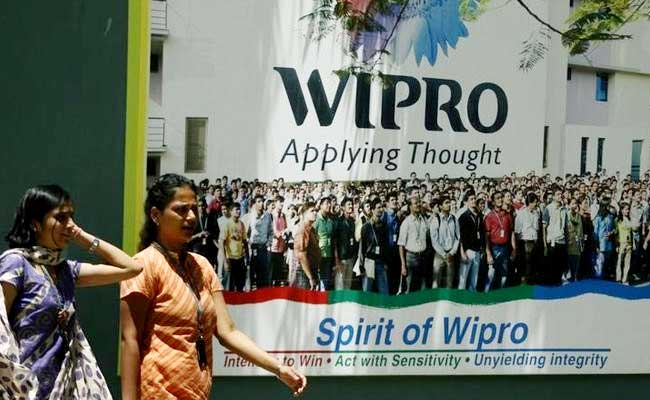
Wipro shares declined as much as 1.7 per cent to Rs 465 in an otherwise strong market after the India's third largest software exporter issued a muted guidance for the March quarter. Wipro's net profit came in at Rs 2,109.6 crore on sales of Rs 13,764 crore, compared with net profit of Rs 2,070 crore on sales of Rs 13,896.8 crore in the previous quarter. Wipro announced its earnings after market hours on Wednesday. Markets were closed on Thursday on account of Republic Day.
However, a muted revenue growth forecast for the quarter ending March 31, as India's outsourcing industry braces for a protectionist regime in the United States, its largest market weighed upon the stock in trade today.
Wipro's revenue from IT services came in at Rs 13,196 crore compared with Rs 13,136 crore in the previous quarter. Wipro's EBIT or operating profit came in at Rs 2,415 crore as against Rs 2,337 crore in the previous quarter.
Wipro expects revenues from its IT services business to be in the range of $1.92 billion to $1.94 billion, the company said in a statement on Wednesday.
Domestic brokerage Edelweiss in a note said, "Wipro's Q3FY17 IT services revenue, at $1,903 million, came below Street's 0.8 per cent growth estimate, partly due to 130 basis points cross-currency impact. However, IT services EBIT margin jumped 50 basis points QoQ to 18.3 per cent on improvement in core operations."
"Valuation comfort limits downside and we maintain 'buy' with revised target price of Rs 558," added Edelweiss.
Wipro's bigger rivals Infosys Ltd and Tata Consultancy Services Ltd, which reported earnings earlier this month, said they were preparing for a more restrictive US visa regime under President Donald Trump.
Indian IT companies depend on H1-B work visas to send their developers and engineers to the United States to service clients.
As of 10:40 am, shares of Wipro traded 1.56 per cent lower at Rs 466.30, underperforming the Nifty which was up 0.6 per cent. (With inputs from Reuters)

-
A New Samvat Wishlist: Inclusive Prosperity And Human Development

India has strengthened its economic foundations through infrastructure, digital access and enterprise. Its next growth chapter must deepen productivity, create better livelihoods and widen participation in prosperity.
-
Love, Sex Aur Dhokha: The Audacious Plot To Spy On Jensen Huang
A Taipei dinner, a Singapore chip buyer and a suspected Chinese asset: inside the alleged spy operation that got close to NVIDIA's Jensen Huang.
-
Ten Things I Learnt This Samvat
Patience can be a trap. Cheap stocks can stay cheap. Leverage can wipe you out. What did Samvat 2082 teach us? Niraj Shah writes on 10 lessons from the year gone by.
-
Talking Points This Week: Tech Nerves, FII Buying, And A Faraway Banking Shock
The global markets are not shining this Diwali. The exception in the large markets is, India.
-
Midterm Rally Lasted A Day. The Hard Reality Of A Divided US May Last Two Years | Opinion
Between a contested AI boom, a debt ceiling that arrives in 2027 and a president with every incentive to act alone, the next two years may prove more volatile than the first day's rally suggests.
-
Blue Wave Will Derail the AI Trade but Won't Dismantle the AI Era | Unhedged Position
The Democrats' sweep of the US Congress will see politics collide with economic forces both over the long and short term.
-
It's Time To Take The GST Council's Bet On Trust Global
Payment records can prove India's services exports, and clear, proportionate rules can bring foreign digital sellers into the tax net.
-
Opinion | India at 38: From Innovation Overperformer to Innovation Powerhouse
India now has 453 VC-backed deep science startups, 18 of them late-stage, after 117 percent growth since 2020. Laurus Labs, at USD 9.3 billion, is the most valuable deep science company in any middle-income economy outside China.
-
Navigating Energy Crossroads: S Jaishankar's Call For Diversified Supply Chains At G20 Ministerial Meeting
As geopolitical fault lines continue to test maritime trade routes and commodity flows, Jaishankar's message remains pertinent: true economic resilience requires open markets, protected transit lines, and a genuine commitment to multilateral cooperation rather than coercion.









