Winners Of The First Trade War May Not Be So Victorious
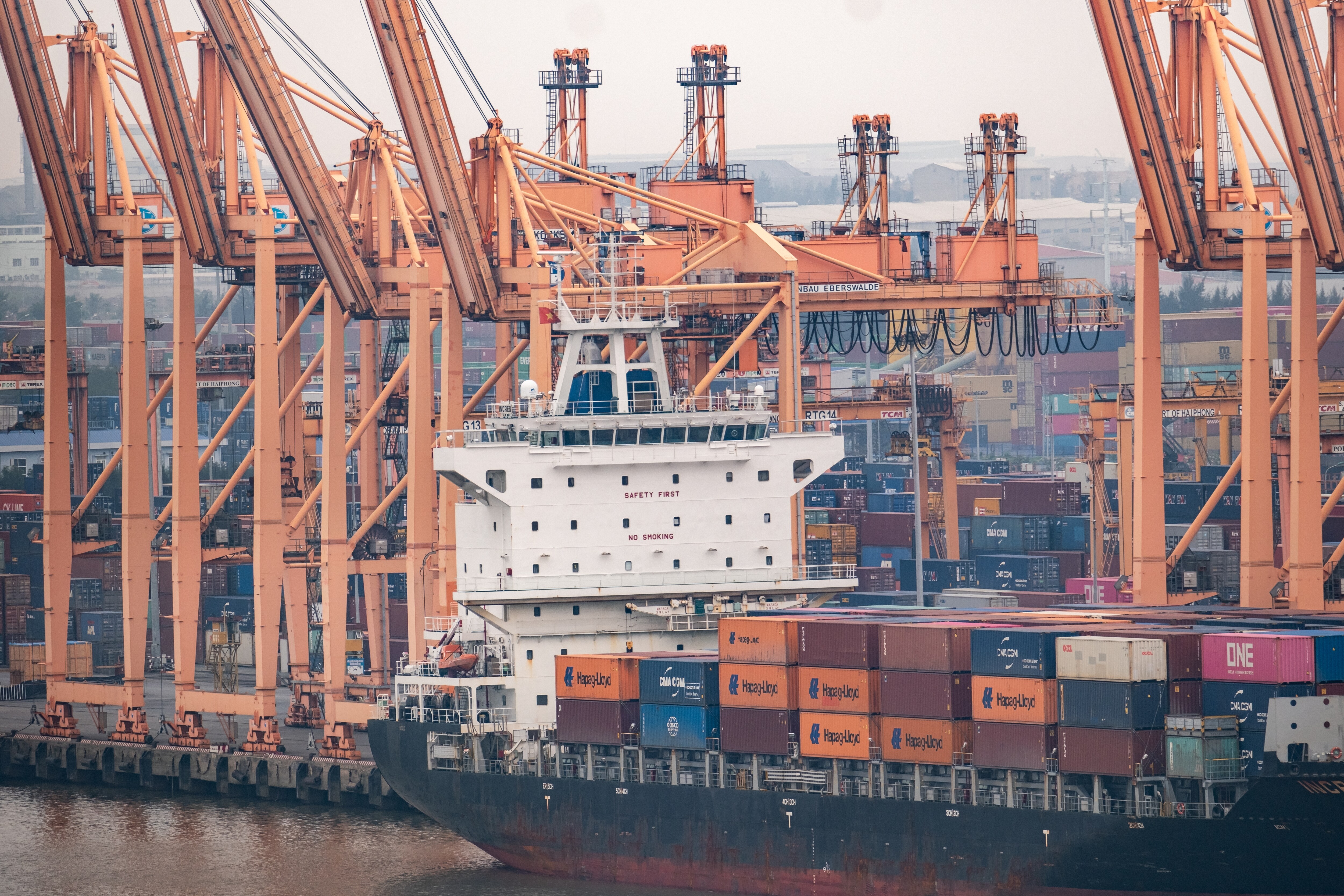
The often-proclaimed winners of the first trade war have their work cut out. Southeast Asian economies, usually portrayed as beneficiaries of fraying ties between China and the US, have a challenging outlook. The region will have solid performers, if anybody can truly emerge from commercial conflict in reasonable standing, and its share of also-rans. One thing seems depressingly clear: Faith in the relatively unfettered flow of exchange of goods and services has been dealt a heavy blow.
Donald Trump's latest salvos are broader and more sweeping, targeting Mexico and Canada. But the health of the relationship between the US and China has been viewed within Asia as an important gauge of America's appetite for sprawling supply chains — and where they are best located. The signs aren't auspicious: The 10% hike in levies on imports from China alone is the biggest single increase under Trump, according to Nomura. Overall, the effective average tariff moved up “modestly” to 2.8% in 2020 from 1.5% in 2016, the firm's economists said in a note on Monday.
How successfully Southeast Asia can weather the storm Trump has unleashed will help determine whether it can sustain the dramatic rise in living standards in the past few decades. The White House agreed late Monday to pause tariffs on Mexico and Canada for a month, though the new administration shows an inclination to resort to such charges for anything it sees as a transgression or detrimental to US interests. That's a sobering prospect for a region that depends on foreign investment and exports. For example, would Malaysia be hit in the event American cargo jets were denied landing rights, or a state government held up approval for a data center operated by a West Coast tech behemoth?
Growth in the region is well off the scorching levels that earned countries the mantle of Tiger economies in the 1980s and 90s. Thailand, an early manufacturing star, now has an anemic pace of growth; Capital Economics recently dubbed it “the new sick man of Asia.” Malaysia's expansion is respectable, but no world-beater. Singapore had a good 2024, though growth was tempered in the final three months. Vietnam, lauded as a rising power, is trying to streamline its bureaucracy and cut the size of government by 20%, all the while fretting that its giant trade surplus with the US will place it in Washington's crosshairs. Indonesia isn't satisfied with 5% growth, but nurses unrealistic ambitions to lift that clip to 8%. Factories in much of Asia expanded at a lackluster pace in January.

Leaders are right to be wary. “Trade is three times our GDP,” Singapore Prime Minister Lawrence Wong told reporters in November. “We are an open economy. We are a trading economy. We would be concerned in a world where there are more and more frictions.” The message is that trade conflicts, regardless of their duration or intensity, ultimately work against good outcomes.
In some ways, the broader vibe from Washington is as significant as the details of the customs charges. If levies of 25% can be whacked on Mexico and Canada within weeks of Trump's return to the Oval Office, what does that say about prospects for trade integration elsewhere? I single the two North American partners out because, together with the US, they were signatories to the North American Free Trade Agreement in the early 1990s. That pact was rebranded during Trump's first term in a deal that the president hailed as a “model agreement.” His treatment of Ottawa and Mexico City this time around effectively disses that accord. It's hard to see any half-way comprehensive arrangement with China being treated better.
When Trump launched the trade battles in his first stint in the White House, Southeast Asia was doing okay. The damage was seen as minimal and the result possibly even advantageous, depending on how much companies were prepared to hedge their bets on China and diversify their production sites. But it was tricky to get it just right: The region reaped the benefits of growing ties with Beijing, while American businesses enjoyed an entrenched position. Many nations had cordial relations with the US and several had deep political and defense ties with Washington. They couldn't be seen as profiting from a desire to disengage from China, but nor would they knock back serious investment propositions from Western conglomerates.
Nations may want to keep their heads down, but it's hard to fly under the radar for four years. The greater import may not be what happens to individual countries or even specific industries, but the collateral damage to the standing of trade agreements and the ideas that underpinned them. Free, or relatively unchained, trade has taken a philosophical hit. This isn't the end of globalization, but it's surely a new, tortured chapter. As a young journalist in Sydney contemplating my first offer of a foreign assignment, to Kuala Lumpur in 1996, almost everyone I consulted said something like: Just get there and figure it out, you can't really lose because Asia is where the growth is.
This phase feels more threatening. Southeast Asia will get through it, but not unscathed. Trade wars are for surviving. Thriving is an altogether different proposition.

-
High US Salaries, No Green Card Certainty: The Financial Calculation Facing Indian H-1B Families

The suspension of PERM processing at eight technology employers does not cancel existing H-1B visas. What it does is force a question many Indian families have been avoiding: is the US salary worth tying your career and family plans to one employer?
-
Unhedged Position: Can India See An Indonesia-Style Time Correction?
The Nifty is trading below levels it first clocked in 2024. Is there, then, as I have suggested in the headline, potential that the current time correction drags on painfully for the next three-five, even ten years?
-
Navigating Friction And Energy Realities: An Analysis Of Marco Rubio's October Visit To India
Occurring at a critical juncture marked by stalled trade negotiations and escalating geopolitical pressures over global energy supplies, the visit offers a profound window into modern US-India relations.
-
India Exports Capital. Why Not Export Trusteeship?
The big question, then, is whether India can build an institution that global borrowers, investors, banks, and lawyers can trust, even without an Indian connection.
-
France's Economy & Politics Are In Crisis | The Reason Why
Let's look at how the French economy and politics evolved under Nicolas Sarkozy, Franois Hollande and Emmanuel Macron.
-
You May Inherit The Business. You Must Earn Its Credibility.
Succession tests the founder's ability to share authority as much as it tests the next generation's readiness to assume it.
-
Signing Deals Is One Thing; Making Them Work Is Another | The Week In Whys
Sometimes, things don't turn out as planned. Indian companies have lost some bids to rivals, some projects won't produce until 2030.
-
FOMC Wall, PERM Suspension, Hospital Stocks | Talking Points This Week
A PERM suspension would directly affect green-card sponsorship rather than H-1B visas, so the near-term earnings impact could remain relatively limited. The key question is whether this marks a new phase in US scrutiny of Indian IT.
-
Everything, Everywhere, All At Once: Dalal Street's Week To Forget | Joining The Dots
Visa curbs, a Starlink spat and cancer drug caps: what connects this week's shocks for Indian markets
-
India Is Going Abroad For Critical Minerals. But It May Take Years To Pay Off | The Reason Why
Although India's steps are in the right direction, they remain modest compared with India's growing dependence.









