Winner Takes It All In The World's Biggest Index Options Market
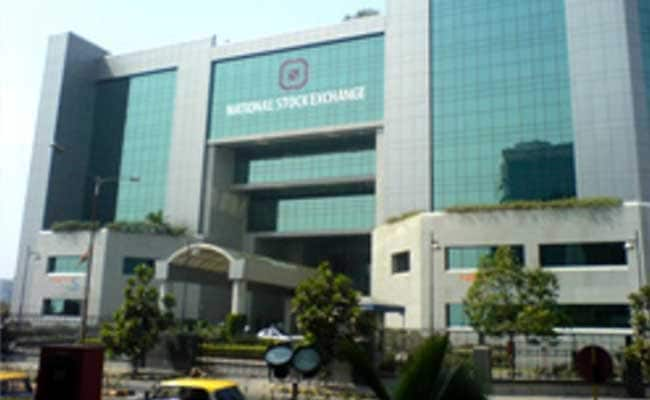
India's index options market, the biggest in the world, is a virtual monopoly.
The National Stock Exchange of India Ltd. has a 99.6 percent share of trading in the derivatives. The 657 million index options contracts traded at NSE this year through August is higher than any other venue and the country's total outstrips any other nation, according to the World Federation of Exchanges.
The domestic popularity of index options, which allow traders to bet on the future of the underlying index, has helped NSE beat rivals from the U.S. and Europe. India's global supremacy is notable both for the fact that options trading in the country only started in 2001, and for just how dominant a single exchange is in what's theoretically a competitive market, with NSE battling BSE Ltd., Asia's oldest exchange. The former is widely seen as succeeding over its rivals thanks to better technology.
The NSE's position is so dominant that “there is a de facto entry barrier for new exchanges,” Manoj Nagpal, chief executive officer at Mumbai-based Outlook Asia Capital Pvt., said by phone. “It will be difficult for BSE to come back in the game.”
CBOE Holdings Inc. trails NSE with 286 million index options contracts traded, according to WFE. Deutsche Boerse AG unit Eurex is third, seeing volume of 264 million contracts through August.
One reason why options are so popular in India is the difficulty of shorting stocks. The country briefly banned short selling in the early 2000s, and though it's now allowed it's not as easy as other countries.
“Beyond the top companies liquidity dries up, making it a shallow market and extremely difficult to short,” Chakri Lokapriya, Mumbai-based managing director at TCG Advisory Services, which manages about $3 billion, said by phone. “That's why Indian investors have shifted more to futures and options as that allows them to short the index.”
Brokers in India also took to stock derivatives as they looked for alternatives to the “badla,” the century-old system of carry-forward trades that was banned in July 2001. Badla, which allowed investors to borrow or lend money for trades resembling the forwards contract of today, often allowed rogue traders to rig the market.
“Lower capital requirement and no physical delivery attracts investors to Indian options,” said Abhimanyu Sofat, vice president at brokerage India Infoline Ltd. in Mumbai. “India has a long history of trading derivatives and speculation.”
Long History
Derivatives markets in India have existed since at least the start of futures trading at the Bombay Cotton Trade Association in 1875, the same year the BSE was formed.
Mumbai-based BSE hasn't managed to gain a foothold in options. In October 2011, the bourse started an incentives program to lure options brokers to its venue, a move that saw its market share increase to as much as 30 percent. But those gains fell away after the program ended in April. BSE spokesman Yatin Padia declined to comment.
NSE's dominance in options is even greater than its success in the nation's $1.7 trillion stock market, where it claims 86 percent of the share of annual turnover. The combined value of trades in this segment at NSE and BSE has averaged 219 billion rupees ($3.3 billion) this year through Oct. 10, up from last year's mean of 207 billion rupees.
There may be more to come, brokers said. Options trading has the potential to grow 10-fold over the next five years as the NSE adds to the 172 companies currently permitted for stock derivatives trading and introduces long-dated options on its indexes, according to Dimensions Consulting Pvt. The country's regulator last month permitted options trading in commodities.
“There are a few companies in this space and people still use options as an investment tool and not primarily to hedge portfolios,” Ajay Srivastava, New Delhi-based managing director at Dimensions Consulting, said by phone. “The market is at a very nascent stage. It is nothing compared to what you are going to see in future.”
© 2016 Bloomberg L.P
(Except for the headline, this story has not been edited by NDTV staff and is published from a syndicated feed.)

-
Unhedged Position: Can India See An Indonesia-Style Time Correction?

The Nifty is trading below levels it first clocked in 2024. Is there, then, as I have suggested in the headline, potential that the current time correction drags on painfully for the next three-five, even ten years?
-
Navigating Friction And Energy Realities: An Analysis Of Marco Rubio's October Visit To India
Occurring at a critical juncture marked by stalled trade negotiations and escalating geopolitical pressures over global energy supplies, the visit offers a profound window into modern US-India relations.
-
India Exports Capital. Why Not Export Trusteeship?
The big question, then, is whether India can build an institution that global borrowers, investors, banks, and lawyers can trust, even without an Indian connection.
-
France's Economy & Politics Are In Crisis | The Reason Why
Let's look at how the French economy and politics evolved under Nicolas Sarkozy, Franois Hollande and Emmanuel Macron.
-
You May Inherit The Business. You Must Earn Its Credibility.
Succession tests the founder's ability to share authority as much as it tests the next generation's readiness to assume it.
-
Signing Deals Is One Thing; Making Them Work Is Another | The Week In Whys
Sometimes, things don't turn out as planned. Indian companies have lost some bids to rivals, some projects won't produce until 2030.
-
FOMC Wall, PERM Suspension, Hospital Stocks | Talking Points This Week
A PERM suspension would directly affect green-card sponsorship rather than H-1B visas, so the near-term earnings impact could remain relatively limited. The key question is whether this marks a new phase in US scrutiny of Indian IT.
-
Everything, Everywhere, All At Once: Dalal Street's Week To Forget | Joining The Dots
Visa curbs, a Starlink spat and cancer drug caps: what connects this week's shocks for Indian markets
-
India Is Going Abroad For Critical Minerals. But It May Take Years To Pay Off | The Reason Why
Although India's steps are in the right direction, they remain modest compared with India's growing dependence.
-
When Everyone Has AI, What Gives You An Edge?
India's young workforce is entering an uncertain world of work where powerful AI tools are becoming widely accessible. The advantage will belong to those who combine deep expertise with digital fluency, and the distinctly human capabilities that technology cannot manufacture.









