Will Oyo’s Big Townhouse Bet Pay Off?
Online budget hotel aggregator Oyo Rooms will not only lease and brand properties, but will also manage them, adopting a high-cost model of hospitality chains even as it continues to burn cash.
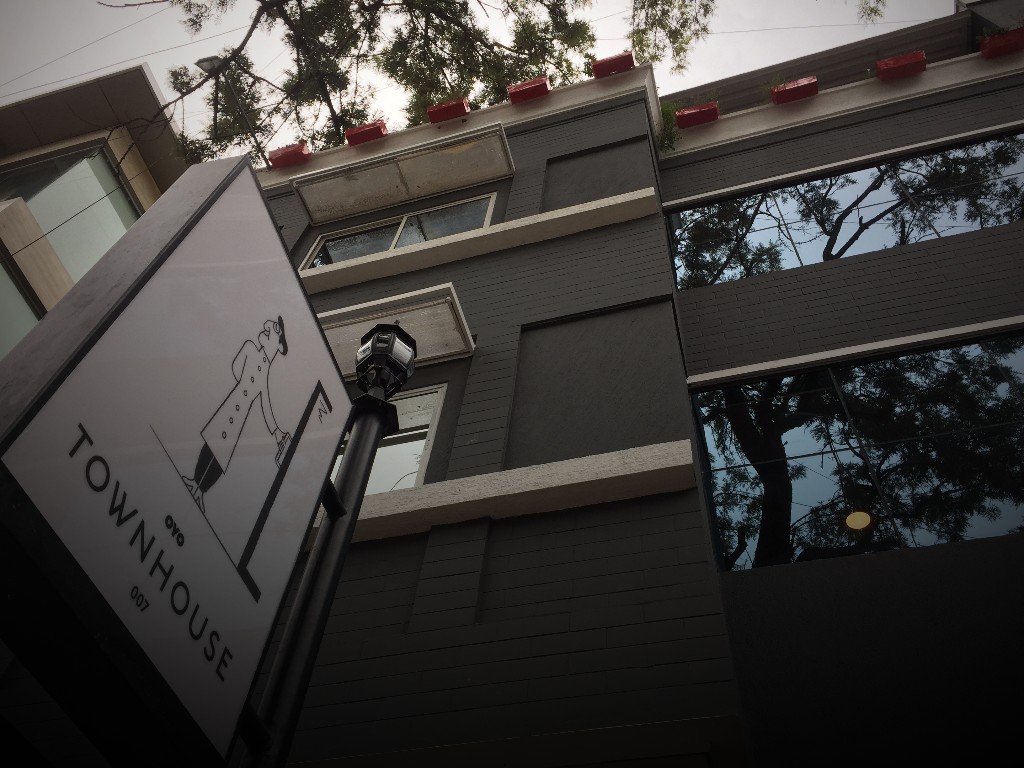
Through Oyo Townhouse, the SoftBank-backed company is not just leasing existing hotels and guesthouses, it is refurbishing them completely, hiring its own staff, and managing customer experience. Launched in December 2016, the firm unveiled its first property in Bengaluru last week and has a handful of similar ones in New Delhi, Gurugram and Hyderabad. Other players in the space include Treebo and FabHotels.
The model Oyo has adopted is not unique. That's how conventional hotel chains run. But the costs are steep even for a company with a deep-pocket investor.
Oyo has brought down the costs of renovating a single room from Rs 5 lakh to Rs 3-4 lakh and is aiming to bring it down further, a company spokesperson told BloombergQuint. But even then, Oyo would have spent roughly Rs 60 lakh only to set up rooms at its 20-room Bengaluru Townhouse. And there are bigger costs attached.
While Oyo declined to disclose other costs, a person privy to the development and involved in the same business as Oyo, said the firm is spending anywhere between 1-1.5 crore per hotel, which includes cost of leasing, renovation, manpower and deposits to run the hotel. Oyo doesn't have a problem in spending money due to a wealthy parent but the proposition is risky, the person added.
Besides, Oyo is a technology company to start with and will now have to train people, maintain properties, said Harminder Sahni, founder and managing director of Wazir Advisors. A lot can go wrong if the lease agreements are not done properly, he added
Mounting Losses
The company hasn't filed its annual returns for FY16, however its earnings statement for the nine-month period ending December 2015 shows the company lost nearly Rs 350 crore during that period. Revenue during the period stood at Rs 13.9 of which Rs 6.3 crore came from operations. In a nutshell, Oyo spent almost Rs 40 crore a month to generate a revenue of Rs 70 lakh.
In an emailed response to BloombergQuint, the company said its growth and burn-reduction are in line with its business model and the average cost of customer acquisition has come down compared to last year.
Our economic improvement is yielding consistent positive results because we are now able to buy cheaper, and have brought down supplier subsidies. We have been maintaining 2 times growth rate while fixing unit economics.Oyo Spokesperson
The company, so far, has raised $200 million in five rounds of funding.
Deep Pockets To The Rescue?
Not everyone sees the steep costs as an impediment, though.
An early investor of Oyo requesting anonymity said launching Townhouse is a natural extension for the firm trying to create a brand in the second star hotel chain.
Oyo has an advantage of having a cash rich investor and can expand aggressively without having to worry about money, another investor added.
Can Oyo Stand Out?
The notion of creating a hospitality brand out of leased property is a successful model globally but how technology can be used to leverage it is yet to be seen, according to Alok Mittal, angel investor and co-founder of financial technology startup Indifi Technologies.
“It's hard to see what's new in Oyo's offering. Is technology going to be a differentiator here? That's the question to be asked,” he said, but added that taking control of properties is an extension of what Oyo has already been trying to do. He added there is enough room in the hotel chain space for players like Oyo to exploit and create a brand.
But the challenge before Oyo is whether a customer at their price point will skip a Lemon Tree or Sarovar and choose Townhouse. “An offline player cannot match the scale of online player, similarly for an online player to do an offline is ten times difficult,” Wazir Advisors' Sahni said.
Meanwhile, Oyo aims to have 250 properties, across 12 cities by the end of 2017, Chief Operating Officer Abhinav Sinha told BloombergQuint in an interview. Sinha declined to comment on plans to raise more funds from SoftBank but said proceeds to any future fund-raise will use used to grow the Townhouse portfolio as well as Oyo Rooms, the company's bread and butter.

-
Navigating Energy Crossroads: S Jaishankar's Call For Diversified Supply Chains At G20 Ministerial Meeting

As geopolitical fault lines continue to test maritime trade routes and commodity flows, Jaishankar's message remains pertinent: true economic resilience requires open markets, protected transit lines, and a genuine commitment to multilateral cooperation rather than coercion.
-
Indians Are Travelling, But Not Every Journey Is A Holiday | The Week In Whys
Pilgrims, patients and working women are the real travellers, and the system hasn't quite caught up with them.
-
Getting To Work Costs Women More | The Reason Why
It is not just about women paying more than men. It is about women paying much more in cities than in villages.
-
AI Bias In Investing Cannot Be Eliminated, But It Can Be Governed
Framing is a particularly important example as identical financial information presented in terms of gains rather than losses can lead an LLM to reach a different assessment.
-
Joining The Dots | Dark Skies, Steady Diya: Why Hope Holds This Diwali
With war, a weak rupee and foreign outflows weighing on sentiment, policymakers at the NDTV World Summit and market veterans at NDTV Profit Ignite: Diwali Edition offered the same advice: stay invested and filter out the noise.
-
The Curious Case of Equitas Small Finance Bank And A CEO Who Quit For Stock
PN Vasudevan believes persistent investor concerns over a perceived conflict of interest had become a governance overhang on Equitas Small Finance Bank's stock, even as the lender improved profitability and asset quality.
-
Talking Points This Week: AI Cash Burn, A Tiger Comeback And An India That Still Finds Its Own Path
India is not immune to higher oil or tighter global liquidity, yet its earnings base is broader, its domestic policy levers are still available.
-
Foreign Investors Own Half Of HDFC Bank and ICICI Bank. An LTCG Cut Could Matter Most Here
Foreign portfolio investors have US$115 billion parked in HDFC Bank, ICICI Bank. If the government cuts long-term capital gains tax, Jefferies says returning foreign money could land here first.
-
'Never Seen This Level Of Negativity': Sandeep Tandon Says The Next Rally May Be Closer Than You Think
Veteran investor Sandeep Tandon says foreign selling is easing, large-caps are due a comeback and mid-caps are crowded, while he turns positive on gold, power and pharma this Diwali.










