Will a Record-Low Wind Power Tariff Hurt Energy Producers’ Profits?
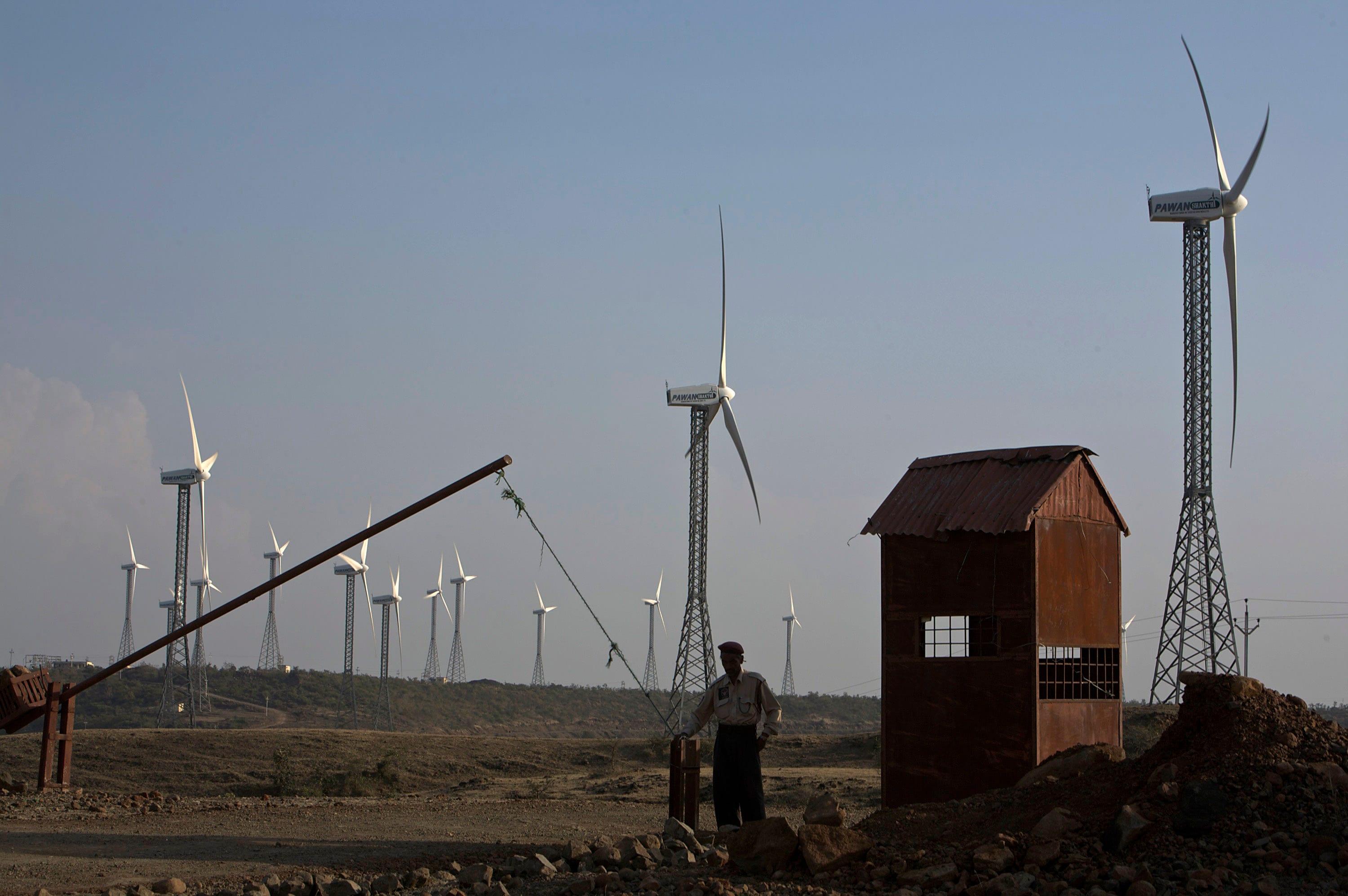
Even as the recently concluded wind power auction has shifted the focus back to the sector, the jury is still out on the financial viability of the record low tariffs for power generating companies.
Wind power prices crashed to a record low of Rs 3.46 a kWhr (kilo Watt-hour) on February 24 in the country's first-ever auction of producing 1 Giga Watt (GW) wind capacity conducted by Solar Energy Corporation of India.
The five companies which won the auction bid were: U.K.-based Mytrah Energy (India) Ltd., Singapore-based Sembcorp Green Infra Wind Energy Ltd., Inox Wind Infrastructure Services Ltd., Ostro Kutch Wind Pvt. Ltd. and Adani Green Energy Ltd., according to a Bloomberg New Energy Finance (BNEF) report. The companies will set up wind power projects and sell energy to Power Trading Corporation of India Ltd. (PTC).
The wind sector had been hit by inordinate delays in signing of power purchase agreements and untimely payments; distribution firms have shied away from procuring electricity generated by wind projects.
A high feed-in tariff had no buyers of power earlier, but now the contract winners will have a 25-year power purchase pact with PTC. Under a feed-in tariff, a renewable power generator is paid a cost plus return based price for the power it supplies.
A record low tariff of Rs 3.46 per kWhr to supply power will become financially feasible for power generators if they adopt high efficiency turbines, reduce their capital expenditure, negotiate with suppliers and service providers, according to experts.
“The developers have to be very careful on execution. They have been given only 18 months for execution. As developers have to arrange land on their own and turbine procurement typically takes 6-12 months, execution on time and within budget will be a challenge.
“On the other hand, because of the auction based allocation, developers can choose the most cost efficient turbines rather than buy a package of land, machine and construction work at a premium from EPC (engineering, procurement, construction) contractors.” Vinay Rustagi, managing director of Bridge to India, a renewable energy sector consultancy, told BloombergQuint.
What Works?
The wind power generation sector will witness a complete makeover, which earlier relied on feed-in tariffs. Earlier, feed-in tariffs for wind energy ranged from nearly Rs 3.80 to Rs 6.04 kilowatt-hour, the BNEF report said.
Shantanu Jaiswal, an analyst at BNEF who authored the above quoted report, sees margins of power producers “squeezing”, but expects the auctions to create new business opportunities, and promote innovation.
“Auctions are expected to squeeze margins for the entire value chain, but will also create new business opportunities and promote innovation to bring down the costs. Independent power producers who had been petitioning for increasing feed-in tariffs will now have a lot of explaining to do,” said the BNEF report.
The auction mechanism has successfully managed to reduce the price of renewable energy, in turn increasing the competitiveness of wind and solar against fossil fuel, it added.
A solar auction conducted in early February this year also showed a record low bid of Rs 3.30 rupees a kilowatt-hour on for 750 megawatts of projects in Madhya Pradesh.
The average tariff for coal-based power for nine-month period ending December, 2016 was Rs 3.28 per unit, as per NTPC Ltd.'s data. State-owned NTPC is the largest power producer in India with a generation capacity of 48 GW.
The total installed capacity of power stations in India as on January 31, 2017 was 314.6 GW, according to data on Central Electricity Authority's website. Of this, wind-produced power's share is 28.7 GW.
Power produced by generators is carried through a transmission network into a grid. The power producers may not incur a loss in power as these projects will be connected to a high-voltage national grid, and will be selling power to PTC India. Usually, wind projects were connected with low-voltage state-grids which led to loss in power generated by these producers.
“For developers, this means whatever power they produce, they can sell it. In state grids or low voltage grids…if the grid is unstable, then even if the project can produce power, the grid cannot take that power. So, ultimately the developer ends up losing that power,” said Rustagi.
Earlier, the wind power generation industry was lobbying to increase the feed-in tariff, but all players have bid aggressively in the recently concluded auctions.
“There is a discrepancy on how wind projects are priced. Now, the project costs should fall as there will be strong negotiations between wind equipment manufacturers and IPPs (Independent Power Producers), and the regulatory body would now want to understand why there was such a discrepancy in price. This would lead to some transparency in the system, which could in turn lead to drop in prices,” BNEF's Jaiswal said.
These companies will have to reduce their borrowing cost, capital expenditure, and might need to tone down their equity return expectations, Jaiswal said.
“It will affect their (power generators) profitability but that doesn't mean they will go in the red…the profitability may come down but the project should be still be financially viable.”Shantanu Jaiswal, Analyst, Bloomberg New Energy Finance
Prashant Khankhoje, an adviser at the Independent Power Producers Association of India concurs that a “drastic” reduction in installation cost and capital expenditure would help in making a low-tariff model sustainable. The companies should improve their technology for generation for new installed capacity.
What Doesn't Work?
Hero Future Energies Ltd., which was a participant in the wind power auction, did not bid in it, as the renewable energy major did not find the tariff attractive.
“Companies have bid for a lower tariff and they would know what's best for them…for us those tariffs were not good, so I did not bid. People have taken a call that they can get 35-40 percent PLF (plant load factor) from new turbines…And believe that the plant load factor will go up significantly with new turbines,” Sunil Jain, chief executive officer, Hero Future Energies told Bloomberg Quint.
“Companies also think that turbine prices will fall 15-20 percent, so that is another view. A combination of all the factors will result in such lower tariffs. Only time will be able to tell whether these bids are financially viable or the returns are good,” he added.
He said that companies also think that turbine prices will fall 15-20 percent, which would help them going ahead.
An earlier version of this story had incorrectly mentioned in the introduction that experts are divided on the financial viability of the feed-in tariff instead of the tariff arrived at through the auction.

-
Navigating Energy Crossroads: S Jaishankar's Call For Diversified Supply Chains At G20 Ministerial Meeting

As geopolitical fault lines continue to test maritime trade routes and commodity flows, Jaishankar's message remains pertinent: true economic resilience requires open markets, protected transit lines, and a genuine commitment to multilateral cooperation rather than coercion.
-
Indians Are Travelling, But Not Every Journey Is A Holiday | The Week In Whys
Pilgrims, patients and working women are the real travellers, and the system hasn't quite caught up with them.
-
Getting To Work Costs Women More | The Reason Why
It is not just about women paying more than men. It is about women paying much more in cities than in villages.
-
AI Bias In Investing Cannot Be Eliminated, But It Can Be Governed
Framing is a particularly important example as identical financial information presented in terms of gains rather than losses can lead an LLM to reach a different assessment.
-
Joining The Dots | Dark Skies, Steady Diya: Why Hope Holds This Diwali
With war, a weak rupee and foreign outflows weighing on sentiment, policymakers at the NDTV World Summit and market veterans at NDTV Profit Ignite: Diwali Edition offered the same advice: stay invested and filter out the noise.
-
The Curious Case of Equitas Small Finance Bank And A CEO Who Quit For Stock
PN Vasudevan believes persistent investor concerns over a perceived conflict of interest had become a governance overhang on Equitas Small Finance Bank's stock, even as the lender improved profitability and asset quality.
-
Talking Points This Week: AI Cash Burn, A Tiger Comeback And An India That Still Finds Its Own Path
India is not immune to higher oil or tighter global liquidity, yet its earnings base is broader, its domestic policy levers are still available.
-
Foreign Investors Own Half Of HDFC Bank and ICICI Bank. An LTCG Cut Could Matter Most Here
Foreign portfolio investors have US$115 billion parked in HDFC Bank, ICICI Bank. If the government cuts long-term capital gains tax, Jefferies says returning foreign money could land here first.
-
'Never Seen This Level Of Negativity': Sandeep Tandon Says The Next Rally May Be Closer Than You Think
Veteran investor Sandeep Tandon says foreign selling is easing, large-caps are due a comeback and mid-caps are crowded, while he turns positive on gold, power and pharma this Diwali.










