Why You Should Take Your Car Tyres Seriously
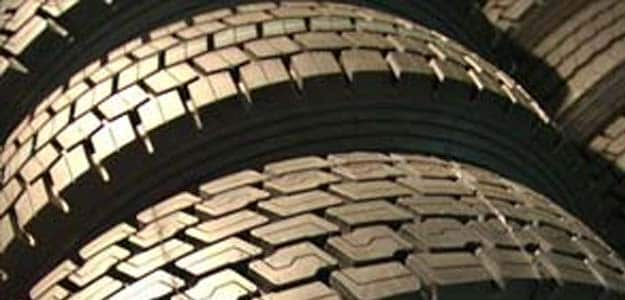
Investigations into Hollywood actor Paul Walker's fatal car crash revealed that his Porche's 9-year old tyres had contributed to the accident.
The 'Fast and the Furious' actor's Porsche Carrera GT was travelling at around 150 km/ hour when it crashed and burst into flames.
Tyres are often an ignored part of the car. For many, the responsibilities toward the tyres end with regular pressure checks.
"More than 80 per cent of the accidents that happen are attributed to bad tyres," says auto expert Tutu Dhawan.
Tyres are your car's point of contact with the road, so its importance can't possibly be stressed upon enough. From accelerating to braking to manoeuvring, the tyres play a pivotal role.
"Rubber starts deteriorating from day one, from the time of manufacture, even before you've started driving. Even if it looks good from outside, an old tyre may burst as it starts disintegrating from the inside," Mr Dhawan says.
In high performance cars like the Audis and BMWs of the world, the tyres start deteriorating faster than the mass segment cars, he says.
For high-performance cars tyres should be changed after 2-3 years and for mass segment cars after 3-4 years, he adds.
Highway or long-distance driving with old tyres at high-speeds is even more dangerous than inter-city driving. "The tyres won't go flat. With the heat generated at high speed on highways, they would just blow out," he says.
If your tyres are more than five years old then never hit the highway with them, cautions Mr Dhawan, recalling a personal experience where his tyres blew out when "they otherwise looked perfectly fine from the outside".
Of course, wear and tear also depends on kilometres run, weather, terrain and driving style among other factors.

-
Where You Live Shapes How You Get To Work | The Reason Why

Two-wheelers are the most popular way to get to work in India, accounting for nearly 43% of workplace commutes.
-
High US Salaries, No Green Card Certainty: The Financial Calculation Facing Indian H-1B Families
The suspension of PERM processing at eight technology employers does not cancel existing H-1B visas. What it does is force a question many Indian families have been avoiding: is the US salary worth tying your career and family plans to one employer?
-
Unhedged Position: Can India See An Indonesia-Style Time Correction?
The Nifty is trading below levels it first clocked in 2024. Is there, then, as I have suggested in the headline, potential that the current time correction drags on painfully for the next three-five, even ten years?
-
Navigating Friction And Energy Realities: An Analysis Of Marco Rubio's October Visit To India
Occurring at a critical juncture marked by stalled trade negotiations and escalating geopolitical pressures over global energy supplies, the visit offers a profound window into modern US-India relations.
-
India Exports Capital. Why Not Export Trusteeship?
The big question, then, is whether India can build an institution that global borrowers, investors, banks, and lawyers can trust, even without an Indian connection.
-
France's Economy & Politics Are In Crisis | The Reason Why
Let's look at how the French economy and politics evolved under Nicolas Sarkozy, Franois Hollande and Emmanuel Macron.
-
You May Inherit The Business. You Must Earn Its Credibility.
Succession tests the founder's ability to share authority as much as it tests the next generation's readiness to assume it.
-
Signing Deals Is One Thing; Making Them Work Is Another | The Week In Whys
Sometimes, things don't turn out as planned. Indian companies have lost some bids to rivals, some projects won't produce until 2030.
-
FOMC Wall, PERM Suspension, Hospital Stocks | Talking Points This Week
A PERM suspension would directly affect green-card sponsorship rather than H-1B visas, so the near-term earnings impact could remain relatively limited. The key question is whether this marks a new phase in US scrutiny of Indian IT.
-
Everything, Everywhere, All At Once: Dalal Street's Week To Forget | Joining The Dots
Visa curbs, a Starlink spat and cancer drug caps: what connects this week's shocks for Indian markets









