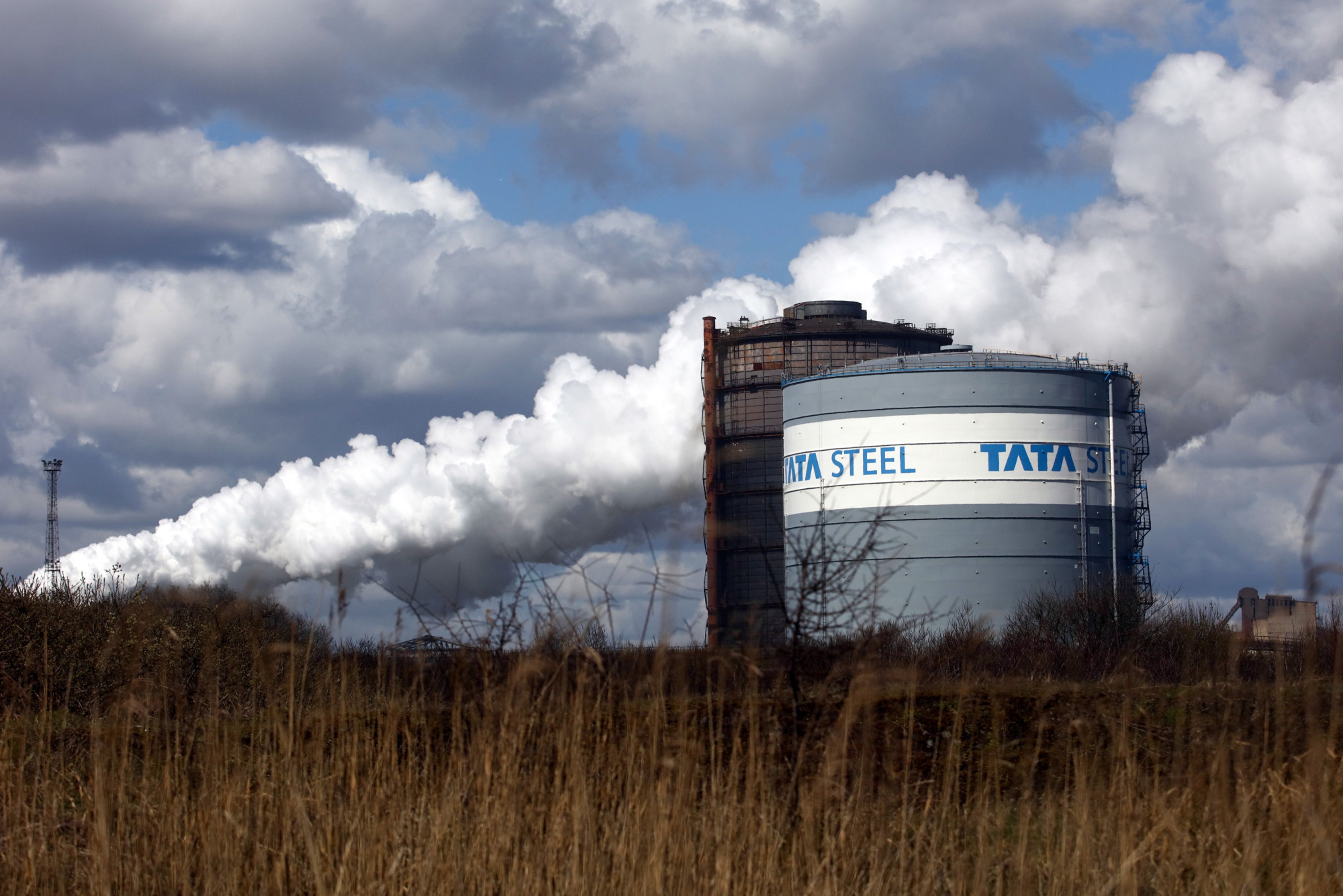
Tata Steel Ltd. beat other steelmakers to buy state-owned Neelachal Ispat Nigam Ltd. While one of its peers says the company may have overvalued the asset, for Tata Steel it's more than a steel mill.
The Tata Group company acquired Neelachal Ispat, which has a capacity of one million tonnes a year, at an enterprise value of Rs 12,100 crore. The assets with the mill are actually worth Rs 6,000-7,000 crore, according to VR Sharma, managing director at Jindal Steel and Power Ltd. “The company (Tata Steel) seems to have paid the huge price for just a large land bank and iron ore resources.”
Tata Steel, however, said the company is "running its own race".
The value of the acquisition does not reflect the value of embedded assets, Koushik Chatterjee, executive director and group chief financial officer at Tata Steel, said in an interview with BloombergQuint after the company's third-quarter earnings. "It's the strategic value of what the overall asset brings to Tata Steel over a longer period."
The company is banking on the deal to enhance its long products portfolio, aiding brownfield capacity expansion potential and operational synergies.
Fits Into Long Products Strategy
Tata Steel Long Products Ltd., the 74% subsidiary of Tata Steel that acquired the asset, aims to build its business across branded products, downstream solutions, and specialty high-end products from rebars to rails.
That dovetails with India's infrastructure thrust, with capex spending rising in the union budget for 2022-23. India has also announced the National Infrastructure Pipeline comprising projects worth Rs 102 lakh crore.
That would make Tata Steel a direct beneficiary of India's investment in building roads to rail lines.
“This acquisition gives us a big leg-up for the long portfolio profile, which is widely used for the infrastructure sector,” Chatterjee said. He expects the share of this segment to rise from 20% now to 55-60% after the expansion.
Tata Steel manufactures flat products at its Kalinganagar and Meramandali sites in Odisha, apart from Jamshedpur. Neelachal Ispat will become the hub for its long products business in the future, according to an Ambit Capital report.
The company's willingness to pay what it did for the asset reflects that focus on long products. JSPL, however, is looking to dilute its longs portfolio from 70% to 50%, Sharma told BloombergQuint in an interview.
While the acquired assets are much smaller than Tata Steel's global capacity of 32.5 million tonnes per annum, Moody's Investors Service said it's “credit positive” because it will increase Tata Steel's long-steel product capacity and its reserves of iron ore.
Added Expansion Options
According to Chatterjee, Tata Steel remains “open to evaluating inorganic acquisition, like that of Rashtriya Ispat Nigam Ltd. and National Mineral Development Corp.'s Nagarnar plant, as and when they are on offer”.
Tata Steel has 17 million tonne existing capacity expansion options at multiple plants, according to a report by Investec Securities. Neelachal Ispat is expected to add another 10 million tonnes of potential expansion.
Factoring in the expansions, Moody's expects Tata Steel to increase its domestic steel production capacity to 34.6 MTPA by 2030 from the existing 19.6 MTPA.
Cost Savings And Synergies
The acquisition of Neelachal Ispat will add an additional 100 million tonnes of iron ore to Tata Steel's existing reserves. Going by industry standards, around 1.6 million tonnes of raw material is required to produce a million tonnes of steel. With Neelachal Ispat looking to expand its portfolio to 4.5 million tonnes and then to 10 million tonnes, that would become a captive resource for Tata Steel.
There are geographical benefits too. The integrated steel mill of Neelachal Ispat in Duburi, Odisha, is close to Tata Steel's Kalinganagar hub.
Neelachal Ispat would benefit from synergies with Tata Steel's existing operations, including access to its global supply chain, and marketing and distribution channels, Chatterjee said. Tata Steel would be able to share resources like construction, equipment and manpower, he said.
Moody's Investor Service also said as much. The operational and logistical synergies for Neelachal Ispat with the Kalinganagar site will help save costs, the research and ratings firm said in a report.
That's an additional benefit for Tata Steel compared to JSPL, which has successfully built and is operating its 6 MTPA integrated mill at Angul, Odisha.
Higher Profits
With the proposed acquisition and planned expansions, the contribution of Tata Steel's Indian operations to its global production capacity will increase to 70% from the current 60%. Indian operations offer better profitability, thus strengthening Tata Steel's earnings capacity, Moody's said.
No Regulatory Hurdles
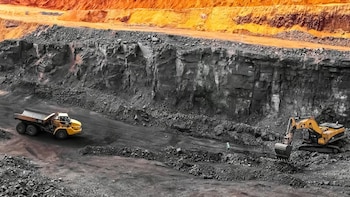
The deal has given Tata Steel mining rights for a period of 50 years over an area of 874 hectares in Sundergarh and Keonjhar, Odisha, with an estimated reserve of 110 million tonnes of high-grade iron ore. The lease deed has been executed between the Government of Odisha and the company, according to a report by ICICI Securities. Initial forest clearance has already been granted to the mine, while second-stage approval is awaited, the report added.
Ritesh Shah, analyst at Investec Securities, wrote in a separate report that it means acquired resources could be augmented, and a long lease implies the company is shielded from regulatory changes on mining policy.
The company will continue to pay royalty at Indian Bureau of Mines notified prices, with arm's length pricing between different group entities.
Debt Risk
ICICI Securities said in its report that the Neelachal acquisition will undo deleveraging efforts undertaken in the last two quarters and should potentially propel net debt to Rs 75,000 crore. That's because part of the deal may be funded by debt.
According to ICRA Ltd.'s note, with the acquisition being twice the size of Tata Steel Long Product's current balance sheet, the funding for Neelachal Ispat would be largely supported by long-term infusion from the parent, Tata Steel.
Chatterjee told BloombergQuint that since the subsidiary doesn't have enough balance-sheet strength to fund the deal and its expansion will be organic, internal resources of Tata Steel will be allocated. "As for the funding mix, 50% will be cash (via Tata Steel's internal accruals) and the remaining 50% will be via bridge loans."
He, however, said that focus on deleveraging will continue and the company will find "a balance between expansion and debt reduction".
Essential Business Intelligence, Continuous LIVE TV, Sharp Market Insights, Practical Personal Finance Advice and Latest Stories — On NDTV Profit.