Why Sensex Plunged 788 Points Today, Its Worst Day In Six Months
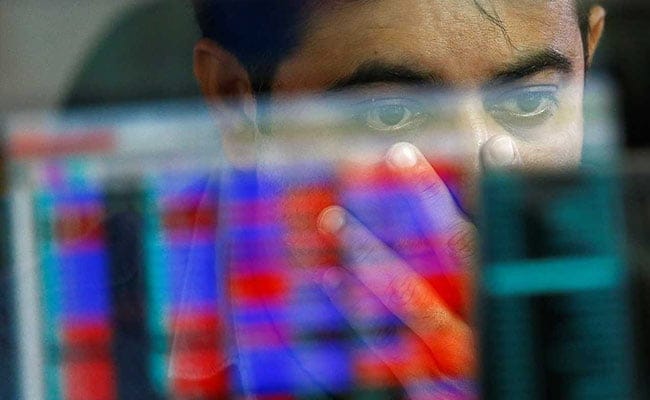
The S&P BSE Sensex and NSE Nifty 50 indexes nosedived in today's session as markets suffered their worst day in six months after US President Donald Trump issued a threat to impose sanctions on Iraq amid escalated tensions with Iran in the Middle East. United States killed a top Iranian military commander in Iraq on Friday, which led to surge in gold and crude oil prices internationally and a drop in equities. The Sensex plummeted as much as 851 points while the Nifty 50 index dropped as much as 252 points to 11,974. The Sensex ended 788 points or 7.9 per cent to close at 40,676.63 and Nifty 50 index dropped 234 points or 1.9 per cent to close at 11,993.
Here's what dragged the markets lower:
US-Iran Tensions
The killing of Qasem Soleimani, a top Iranian commander, in the strike ordered by President Donald Trump escalated tensions in the Middle East and raised concerns of retaliation on the part of Iran. The government in Iran has already announced that it will not abide by the uranium enrichment limits under the 2015 nuclear deal, from which the United States had unilaterally withdrawn in 2018. The US President Donald Trump's subsequent threat of a major retaliation if Iran avenges killing of the military commander further kept the traders on the edge. In other middle east development, Trump also threatened to impose sanctions on Iraq after its parliament called on US troops to leave the country.
Weak Global Markets
The heightened geopolitical tensions had a domino effect on the global equity markets. Stocks, meanwhile, mostly kept falling on Monday. South Korea's Kospi lost 0.8 per cent, Hong Kong's Hang Seng Index dropped 0.7 per cent. Japan's Nikkei 225 weakened by 2.1 per cent on its first trading day of the year after several days of New Year holidays.
Oil On Boil
The flare-up in Iran-US tensions sent the prices of oil surging to six-month peaks as the Middle East is home to some of the world's leading oil producing countries. Brent crude gained 2.4 per cent to reach $70.24 per barrel. A rise in crude oil is bad news as India imports more than 80 per cent of its crude oil requirements and the ballooning oil prices could impact the fiscal math.
In a related development, gold also touched a near seven-year high as harried investors scurried for the safe heaven. On the MCX, February gold futures surged 2.3 per cent or Rs 918 to a record high of Rs 41,030 per 10 gram.
Rupee Spiralling Downwards
The rupee nosedived below the 72-mark on the back of rising global oil prices. It had opened 21 paise lower at 72.01 per dollar versus Friday's close of 71.80 and is currently trading at 72.04 a dollar. The weakening rupee is also bad omen for the Indian economy as it will drive up the price of imports.
Rise in Volatility
India VIX, which is a measure of volatility in the market, soared as much as 16 per cent to 14.8.
Gainers and Losers
All the sector gauges compiled by National stock Exchange ended lower, led by the Nifty PSU Bank index's over 4 per cent fall. Nifty Realty, Private Bank, Bank, Auto, Financial Services, Media and Metal indexes also plunged between 2.3-3 per cent each.
Forty six out of 50 shares in the Nifty 50 basket ended lower. State Bank of India was top Nifty loser, the stock declined 4.6 per cent to close at Rs 318.40. Bajaj Finance, Vedanta, Zee Entertainment, Yes Bank, IndusInd Bank, Hindalco, Bajaj Finserv, Bharat Petroleum, Coal India and Maruti Suzuki were also among the losers.
On the flip side, Titan, Wipro, Dr Reddy's Labs and TCS were among the notable gainers.

-
High US Salaries, No Green Card Certainty: The Financial Calculation Facing Indian H-1B Families

The suspension of PERM processing at eight technology employers does not cancel existing H-1B visas. What it does is force a question many Indian families have been avoiding: is the US salary worth tying your career and family plans to one employer?
-
Swiggy vs Eternal: Food Delivery's Two Rivals Are No Longer In The Same Race
Eternal is building a private AI assistant, dark.ai. Swiggy is still working out how to make Instamart pay, with an operating loss of Rs 895 crore in the July-September quarter while Blinkit stayed profitable.
-
Where You Live Shapes How You Get To Work | The Reason Why
Two-wheelers are the most popular way to get to work in India, accounting for nearly 43% of workplace commutes.
-
Unhedged Position: Can India See An Indonesia-Style Time Correction?
The Nifty is trading below levels it first clocked in 2024. Is there, then, as I have suggested in the headline, potential that the current time correction drags on painfully for the next three-five, even ten years?
-
Navigating Friction And Energy Realities: An Analysis Of Marco Rubio's October Visit To India
Occurring at a critical juncture marked by stalled trade negotiations and escalating geopolitical pressures over global energy supplies, the visit offers a profound window into modern US-India relations.
-
India Exports Capital. Why Not Export Trusteeship?
The big question, then, is whether India can build an institution that global borrowers, investors, banks, and lawyers can trust, even without an Indian connection.
-
France's Economy & Politics Are In Crisis | The Reason Why
Let's look at how the French economy and politics evolved under Nicolas Sarkozy, Franois Hollande and Emmanuel Macron.
-
You May Inherit The Business. You Must Earn Its Credibility.
Succession tests the founder's ability to share authority as much as it tests the next generation's readiness to assume it.
-
Signing Deals Is One Thing; Making Them Work Is Another | The Week In Whys
Sometimes, things don't turn out as planned. Indian companies have lost some bids to rivals, some projects won't produce until 2030.
-
FOMC Wall, PERM Suspension, Hospital Stocks | Talking Points This Week
A PERM suspension would directly affect green-card sponsorship rather than H-1B visas, so the near-term earnings impact could remain relatively limited. The key question is whether this marks a new phase in US scrutiny of Indian IT.









