Why Sachin Bansal's Banking Ambitions Were Thwarted By RBI
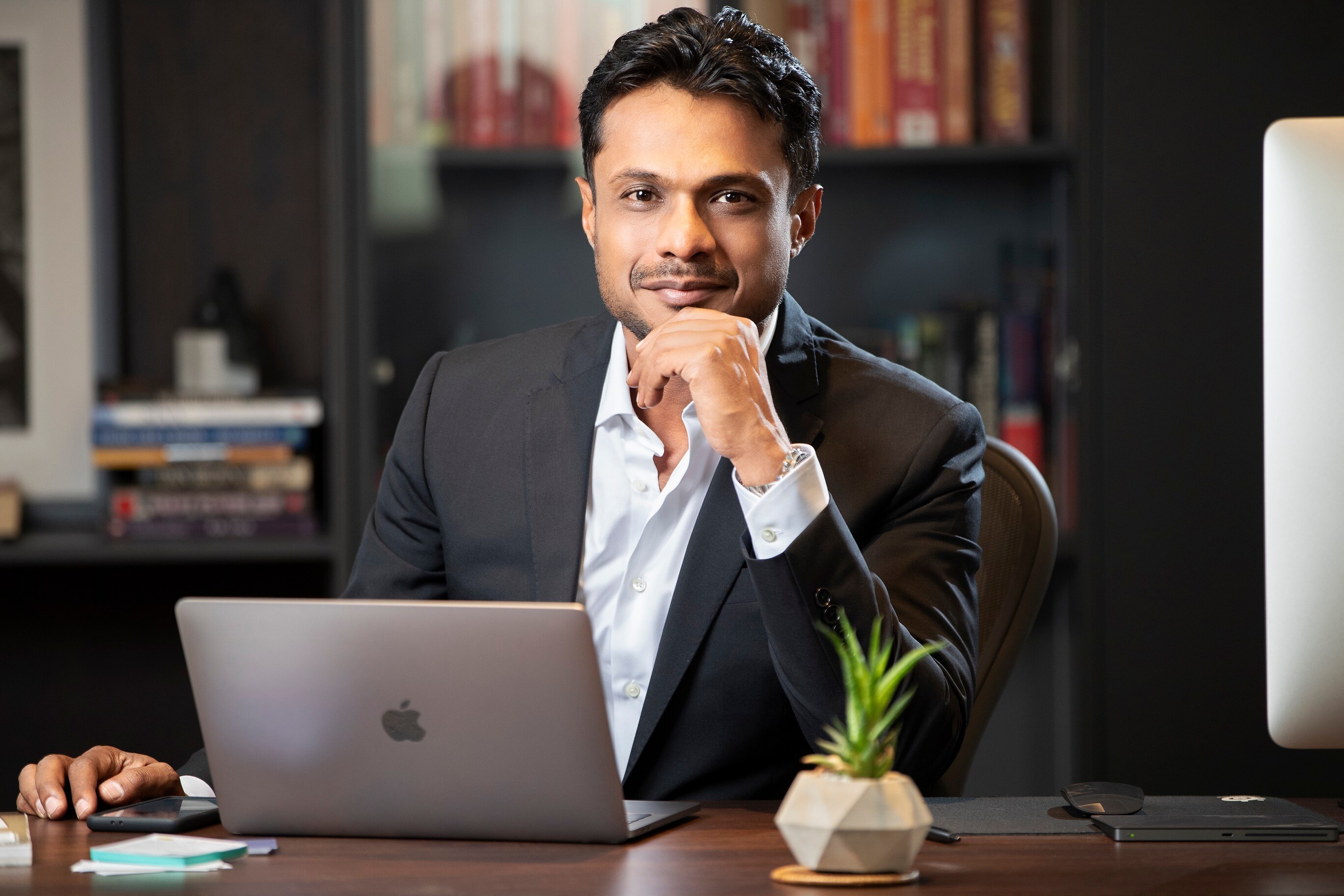
He has tech pedigree like few others. He promised to bring that acumen to an increasingly digitised banking business. He had the capital. And the advisors. His isn't a large corporate group, which the regulator wants to keep away from banking.
Why then did the Reserve Bank of India deny a bank licence to Chaitanya India Fin Credit Pvt., the entity through which Sachin Bansal had applied for a bank licence?
The denial was likely due to the company's size and lack of promoter experience, said two people familiar with the matter, who spoke on the condition of anonymity.
In April 2021, the RBI had announced that it had received applications from four applicants for a universal bank licence, including Chaitanya India. The microfinance firm is a wholly-owned subsidiary of Navi Finserv Pvt., which is promoted by Bansal.
The fit and proper criteria set by the regulator requires the promoter of the applicant entity to have at least 10 years in successful track record. While Chaitanya India was set up in 2009, Bansal only entered the picture in 2020 when he took over the company via Navi Finserv. Prior to that, Bansal's track record was largely in e-commerce. He co-founded and ran Flipkart.
Bansal first acquired Chaitanya Rural Intermediation Development Services Pvt. in March 2020 and then renamed it Navi Finserv, to further take control of Chaitanya India.
The regulator does not allow promoters to enter banking through acquisition of financial services companies, the first of the two people quoted above said.
As part of the fit and proper criteria, the RBI also states that it would give preference to promoter entities who have diversified ownership. Navi Finserv is wholly-owned by Navi Technologies, where Bansal holds more than 97% stake.
Moreover, Chaitanya India had total assets worth only Rs 1,808 crore as of Dec. 31, 2021, according to the draft red herring prospectus filed by Navi Technologies in March.
Parent Navi Finserv also extends unsecured personal loans and housing loans through the Navi mobile app, where the outstanding advances stood at Rs 1,419 crore and Rs 178 crore, respectively, the prospectus said.
Given its size and existing business, the committee felt that the entity may be more suitable to apply for a small finance bank licence rather than a universal bank licence, said the first person quoted above.
"We respect the RBI's decision and will be analysing it in further detail while examining our options. We will decide our next steps in due course while keeping in mind the interest of all stakeholders," a spokesperson for Navi said in a statement on Tuesday.
While addressing reporters on Tuesday, Bansal had said that the RBI's rejection was "not the end of the road" for Navi, and that it will consider appealing against the decision. He also said that the company could consider a reapplication.
Navi did not respond to detailed queries mailed on Wednesday.
The RBI's guidelines for on-tap licensing of private banks specify that once rejected, an applicant cannot re-apply for a bank licence for three years. The guidelines, however, do provide for an appeal process. Within a month of the RBI's decision being announced, an aggrieved applicant can write to the central board of the regulator appealing against it.
Apart from Chaitanya India's application, the RBI also rejected universal banking licence applications of UAE Exchange and Financial Services Ltd., REPCO Bank, and Pankaj Vaish and others. The regulator rejected small finance bank licence applications for Vsoft Technologies Pvt. and Calicut City Service Co-operative Bank.
Five applications for small finance bank licences remain under consideration. These include those by Akhil Kumar Gupta, Dvara Kshetriya Gramin Financial Services Pvt., Cosmea Financial Holdings Pvt., Tally Solutions Pvt. and West End Housing Finance Ltd.
Holding On To Its Customary Caution
RBI has historically been extremely cautious in giving out bank licences.
Despite a recommendation to consider the entry of corporate houses into banking and permitting non-bank lenders an easier path to conversion, an internal working group erred on the side of caution. It kept the recommendation for easier entry into corporates into banking in abeyance and said that non-bank financial companies can apply for a conversion to a bank after 10 years, subject to the RBI's approval.
The rejection of four pending applications for universal bank licences suggests the regulator is not easing up.
The last banking licence extended by the regulator was to Unity Small Finance Bank on Nov. 1, 2021. The RBI had extended the small finance bank licence to Centrum Group as part of its rescue effort for the ailing Punjab & Maharashtra Cooperative Bank.
According to VG Kannan, a veteran banker and former chief executive of the Indian Banks' Association, the RBI needs to be extremely selective when it comes to licences.
"Over the last few years, we have had situations such as Yes Bank, Lakshmi Vilas Bank, PMC Bank and IL&FS emerge. It has become all the more important for the regulator to be extremely stringent in its licensing process," Kannan said. "Unless the promoters inspire full confidence in terms of their track record and ability to run banks, the RBI will not clear applications."
Amit Tandon, managing director of IiAS, however, felt that the RBI must take into consideration the need for more banks in the country.
"The best way, we believe, is to allow large NBFCs to convert to banks directly. To become a large NBFC, the entity has invariably spent a long period of time working in the sector and the regulator has a clear understanding of how it all works inside," said Tandon. "This will take care of any fit and proper concerns the regulator has."
Can blow-ups happen if the regulator allows this? "Yes, they can. But it is also possible in a full-blooded bank. This is the nature of the beast."

-
Navigating Energy Crossroads: S Jaishankar's Call For Diversified Supply Chains At G20 Ministerial Meeting

As geopolitical fault lines continue to test maritime trade routes and commodity flows, Jaishankar's message remains pertinent: true economic resilience requires open markets, protected transit lines, and a genuine commitment to multilateral cooperation rather than coercion.
-
Indians Are Travelling, But Not Every Journey Is A Holiday | The Week In Whys
Pilgrims, patients and working women are the real travellers, and the system hasn't quite caught up with them.
-
Getting To Work Costs Women More | The Reason Why
It is not just about women paying more than men. It is about women paying much more in cities than in villages.
-
AI Bias In Investing Cannot Be Eliminated, But It Can Be Governed
Framing is a particularly important example as identical financial information presented in terms of gains rather than losses can lead an LLM to reach a different assessment.
-
Joining The Dots | Dark Skies, Steady Diya: Why Hope Holds This Diwali
With war, a weak rupee and foreign outflows weighing on sentiment, policymakers at the NDTV World Summit and market veterans at NDTV Profit Ignite: Diwali Edition offered the same advice: stay invested and filter out the noise.
-
The Curious Case of Equitas Small Finance Bank And A CEO Who Quit For Stock
PN Vasudevan believes persistent investor concerns over a perceived conflict of interest had become a governance overhang on Equitas Small Finance Bank's stock, even as the lender improved profitability and asset quality.
-
Talking Points This Week: AI Cash Burn, A Tiger Comeback And An India That Still Finds Its Own Path
India is not immune to higher oil or tighter global liquidity, yet its earnings base is broader, its domestic policy levers are still available.
-
Foreign Investors Own Half Of HDFC Bank and ICICI Bank. An LTCG Cut Could Matter Most Here
Foreign portfolio investors have US$115 billion parked in HDFC Bank, ICICI Bank. If the government cuts long-term capital gains tax, Jefferies says returning foreign money could land here first.
-
'Never Seen This Level Of Negativity': Sandeep Tandon Says The Next Rally May Be Closer Than You Think
Veteran investor Sandeep Tandon says foreign selling is easing, large-caps are due a comeback and mid-caps are crowded, while he turns positive on gold, power and pharma this Diwali.










