Why Retail Investors Care About This Election
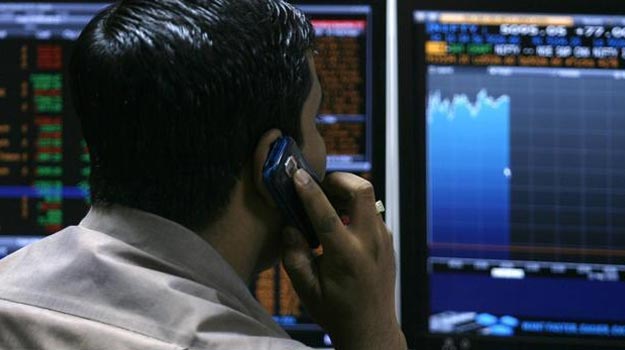
There is a lot of hope about the current elections and the potential for growth post it. The expectation is that industry and people in general would see growth in their economic status with the formation of a new government.
The capital markets are also expected to benefit from the election. Given the current state of affairs, the election results would have a significant impact on three key areas:
1. International perception:
An industry and FDI or foreign direct investment -friendly government could go a long way in improving the sullied image of India. Most institutional investors, sovereign funds and analysts believe that the India growth story could be put back on track by showing an inclination towards positive & firm decision making. The influence groups sitting in Wall Street, London or Hong Kong are sitting on the sidelines and waiting to push money into India. The perception that India story is over can potentially be removed when the new government is formed. And clarity is given on major decisions such as FDI in key sectors such as Insurance, Banking, Retail, Real Estate, etc.
2. Inflow of money:
FIIs have pumped in $5.2 billion into the Indian market in the current year. Among the emerging markets, India has been one of the favorites among the FIIs. The run up to the elections has only increased their appetite to bet on a favorable political outcome and improving macro factors. A favorable result could accelerate the inflow and push the markets upwards substantially.
3. Internal perception:
Various surveys have shown that the confidence of not only consumers but also the industry has been at their lowest ebb in the last few years. A favorable election outcome would send a message that consumers who are the electorate and the industry are worried most about economy and would like to see a government that can ensure economic growth and sustainability. A favorable outcome would increase the confidence level and would also help in kick starting a new capital investment cycle that could lay the foundation for GDP growth and an improved job market.
Conclusion:
The Indian market seems to be hedging its bets on a favorable political outcome in these elections. It might be willing to even take a result that would propagate a change of guard. Among all the emerging markets many of them are in a transition mode waiting for political changes that may occur due to local elections. India has a chance to cement its place as an emerging market bell-weather and help create more wealth for its citizens and its external investors.
As a retail investor, it is a good opportunity to create a diversified portfolio and continuously invest in the market. One outcome that is more or less certain is the fact that all future elections would only be fought on economic promise which would bode well for India in the long term.
ArthaYantra is an integrated online personal finance company.
Disclaimer: The opinions expressed in this article are the personal opinions of the author. NDTV Profit is not responsible for the accuracy, completeness, suitability, or validity of any information on this article.

-
High US Salaries, No Green Card Certainty: The Financial Calculation Facing Indian H-1B Families

The suspension of PERM processing at eight technology employers does not cancel existing H-1B visas. What it does is force a question many Indian families have been avoiding: is the US salary worth tying your career and family plans to one employer?
-
Swiggy vs Eternal: Food Delivery's Two Rivals Are No Longer In The Same Race
Eternal is building a private AI assistant, dark.ai. Swiggy is still working out how to make Instamart pay, with an operating loss of Rs 895 crore in the July-September quarter while Blinkit stayed profitable.
-
Where You Live Shapes How You Get To Work | The Reason Why
Two-wheelers are the most popular way to get to work in India, accounting for nearly 43% of workplace commutes.
-
Unhedged Position: Can India See An Indonesia-Style Time Correction?
The Nifty is trading below levels it first clocked in 2024. Is there, then, as I have suggested in the headline, potential that the current time correction drags on painfully for the next three-five, even ten years?
-
Navigating Friction And Energy Realities: An Analysis Of Marco Rubio's October Visit To India
Occurring at a critical juncture marked by stalled trade negotiations and escalating geopolitical pressures over global energy supplies, the visit offers a profound window into modern US-India relations.
-
India Exports Capital. Why Not Export Trusteeship?
The big question, then, is whether India can build an institution that global borrowers, investors, banks, and lawyers can trust, even without an Indian connection.
-
France's Economy & Politics Are In Crisis | The Reason Why
Let's look at how the French economy and politics evolved under Nicolas Sarkozy, Franois Hollande and Emmanuel Macron.
-
You May Inherit The Business. You Must Earn Its Credibility.
Succession tests the founder's ability to share authority as much as it tests the next generation's readiness to assume it.
-
Signing Deals Is One Thing; Making Them Work Is Another | The Week In Whys
Sometimes, things don't turn out as planned. Indian companies have lost some bids to rivals, some projects won't produce until 2030.
-
FOMC Wall, PERM Suspension, Hospital Stocks | Talking Points This Week
A PERM suspension would directly affect green-card sponsorship rather than H-1B visas, so the near-term earnings impact could remain relatively limited. The key question is whether this marks a new phase in US scrutiny of Indian IT.









