Why Naresh Goyal Finds Himself Grounded
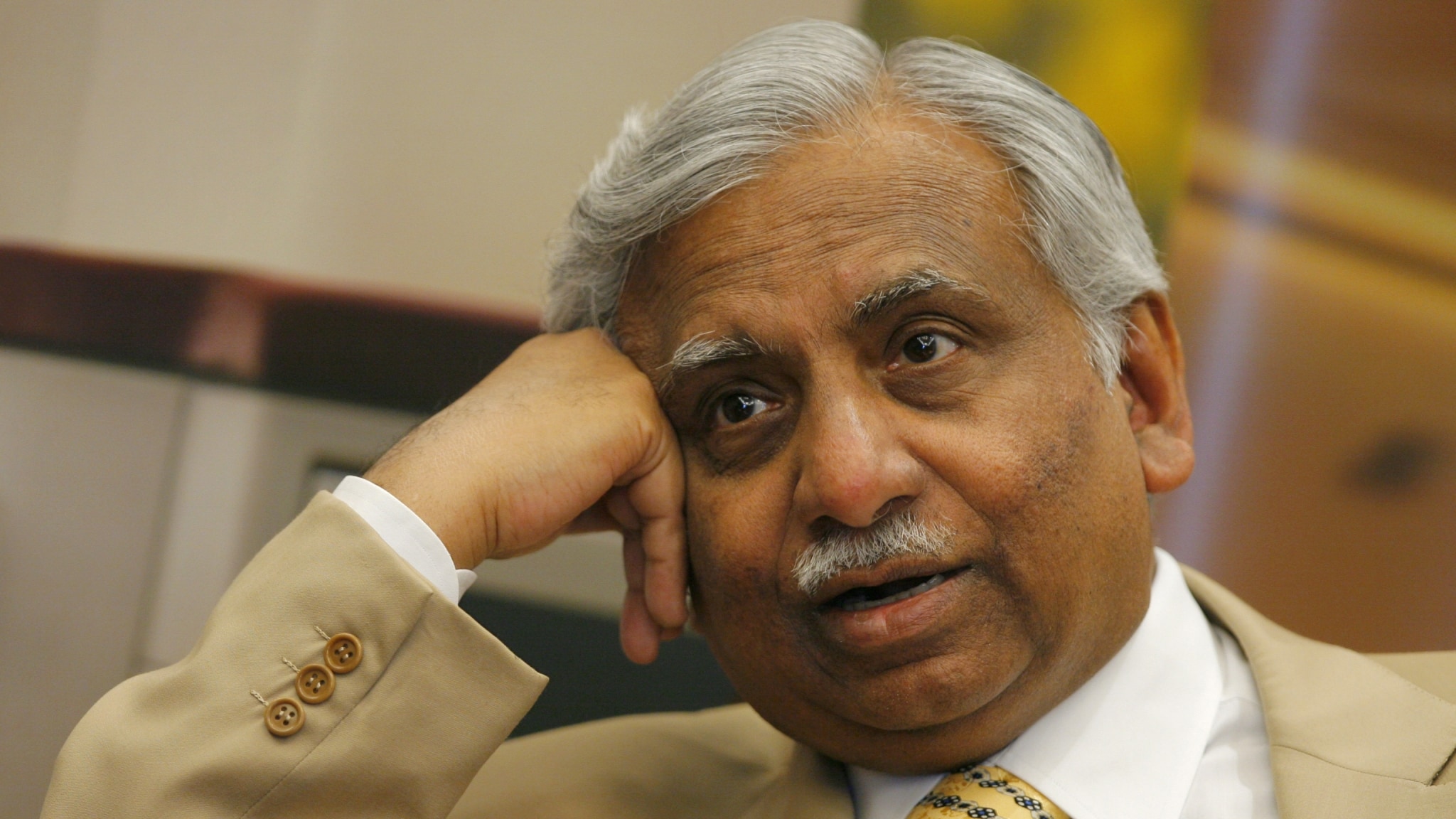
When 74-year-old Naresh Goyal was arrested by the Enforcement Directorate last Friday for alleged fraud in a money laundering case of Rs 538 crore with Canara Bank, it sank the once high-flying poster boy of Indian aviation further into abyss.
Goyal's story is that of a rags-to-riches-to-rags one. Born in 1949 in the small town of Sangrur in Punjab, he shifted to Patiala in the 1960s when the family faced troubled financial times. Supported by a relative of his, Seth Charan Das, first in Patiala and then in Delhi, Goyal's tryst with aviation started in 1967 when he worked in Das' travel agency in Delhi. Ambitious and smart, Goyal learnt the tricks of the trade over the next seven years till he started his own enterprise Jetair Pvt. in 1974, providing sales and marketing support to foreign airlines in India. During this time, he also met his life partner, Anita, who was a colleague of his in the company.
He bided time till the 1990s when the Narasimha Rao-led government at the centre declared the Open Skies Policy and gave the green signal for private players into the aviation sector. Backed by Gulf Air and Kuwait Airlines, Jet Airways started operations in May 1993. For the next decade-and-a-half, Goyal was the undisputed maharaja of the Indian skies. While other private airlines like Damania Airways, ModiLuft and East West Airlines, which started around the same time fell by the way side, even government-owned carriers like Indian Airlines and Air India could not face the market and lobbying clout of Naresh Goyal. His dream run continued: in 2005, Jet Airways had a successful IPO and the company was truly on the ascendant. At this time, it was estimated by Forbes magazine that he was the 16th richest Indian in the world with a net worth of $1.9 billion.
Turbulence And Tailwinds
However, soon enough stiff competition emerged in the form of a string of low-cost carriers like Indigo, SpiceJet and Air Deccan. From there on, three factors forced Naresh Goyal's arms: price wars started in earnest, the 2008 global financial crisis fuelled aviation fuel costs and the business model of full-service airlines took a hit. Management experts also allude to what they call the ‘market leader's curse' for the decline of the airline. That is, when an institution is a leader in the market, then it becomes arrogant and blinded to customer requirements. A new leader had arrived on the horizon: Indigo.
However, there was a temporary reprieve for Jet Airways when the government opened up the aviation sector to foreign investment up to 49%. In April 2013, the Abu Dhabi-based Etihad pumped in Rs 2,200 crore for a 24% stake. In its heights, Jet Airways flew to over 60 destinations in India and overseas. There was a broad consensus that it was truly a world class airline.
Even though it was generally believed that Naresh Goyal had friends at all spectrum of the political frontier, coincidentally, the true descent started with the assumption of power at the centre by the Narendra Modi government. With allegations that Goyal was diverting funds doing the rounds and under a heavy debt burden, Jet Airways was grounded in 2019 after a consortium of banks led by State Bank of India refused to provide emergency funds for the airline to stay afloat. Since then, Goyal, Anita and others were forced out of the board, refused permission to fly abroad and the company has been the subject of a series of scrutiny by the Serious Fraud Investigation Office, the Income Tax department, the Central Bureau of Investigation, Ministry of Corporate Affairs and the Enforcement Directorate.
In the 2000s, there were reports that Goyal may have been instrumental in halting the Tata Group in its track to enter the Indian skies. Today, the Tatas are having the last laugh, with its presence through Air India, Vistara and Air Asia. On another front, the National Company Law Tribunal allowed the Jalan-Kalrock Consortium to acquire Jet Airways. While this process has run into some turbulence, it is possible that the airline might once again take off.
However, for the once blue-eyed boy of Indian aviation, there are miles to go. Goyal was once asked by a global consulting and auditing firm in India as to what was the best part of being one's own boss and he promptly replied: "Responsibility. The buck stops with me." Quite!
George Skaria is former editor of Indian Management and Asian Management Review.
The views expressed here are those of the author and do not necessarily represent the views of BQ Prime or its editorial team.

-
Navigating Energy Crossroads: S Jaishankar's Call For Diversified Supply Chains At G20 Ministerial Meeting

As geopolitical fault lines continue to test maritime trade routes and commodity flows, Jaishankar's message remains pertinent: true economic resilience requires open markets, protected transit lines, and a genuine commitment to multilateral cooperation rather than coercion.
-
Indians Are Travelling, But Not Every Journey Is A Holiday | The Week In Whys
Pilgrims, patients and working women are the real travellers, and the system hasn't quite caught up with them.
-
Getting To Work Costs Women More | The Reason Why
It is not just about women paying more than men. It is about women paying much more in cities than in villages.
-
AI Bias In Investing Cannot Be Eliminated, But It Can Be Governed
Framing is a particularly important example as identical financial information presented in terms of gains rather than losses can lead an LLM to reach a different assessment.
-
Joining The Dots | Dark Skies, Steady Diya: Why Hope Holds This Diwali
With war, a weak rupee and foreign outflows weighing on sentiment, policymakers at the NDTV World Summit and market veterans at NDTV Profit Ignite: Diwali Edition offered the same advice: stay invested and filter out the noise.
-
The Curious Case of Equitas Small Finance Bank And A CEO Who Quit For Stock
PN Vasudevan believes persistent investor concerns over a perceived conflict of interest had become a governance overhang on Equitas Small Finance Bank's stock, even as the lender improved profitability and asset quality.
-
Talking Points This Week: AI Cash Burn, A Tiger Comeback And An India That Still Finds Its Own Path
India is not immune to higher oil or tighter global liquidity, yet its earnings base is broader, its domestic policy levers are still available.
-
Foreign Investors Own Half Of HDFC Bank and ICICI Bank. An LTCG Cut Could Matter Most Here
Foreign portfolio investors have US$115 billion parked in HDFC Bank, ICICI Bank. If the government cuts long-term capital gains tax, Jefferies says returning foreign money could land here first.
-
'Never Seen This Level Of Negativity': Sandeep Tandon Says The Next Rally May Be Closer Than You Think
Veteran investor Sandeep Tandon says foreign selling is easing, large-caps are due a comeback and mid-caps are crowded, while he turns positive on gold, power and pharma this Diwali.
-
Indians Stay With Family, Not In Hotels | The Reason Why
India still lacks enough clean, reliable and affordable hotels for budget-conscious travellers.










